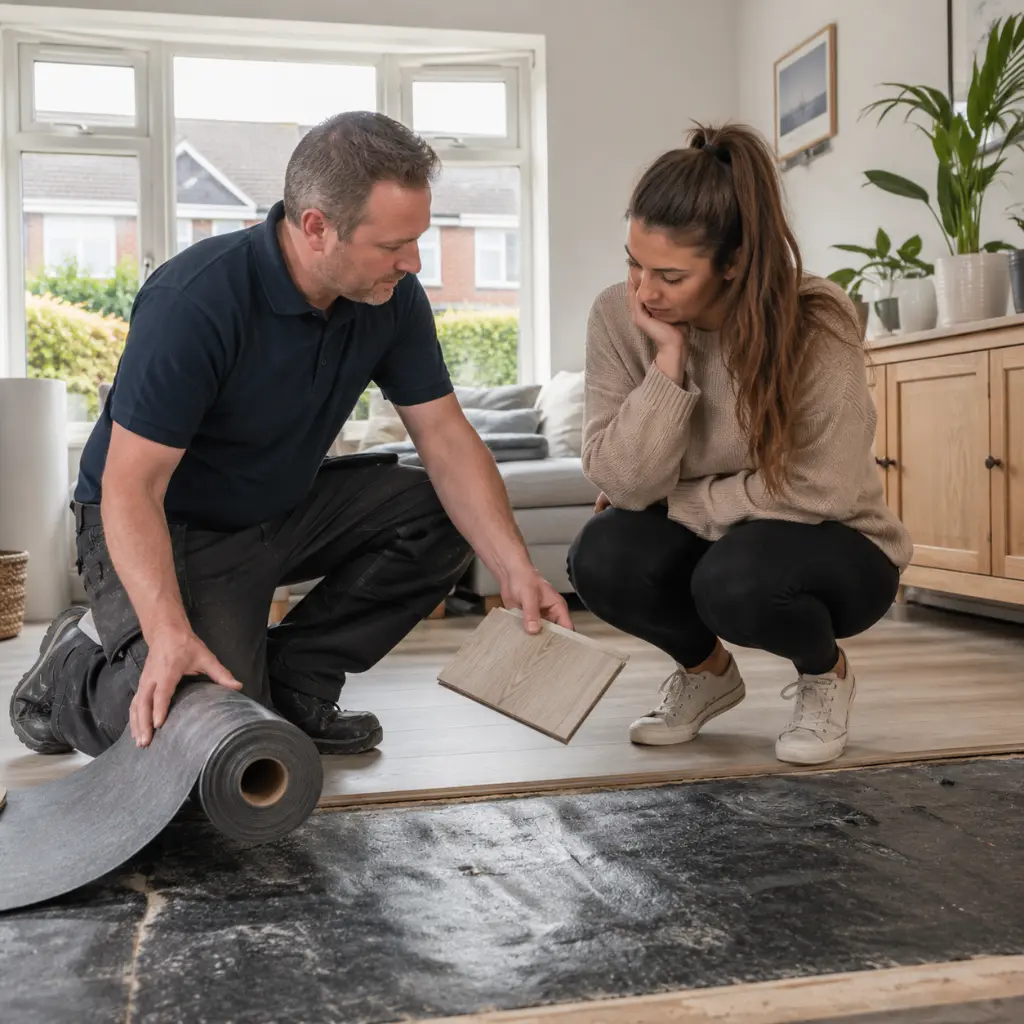
A customer rang us last winter about a hallway she had carpeted three years earlier. It was barely worn and still looked new in the corners, but the dog had caught a claw near the stairs and pulled one loop into a run that reached the front door. That is Berber in a single story: tougher than almost anything else you can put down, with one weakness worth knowing about first.
Berber is a loop pile carpet. The yarn is looped through the backing and left uncut, and everything about how it behaves follows from that. Below is what the loop is, how it differs from cut pile, what makes it worth choosing, how to choose room by room, how to clean loops without damaging them, and what drives the cost. It comes from a team fitting carpets in Sheffield and across South Yorkshire.
Berber loop carpet is made from uncut yarn loops fastened tightly into the backing, giving it a knotted, flecked look and a firm feel underfoot. The name comes from the weaving of the Berber tribes of North Africa, whose rugs used the same construction. What separates it from other carpet types is simply that nothing is cut.
Run a hand across a Berber and you feel rows of small springy loops rather than a soft surface. Packed tightly and sitting low, they keep dirt on top of the pile rather than letting it sink in, and hold their shape instead of flattening into traffic lanes.
Loop height and density decide performance. A tight loop carpet with low, dense loops is the hardest wearing version and the one for a hall, while taller loops feel more comfortable but crush sooner. Fibre matters just as much: wool berber carpet is naturally resilient and stain resistant, nylon berber carpet holds its shape in heavy use, and polypropylene is the budget synthetic, hard wearing but less pleasant underfoot.
| Feature | Loop pile (Berber) | Cut pile |
| Construction | Yarn loops left uncut | Yarn tips cut open |
| Feel underfoot | Firm and springy | Soft and plush |
| Hides dirt | Very well | Less well |
| Shows footprints | Rarely | Often |
| Best for | Halls, stairs, offices | Bedrooms, lounges |
The Berber tribes wove textiles to be used rather than admired, so durability came first. Their hand-knotted rugs, in undyed wool flecked with darker fibres, produced the speckled look modern berber carpeting still copies. Loops resist unravelling and spread wear across the surface rather than concentrating it on cut fibre tips, which is why berber flooring designed for tents centuries ago translated so neatly into carpet for busy homes.
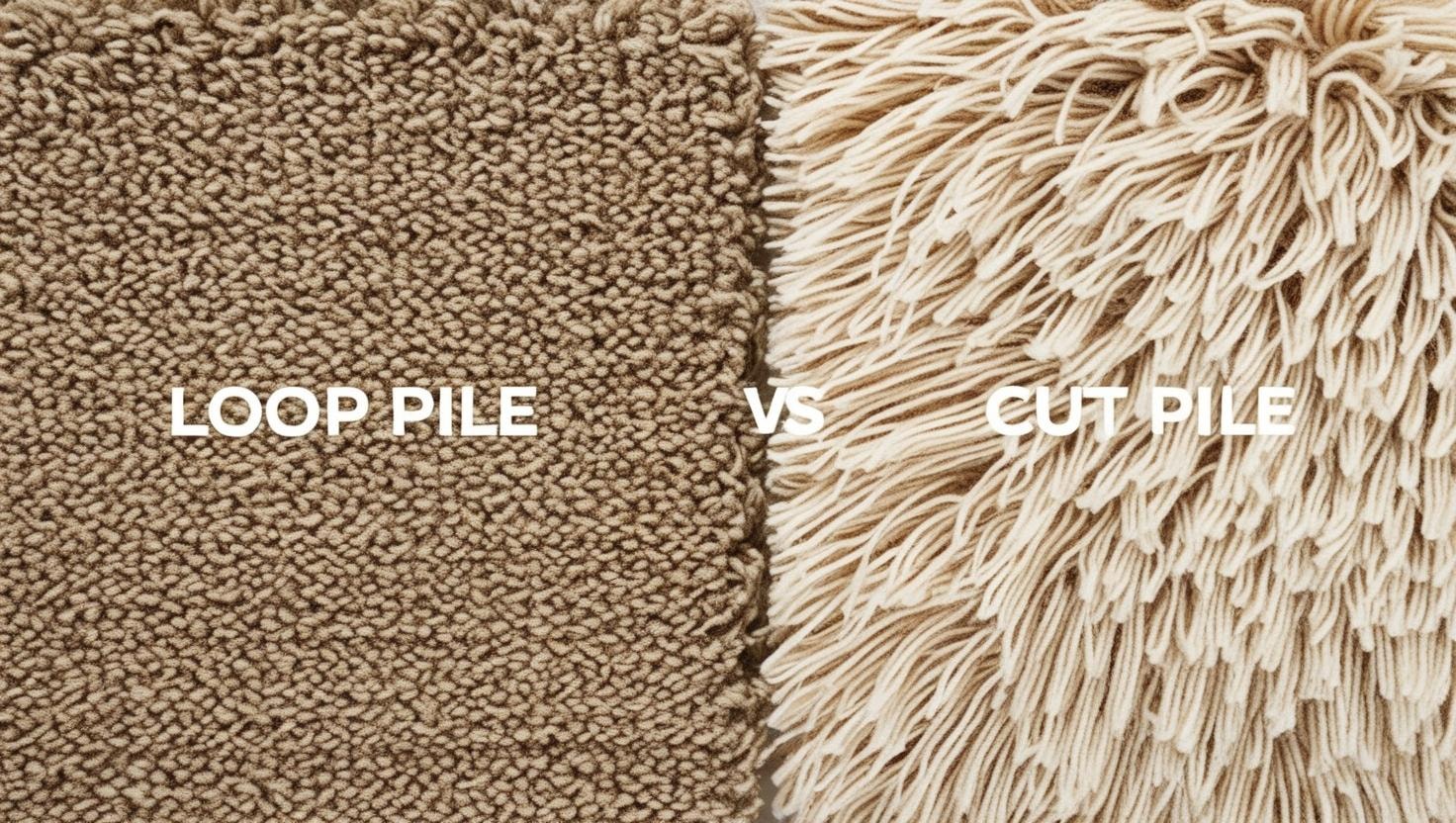
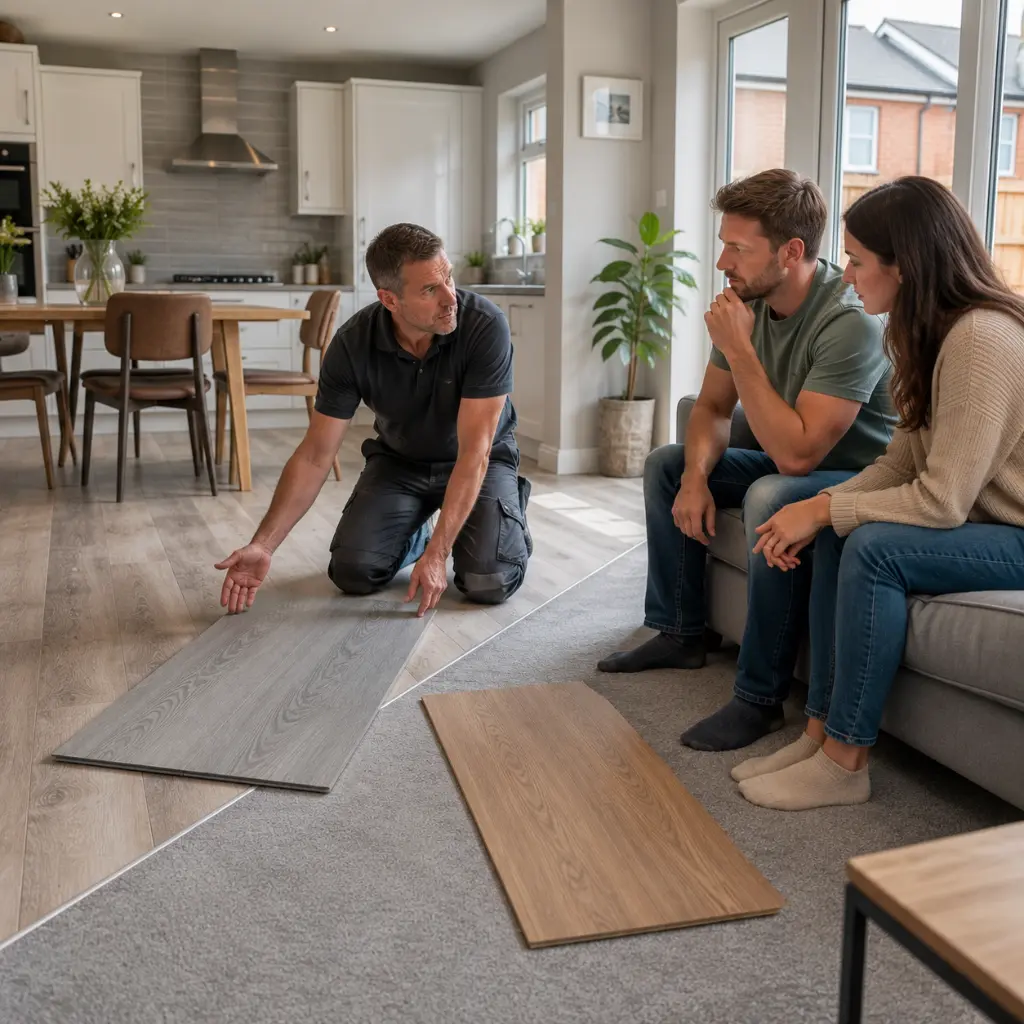
The cut pile and loop carpet distinction is the most useful thing to understand when choosing. Loop pile leaves the yarn looped into the backing, making a dense surface that suits high traffic areas and commercial spaces. Cut pile carpet shears the tops of those loops so the tips stand upright, creating a plush surface that feels better underfoot but shows footprints and wears faster.
Cut pile has styles of its own, including Saxony, plush and frieze, and the tightly turned yarn of a twist carpet pile style is the most hard wearing of them. Cut and loop carpet is the middle option people miss, cutting some loops and leaving others intact to create sculpted patterns. So loop versus cut pile is not about quality. It is about whether the room needs durability or comfort.
Very, and predictably so. A quality wool or nylon Berber lasts well over a decade in a lounge and around ten years in a hallway, roughly twice what a mid-range cut pile manages. What ends its life is rarely wear. It is usually accumulated snags, or grit ground in below the loops that no cleaning shifts.
Match the pile to what the room is for. Bedrooms are about comfort and get light use, so a soft cut pile is the better call. Halls, stairs and landings take the most concentrated traffic in the house and are where Berber pays for itself. Lounges sit in between, which is where cut and loop earns its place. A hard wearing carpet through the circulation spaces with something softer in bedrooms uses a budget far better than the same carpet everywhere.
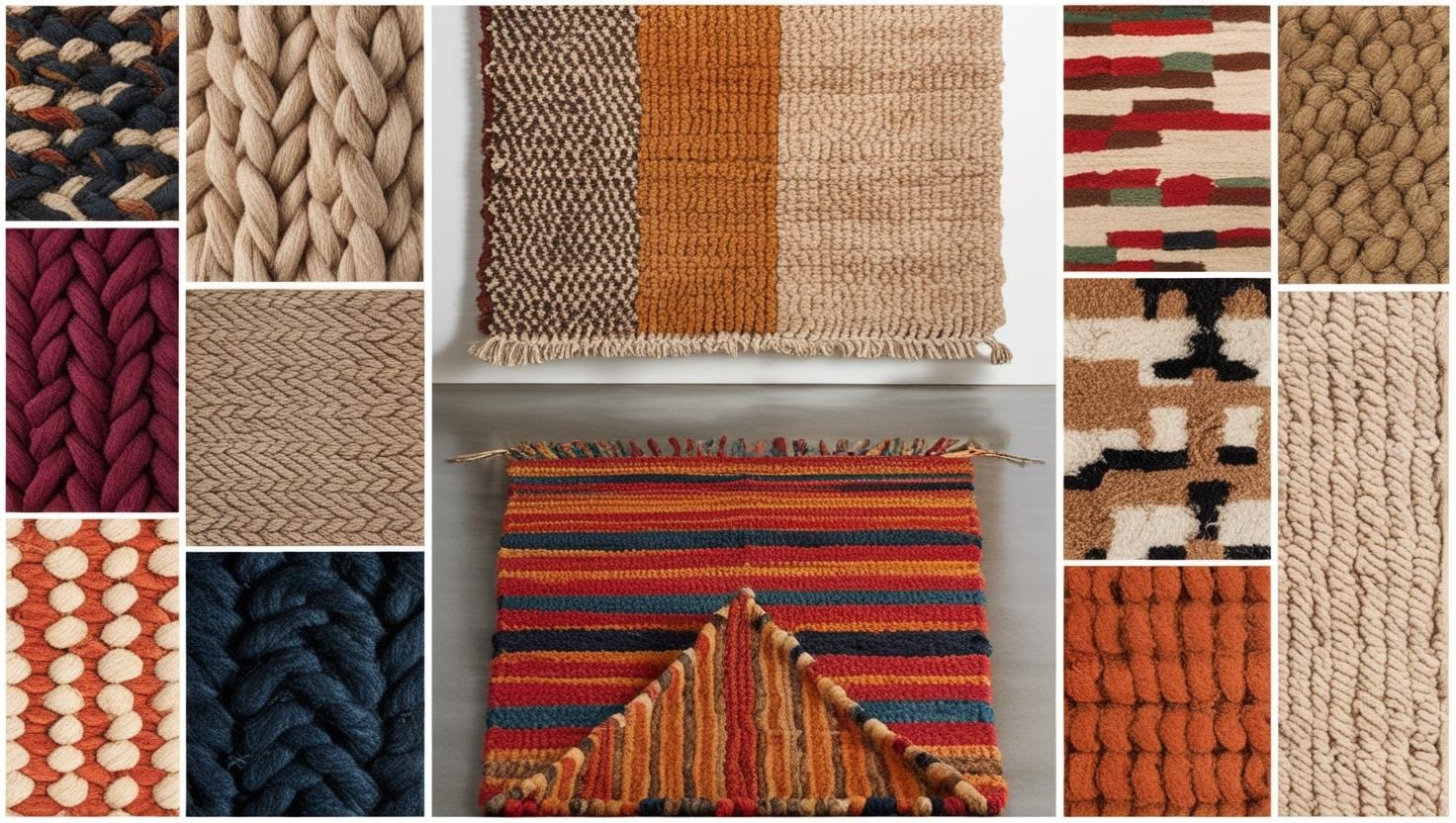
Choose the lowest, densest loop you can find, then pay attention to what goes underneath. Underlay is not optional on a Berber. It absorbs the impact of every footstep, which stops the backing breaking down, and extends the carpet's life more than any other single decision. Door bars stop the edge fraying at thresholds, and grippers hold it taut so it cannot shift and wrinkle.
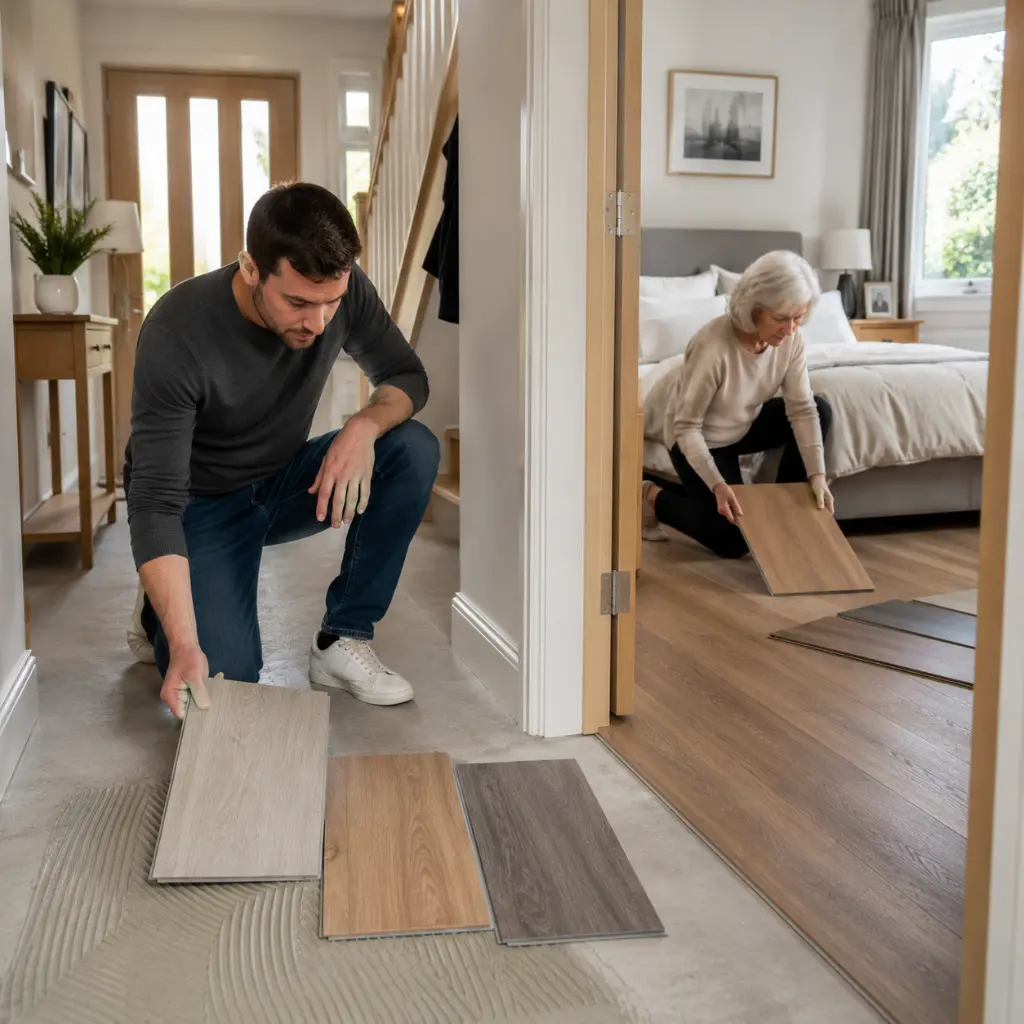
Berber carpet tiles suit offices and playrooms, since a ruined tile can be swapped rather than the whole floor. Whatever you choose, get samples into the actual room, because loop carpets photograph very differently from how they feel.
Berber's flecked neutrals are why it has never really gone out of style. The speckle does a job as well as looking good: mixed fibres break up how the eye reads the surface, which is what disguises wear. That is why darker, multi-toned Berbers work in the busiest rooms, while lighter shades open up quieter spaces where dirt matters less.
Speed matters more on a Berber than on any other carpet, because once liquid is inside the loops it is hard to get back out.
The same care applies to cleaning loop pile wool carpets generally.
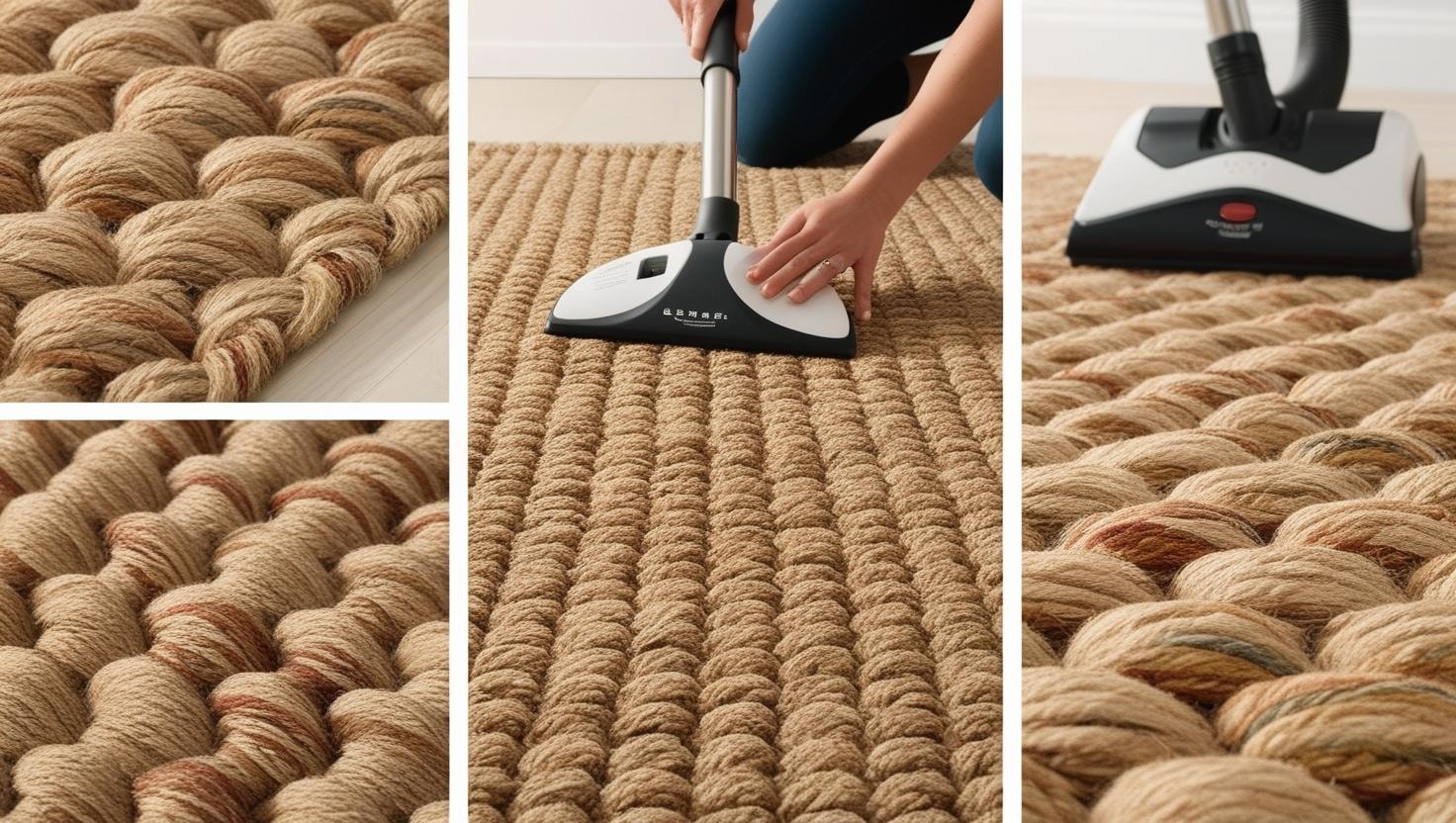
Day to day, one decision protects a Berber more than anything else: how you vacuum it. Set the head high, or use suction only with the beater bar switched off. A rotating brush dropped low onto a loop pile is the most common way people damage their own carpet, and the fuzzing cannot be undone.
Beyond that, vacuum the traffic lanes more often than the rest of the room, since grit under the loops wears the fibre from below. Keep pets' claws trimmed. If a loop pulls, do not tug it and do not vacuum over it. Snip it level with the pile using sharp scissors and it usually disappears.
Berber sits in the middle of the carpet market. A polypropylene Berber competes with the cheapest cut pile carpets, while a wool one costs about what a good wool twist does. The more useful comparison is not what it costs to buy but what it costs per year on the floor, and there Berber wins in a hallway and loses in a bedroom.
Underlay, grippers, door bars and fitting sit on top of the carpet itself, so ask for a fitted quote rather than a per-metre figure.
Usually, and more easily than people expect. Trim the pulled loop level with the surrounding pile using sharp scissors, then dab a little clear carpet adhesive at the base to stop it running further. What you must not do is pull it out, which unpicks the row.
It is one of the best choices for stairs, as the low loop grips underfoot and resists the wear on nosings that destroys plusher carpets. Have it fitted professionally, since loop carpet must be turned tightly over each nosing.
Yes, provided the carpet and underlay have a combined tog rating of around 2.5 or less. The low pile helps, as there is less material for heat to work through than with a deep cut pile.
Wool Berber is better than most people assume. The dense loop traps dust and pollen at the surface rather than letting it circulate, so a regular vacuum removes it.
Synthetics hold their colour well, and undyed wool is naturally resistant because the colour comes from the fibre rather than a dye. The flecked colouring also disguises gradual fading far better than a plain carpet.
Choosing a Berber is less about the carpet than about being honest about the room. Put it where feet, grit and mess are the enemy and it will outlast everything around it. Put it in a bedroom because it was durable and you will spend ten years wishing it were softer. If you're deciding between loop and cut pile carpets for your home, get in touch for a free, no-obligation quote