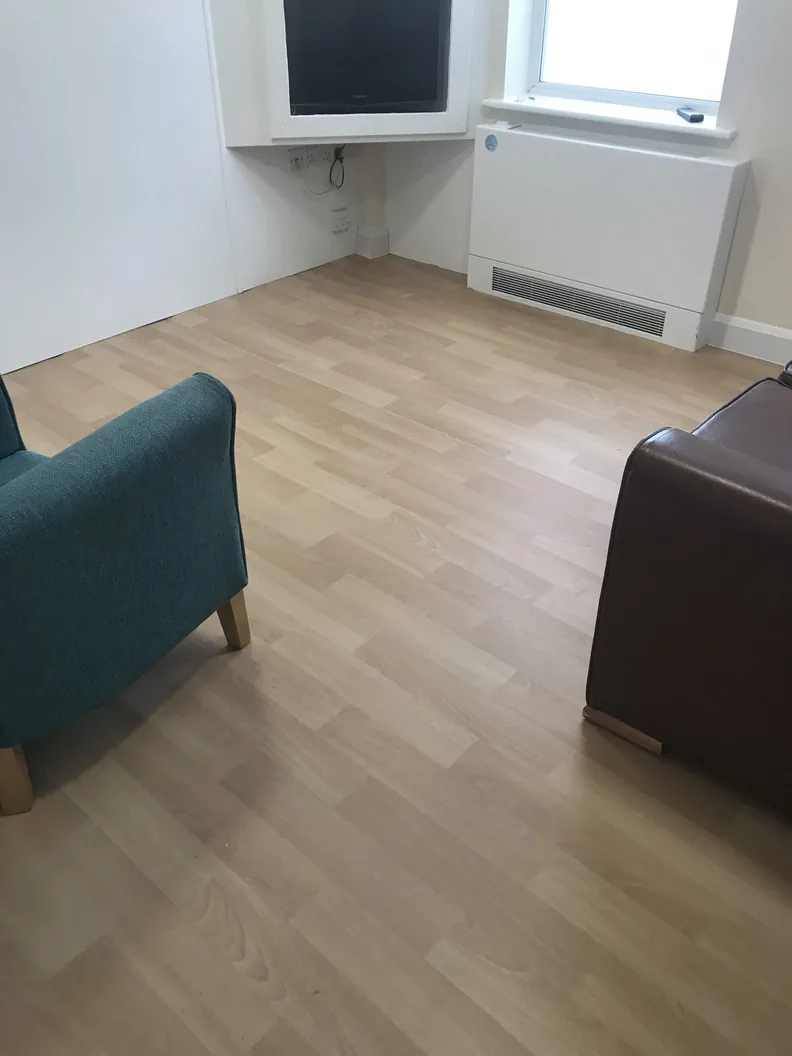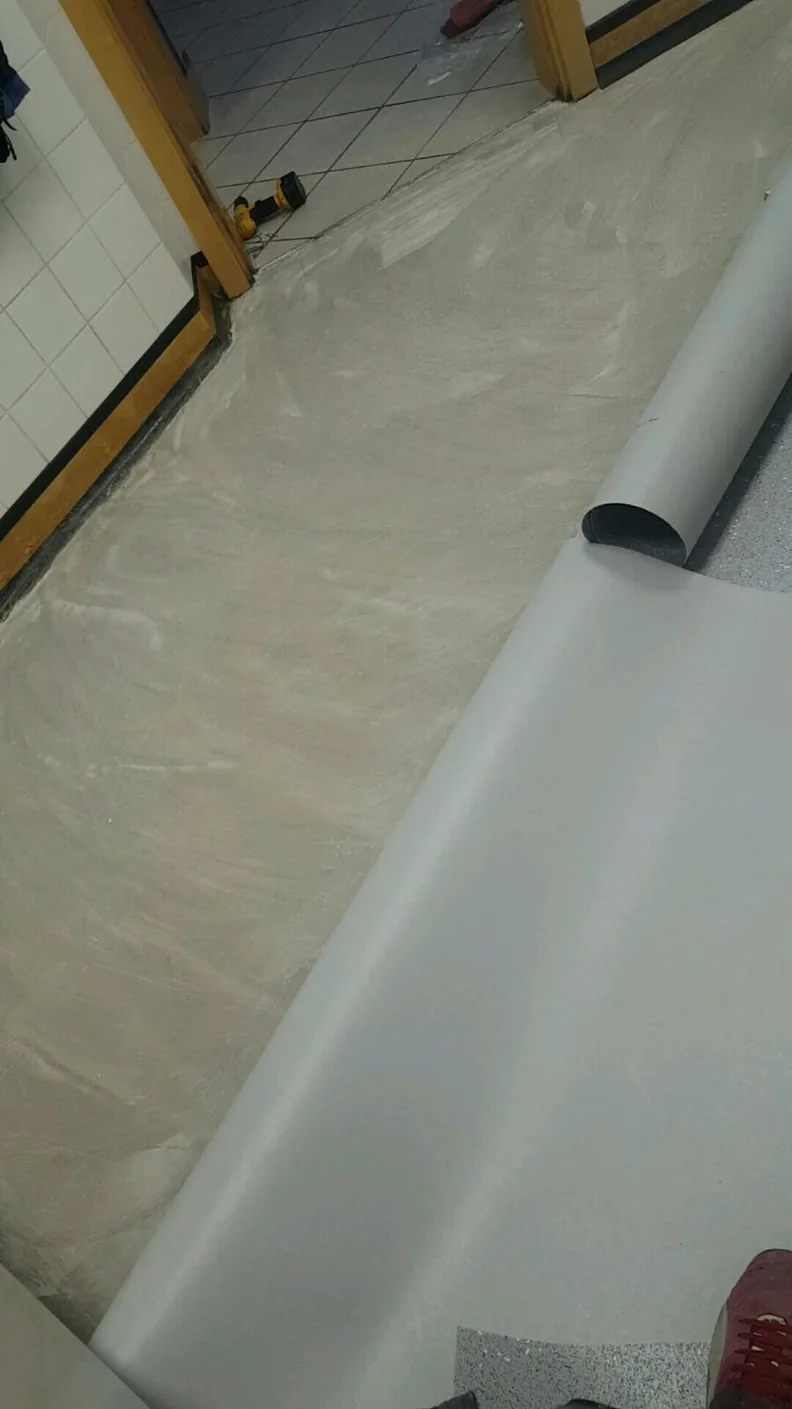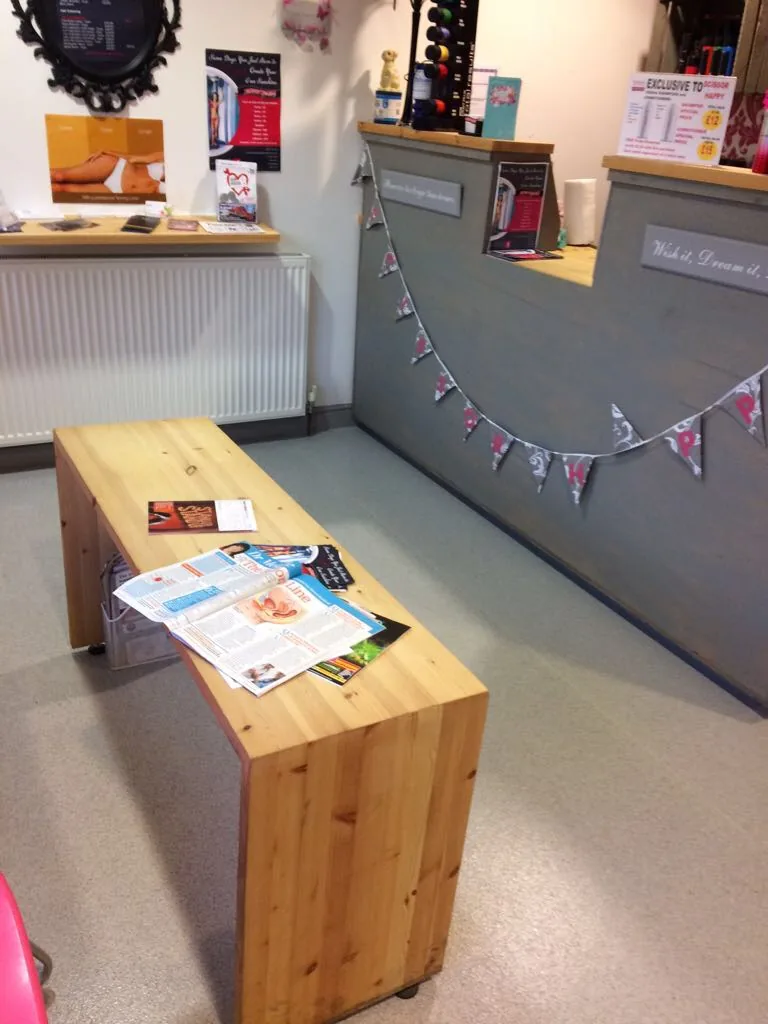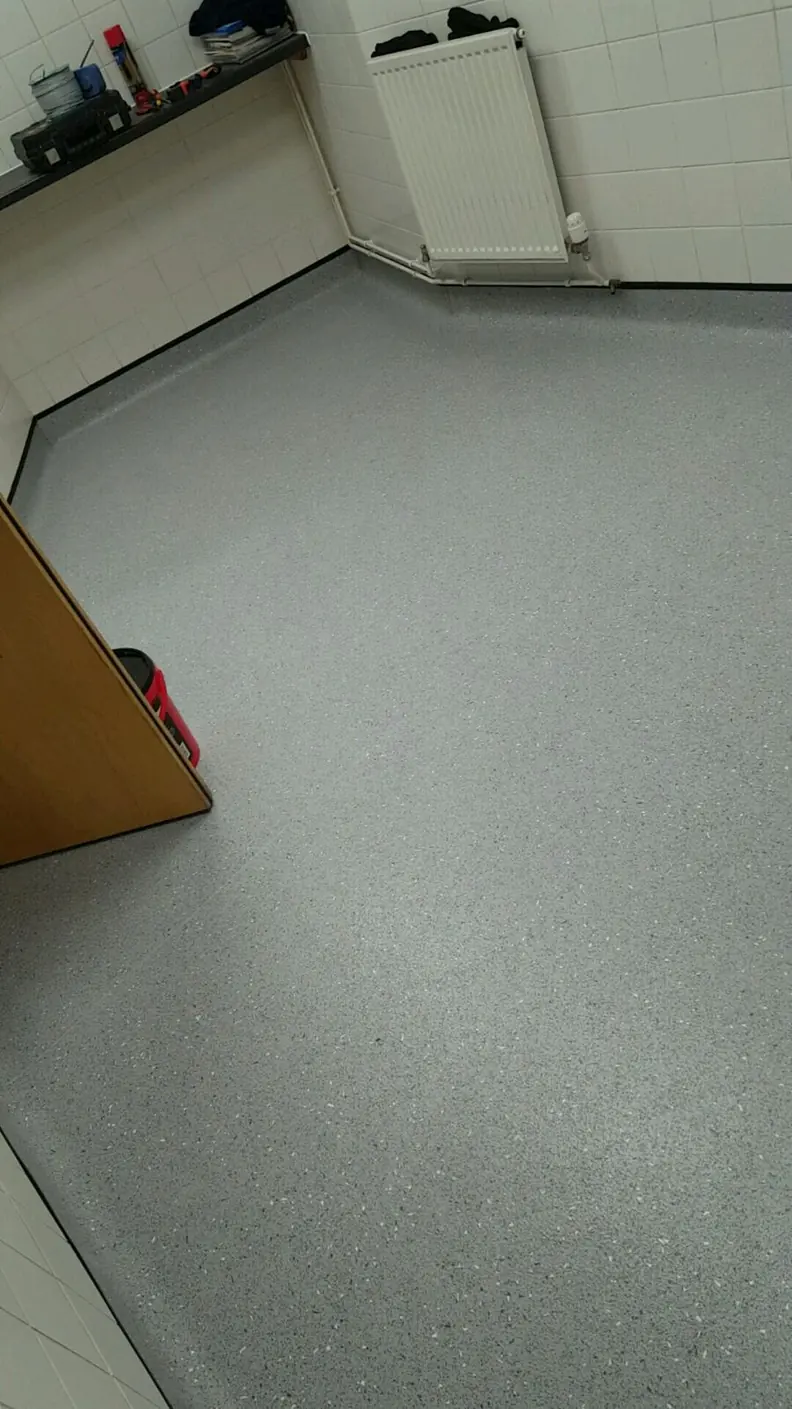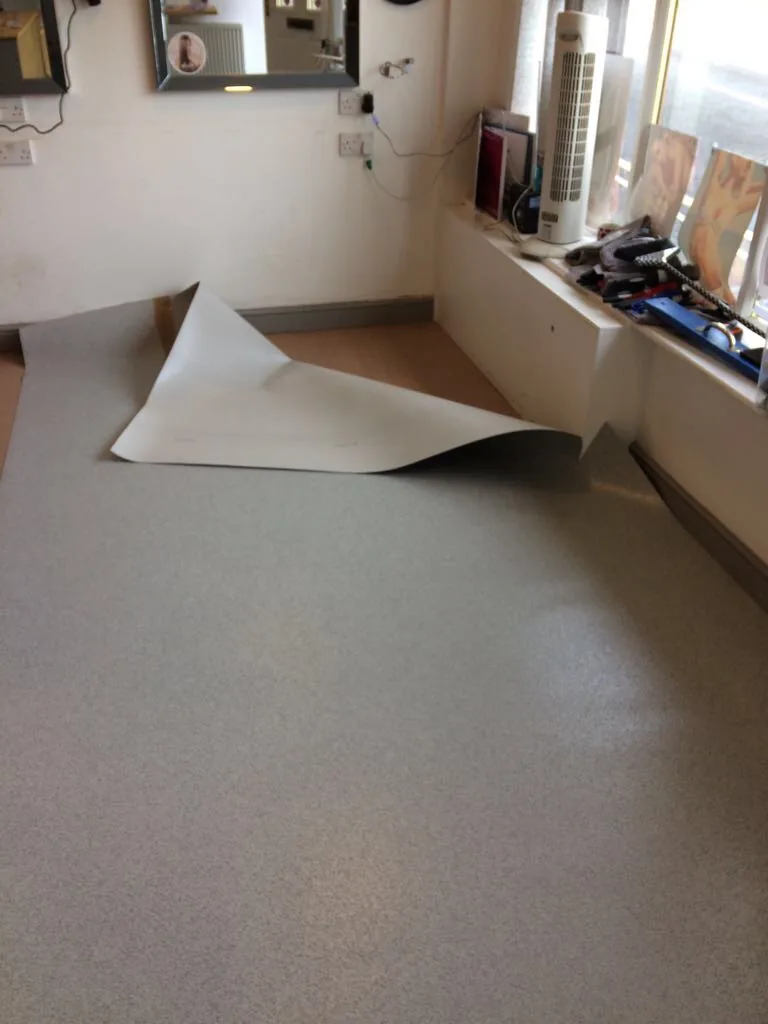
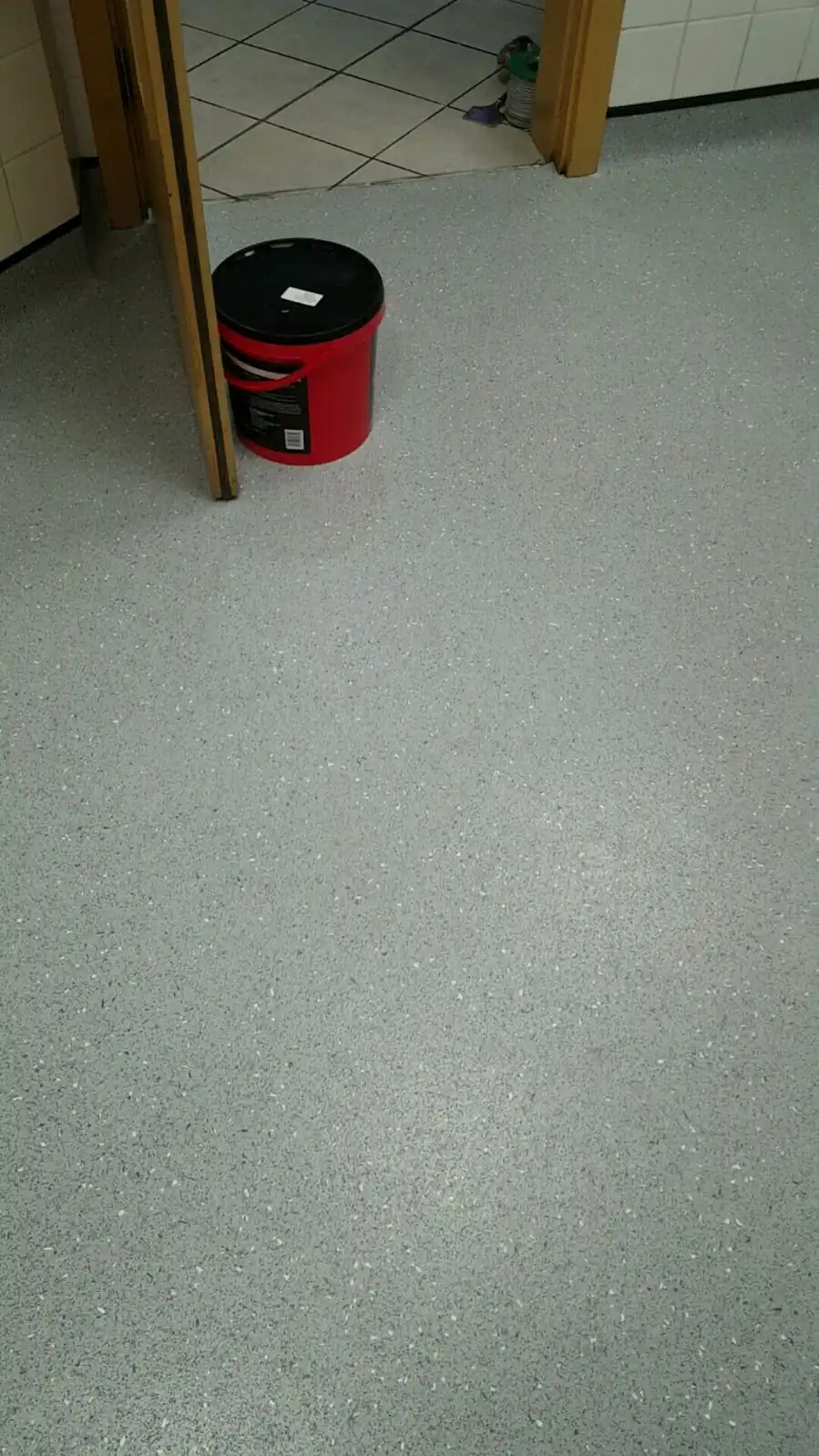
Safety flooring is a hard-wearing vinyl floor made to stay slip resistant, including when it is wet or greasy. It is easy to clean, which is why it is chosen for kitchens, toilets, nurseries, schools, care homes, leisure centres and other places where spills and heavy footfall are part of the day.
How is slip resistance measured? Two measures come up most. The R rating runs from R9 to R13 and comes from a ramp test, where a higher number means more grip. The pendulum test value, or PTV, is the method used in UK workplaces, and a PTV of 36 or more in the wet is widely used as the benchmark for a low slip risk. The two measure different things, so they cannot be swapped for each other. Treat these as general guidance and check them against your own risk assessment.
Which rating do I need? It depends on what ends up on the floor. A dry corridor, a wet kitchen and a greasy commercial kitchen each call for a different level of grip. The rating belongs to the individual product, not to safety flooring as a whole, so ask us for the slip rating of any floor you are considering.
Is it only for workplaces? No. A kitchen, utility room or bathroom at home can use the same type of floor, and there is a choice of styles. Our commercial and safety flooring guide helps you choose for a workplace, and our post on what safety flooring is goes further.
How do I keep it clean? Regular sweeping and the right cleaner keep the surface grip working. Our guide to cleaning safety flooring explains how.
How do I get a quote? We supply and fit safety flooring. Book a free visit and we will look at the space, talk through the options and give you a quote with no obligation.
Commercial and safety flooring guide | Book a free visit | Call 0800 920 2092