
Introduction
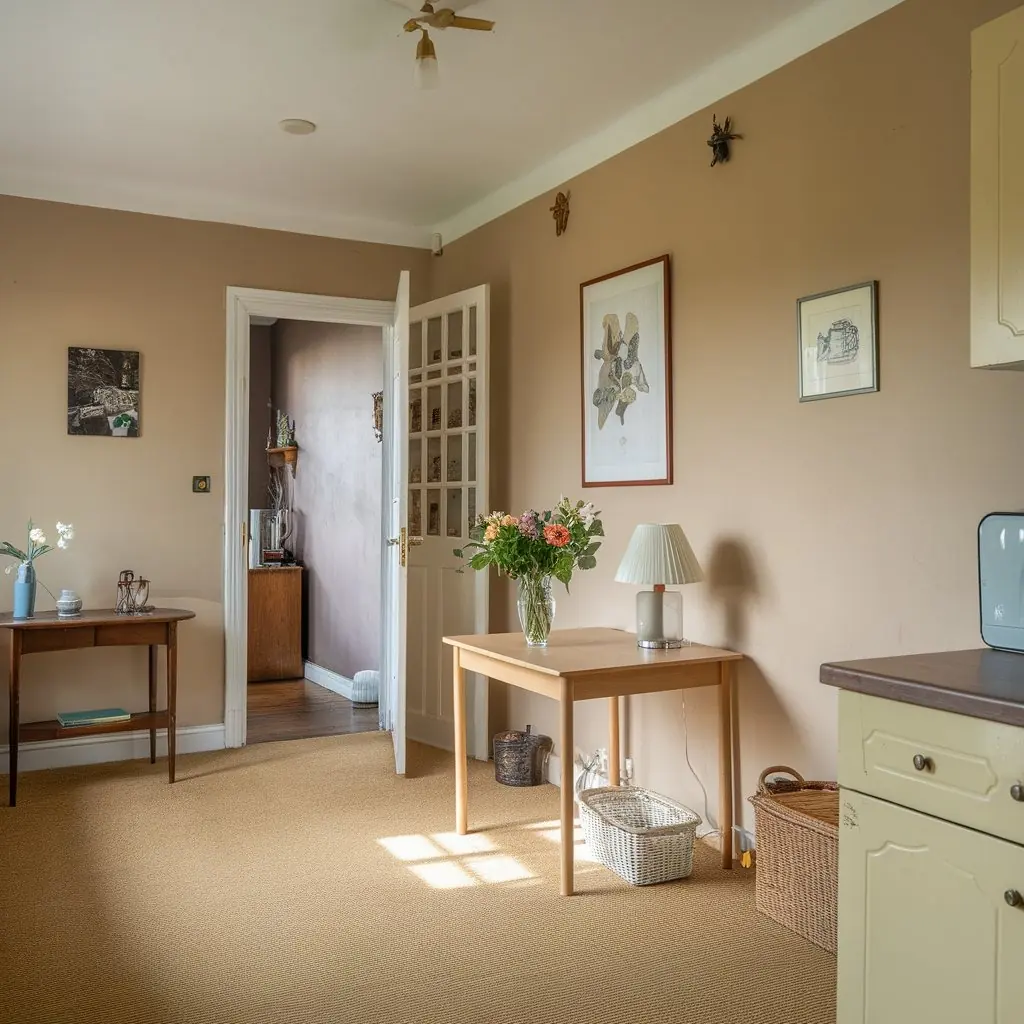
Choosing flooring for a kitchen can feel surprisingly complex, especially when comfort and practicality matter just as much as appearance. Understanding which carpet is best for kitchen use helps avoid costly mistakes and disappointing wear over time. With the UK’s variable climate and the kitchen often being the busiest room in the home, flooring choices need to balance warmth, durability, and easy care. From family homes to smaller flats, the right kitchen carpet can soften hard surfaces while still standing up to daily wear and tear. With thoughtful material selection and professional installation, carpet can be a practical, stylish solution rather than a risky one.
Can You Put Carpet in the Kitchen?
Many UK homeowners are surprised to discover that carpet can be used in a kitchen when the right type is chosen. Traditional deep-pile carpets struggle in these environments, but modern low-profile options are designed to cope with everyday kitchen use.
UK kitchens experience frequent temperature shifts, humidity, and occasional spills. That makes material choice critical. A well-fitted, purpose-made kitchen carpet can provide warmth underfoot, reduce noise, and improve comfort without compromising hygiene or durability.
Is Carpet in a Kitchen a Good Idea for UK Homes?
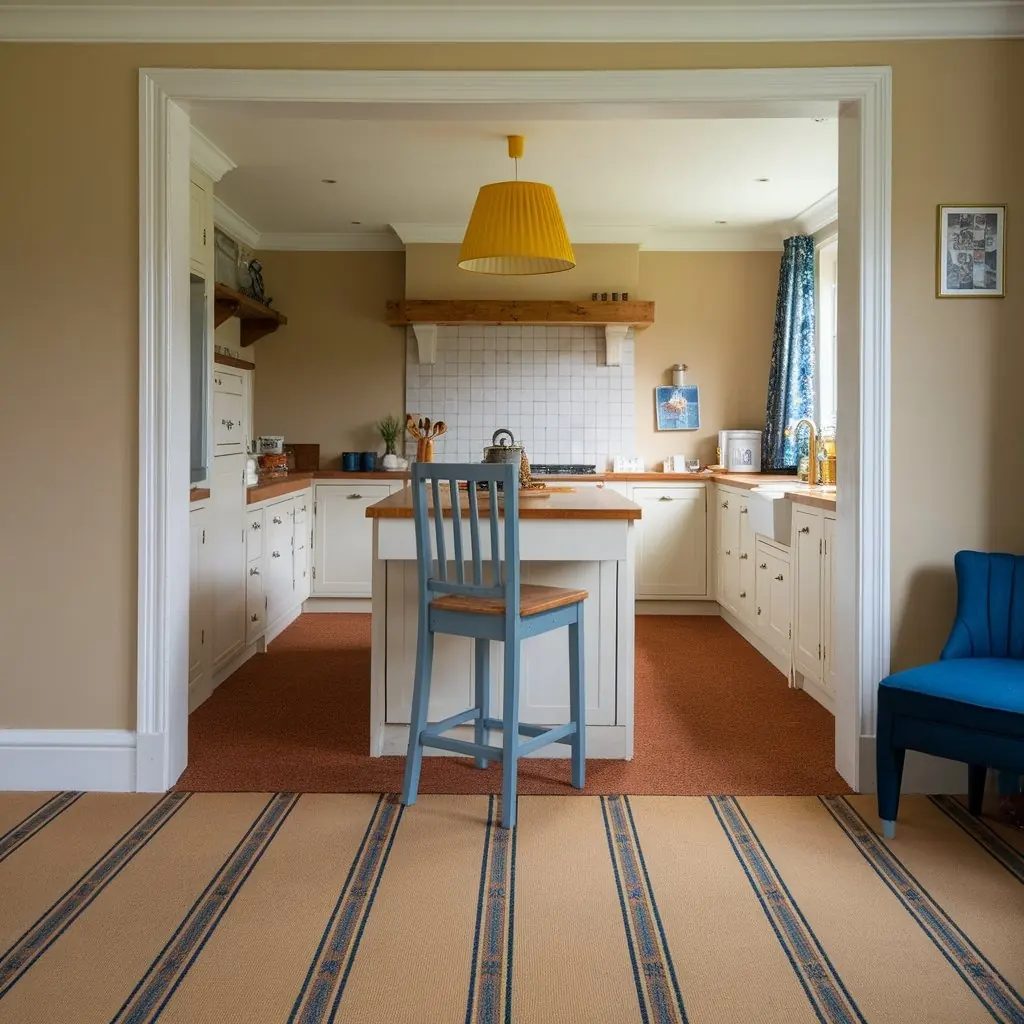
In open-plan homes, carpeted kitchen zones help visually connect living areas while creating a softer, more welcoming feel. For households with young children or elderly residents, carpet offers added grip and comfort. It’s reassuring to know that stain-resistant fibres and washable designs can handle splashes and crumbs, provided spills are dealt with promptly, and a professional fitting ensures proper edge sealing.
Is Carpet a Good Choice for Kitchens in UK Homes? 3
Managing Moisture and Spills in Kitchen Carpeted Areas
Even minor moisture issues in kitchens, if ignored, can damage flooring. That’s why professional installation matters. Correct underlay selection and sealed edges help protect against moisture ingress.
Using kitchen carpet with a non-slip backing, or pairing carpet with anti-slip mats near sinks and appliances, helps improve safety in high-use areas while also extending the carpet’s lifespan.
Kitchen Carpet for High Traffic Areas
Kitchens see constant footfall, making durability essential. Kitchen carpet for high traffic areas should resist flattening and wear without losing comfort.
Low-loop or commercial-grade styles maintain their structure longer and suit busy family homes. Many UK households also choose cut to size kitchen carpet or kitchen runner carpet to protect walkways while keeping the space practical and stylish.
Washable and Easy-to-Clean Kitchen Carpet Options
Washable designs have transformed perceptions of kitchen carpet. Washable kitchen carpet and removable carpet tiles allow for quick, straightforward cleaning without the need for specialist equipment. These options suit households that cook daily or entertain often, offering reassurance without sacrificing warmth or comfort underfoot.
Carpet Tiles for a Kitchen
Carpet tiles suit a kitchen for the reasons above, and one more: if a tile is stained or damaged, you replace that tile and leave the rest of the floor alone. They also soften sound and feel gentler underfoot than a hard floor when you stand to cook. Many carpet tiles are stain-resistant, but they are not waterproof, so spills still need clearing promptly. A hard floor such as vinyl or tile is the more moisture-proof option, and our kitchen flooring page shows what else is available.
Choosing Kitchen Carpet Tiles
- Pile: a dense loop pile, often nylon, is hard-wearing and copes with damp better than a plush cut pile. Our guide to twist and other pile styles explains the difference.
- Backing: look for a robust backing that resists moisture. A thicker backing adds comfort and durability.
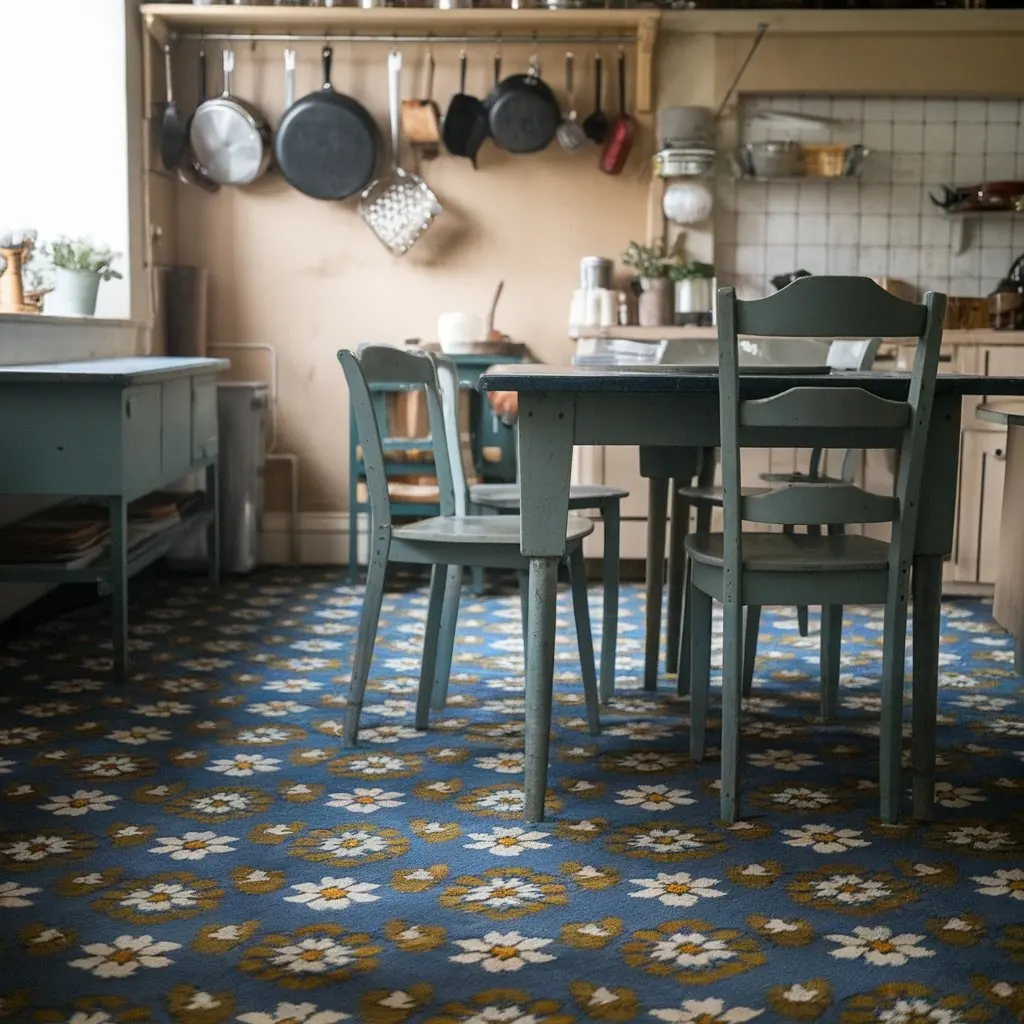
- Colour and pattern: darker shades and patterns hide marks better than pale plain colours.
- Samples: judge the thickness, weight and quality of the pile and backing for yourself. Our Home Showroom service brings samples to your kitchen.
Laying Carpet Tiles
Fitting is straightforward when the preparation is right, and we can fit them for you. If you are laying them yourself, the order is:
- Clear the floor of dust, debris and old adhesive, and check that it is level and dry. A self-levelling compound deals with uneven areas, and excess moisture can stop the adhesive working, so let the floor dry fully after cleaning. If you are lifting an old carpet first, see how to remove carpet from concrete.
- Leave the tiles in the room to acclimatise, and plan the layout so you cut as few tiles as possible.
- Start in the centre of the room and work outwards, using chalk lines as guides. Whole tiles then sit in the most visible places, and the cut tiles end up at the edges, where cupboards and appliances hide them.
- Apply the adhesive exactly as the manufacturer directs, press each tile firmly into place and align it with the chalk lines. Our guides show how to fit carpet tiles and how to cut carpet tiles accurately for edges and corners.
Skipping the manufacturer's guidance on adhesive and preparation is a common cause of weak adhesion and gaps between tiles.
Caring for Kitchen Carpet Tiles
Vacuum often to lift crumbs and grit before they work into the fibres. Blot a spill straight away with a clean cloth and avoid rubbing, then dab with cold water and pat dry. Use a cleaner made for carpet tiles, and call a professional cleaner for a stain that will not shift. You can also swap tiles from busy spots, such as in front of the cooker or sink, with tiles from quieter areas to even out the wear. Our guide to the types of carpet tiles shows what is available.
Decorative and Practical Kitchen Carpet Styles
A decorative kitchen carpet doesn’t need to compromise on practicality. Subtle patterns can help disguise everyday marks, while textured finishes add visual interest without overwhelming the space.
Some homeowners choose cotton rugs for kitchens or natural fibre kitchen rugs in seating or dining zones, combining style with function when positioned away from cooking and preparation areas.
Can a Commercial Kitchen Have Carpet?
In domestic settings, kitchen carpet can work well when chosen carefully. However, whether a commercial kitchen can have carpet is a different matter. Commercial kitchens generally require hard, washable flooring to meet hygiene and food safety standards.
That said, staff rooms or break areas adjacent to commercial kitchens can benefit from carpet, offering improved comfort and noise reduction.
Is Carpet a Good Choice for Kitchens in UK Homes? 4
Prefer a hard floor in the kitchen? See our kitchen flooring page.
Conclusion
Understanding what carpet is best for kitchen use helps UK homeowners make informed, practical choices. Whether considering wool and synthetic carpet options, the right materials, professional installation, and thoughtful placement all play a role in achieving the best result. With careful selection, kitchen carpet can offer warmth, comfort, and durability even in busy homes. Floor Coverings Local provides tailored flooring solutions designed around UK living conditions, ensuring each installation balances style with long-term performance.
Book your consultation with Floor Coverings Local to discover safe, effective flooring solutions for your home or business today.
Worth a look next: Best Kitchen Flooring Options and How Long Do Washable Bathroom Carpets Last.

