Laminate flooring acclimation means letting your new boards settle in the room where they will be fitted, so they adjust to its temperature and humidity first. Skipping it is one of the most common causes of gaps, buckling and creaks later, and it only takes a couple of days to get right.
Your new laminate has arrived, the boxes are stacked in the hallway, and you are itching to start laying it that same afternoon. It is a completely understandable urge, and one our flooring team in Rotherham talks homeowners out of all the time. Rushing this stage is one of the quickest ways to end up with a floor that gaps or lifts a few weeks down the line.
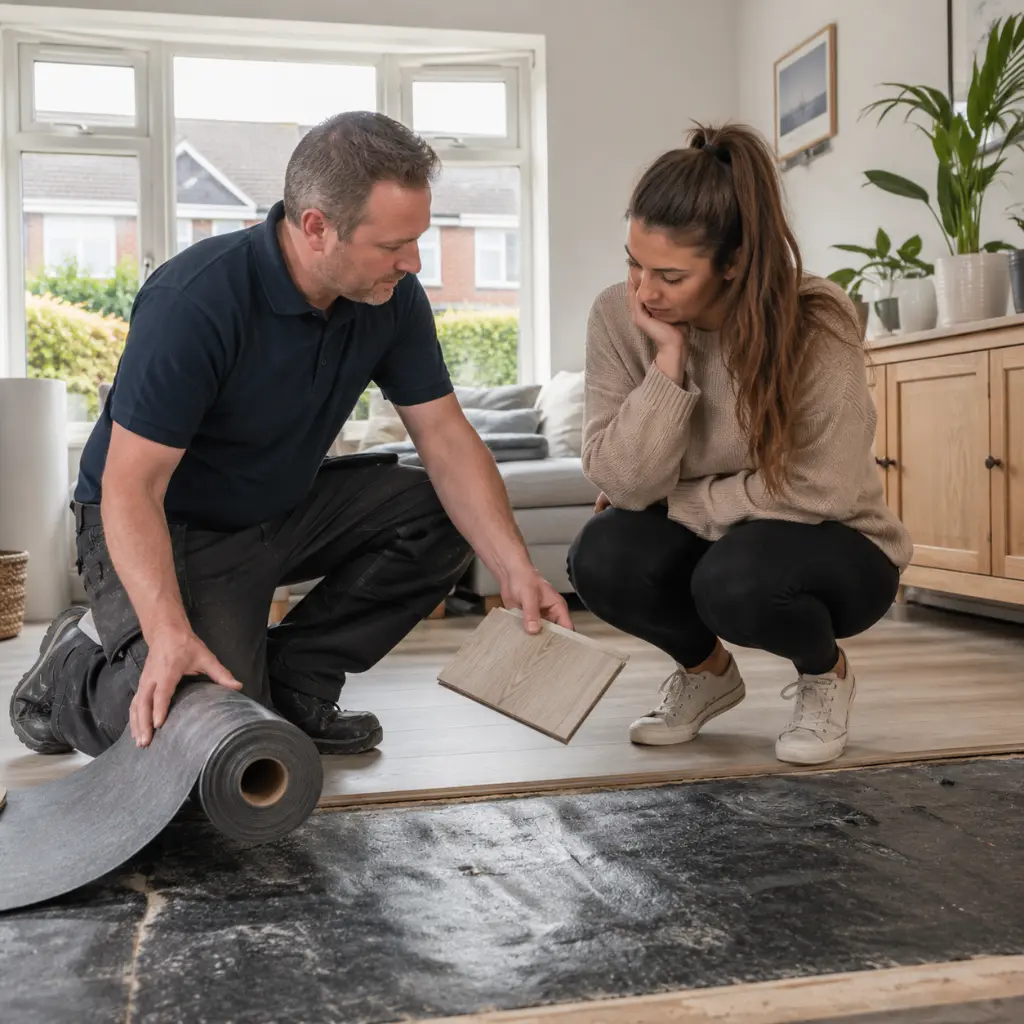
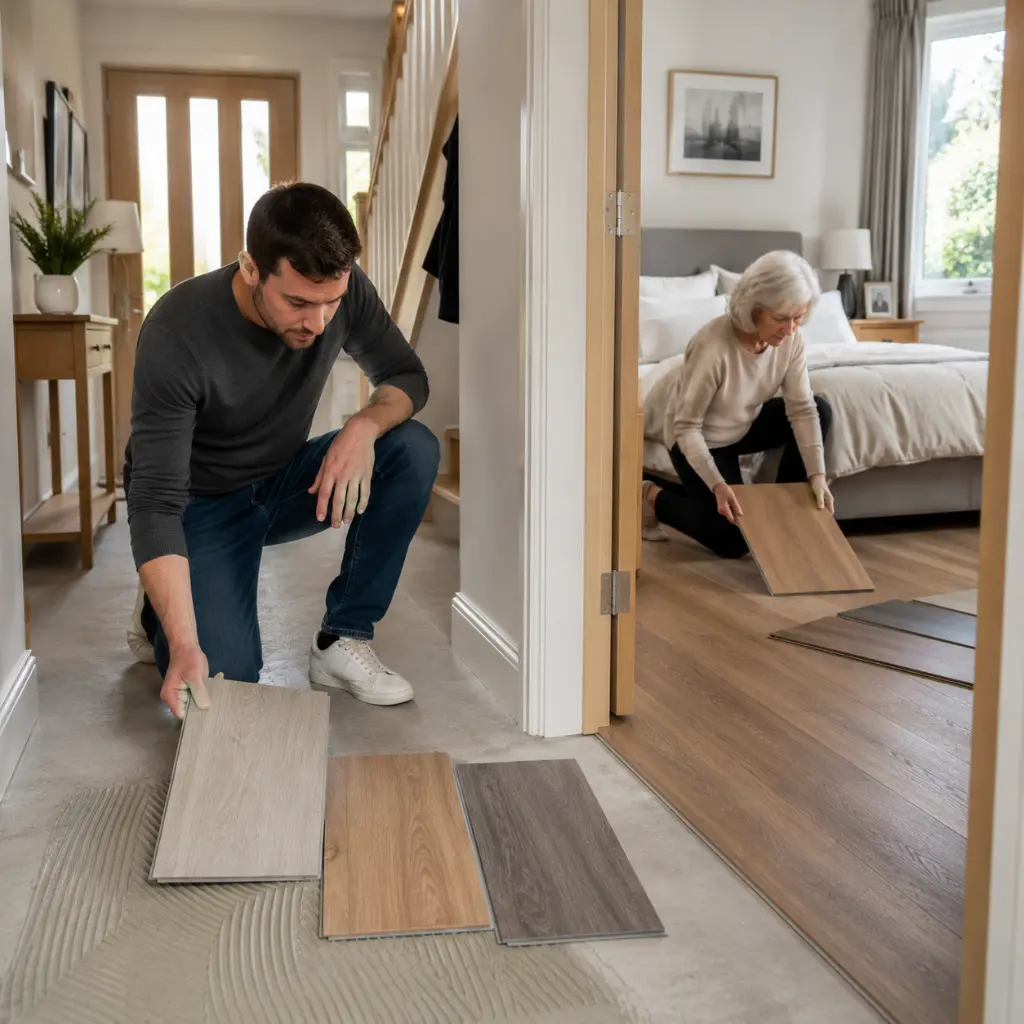
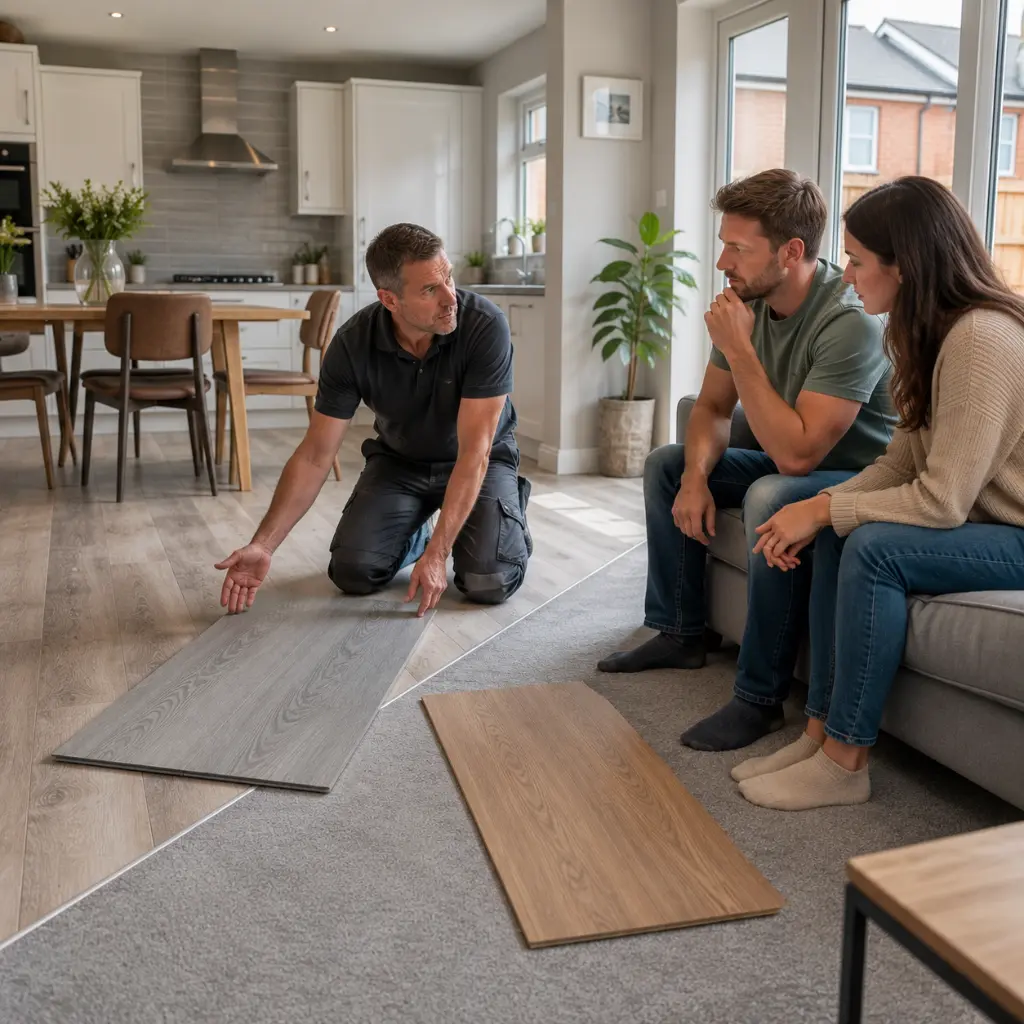
If you haven't settled on a laminate yet, a mobile flooring showroom lets you compare samples in the same room your new floor will eventually be fitted so acclimation can start the moment you decide.
Acclimation is the process of letting your laminate adjust to the temperature and humidity of the room before it is fitted. In plain terms, the boards need to get used to their new home.
Laminate has a core made from HDF, which is a dense, compressed wood fibreboard. Like anything with wood in it, that core expands slightly in warm or humid air and shrinks when it is cold or dry. Left to settle first, the boards reach a stable size, so they stay put after fitting.
When boards are fitted straight from a cold van or a chilly warehouse, they are not yet the size they will settle at. Once they warm up to room temperature, they expand. With nowhere to go, that pressure pushes the joints upward, and you get peaking or buckling.
The opposite happens too. Fit boards that are damp or swollen, and as they dry out and shrink, you are left with gaps between the planks. Acclimatising laminate flooring first lets this movement happen before the floor is locked together, not after.
If all this moisture sensitivity sounds like more hassle than you want, it's worth comparing SPC and LVT flooring both are far more dimensionally stable and need little to none of this waiting stage.
There is also the click-lock system to think about. Boards that are still moving do not seat together as cleanly, which can lead to creaks and joints that work loose over time.
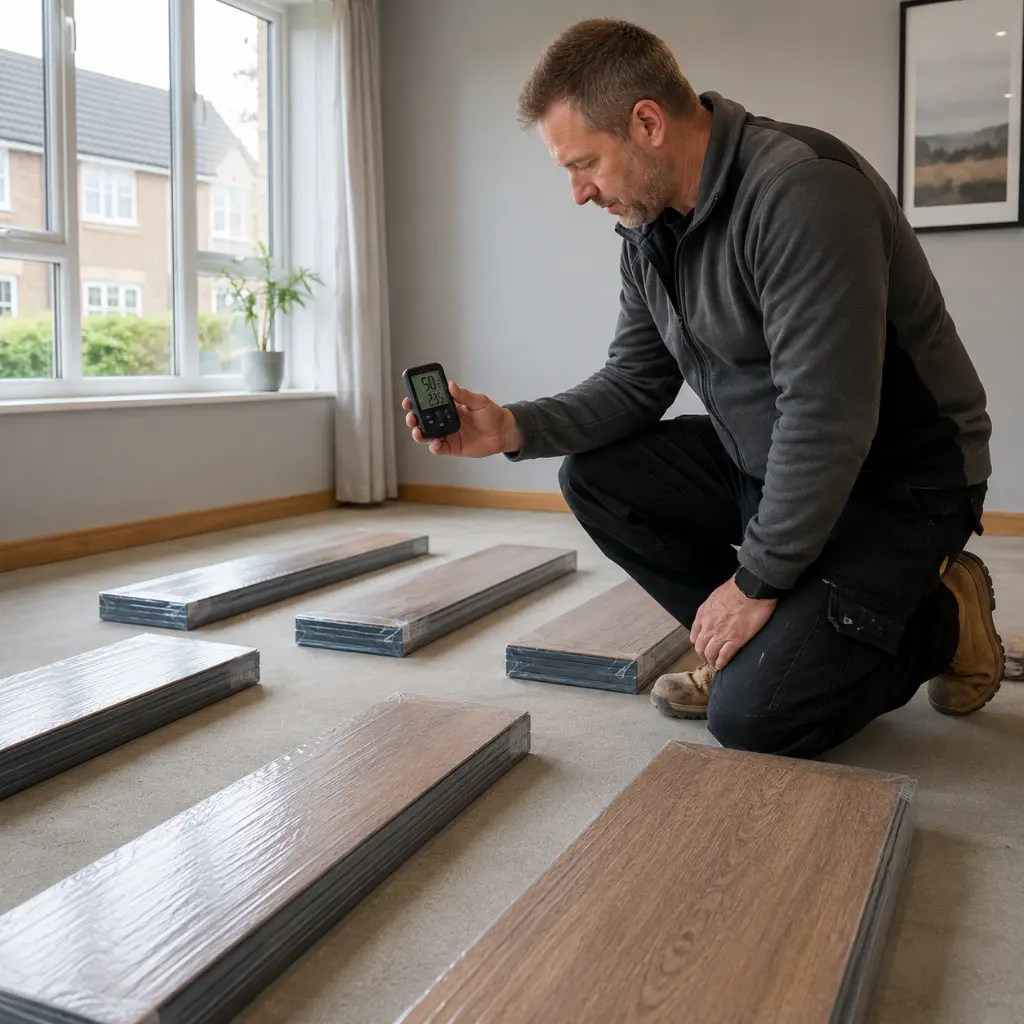
As a general guide, most laminates need somewhere around 48 hours in the room before fitting. Some products are happy with 24 hours, while others ask for up to 72. Always check the guidance that comes with your particular flooring, as it varies between ranges.
A little extra patience helps in certain situations. New build homes, rooms that have recently been plastered, and South Yorkshire's damp, changeable weather can sometimes mean leaving the boards slightly longer to acclimatise.
The good news is that acclimation asks very little of you. It is mostly about getting a few conditions right and then leaving the boxes alone.
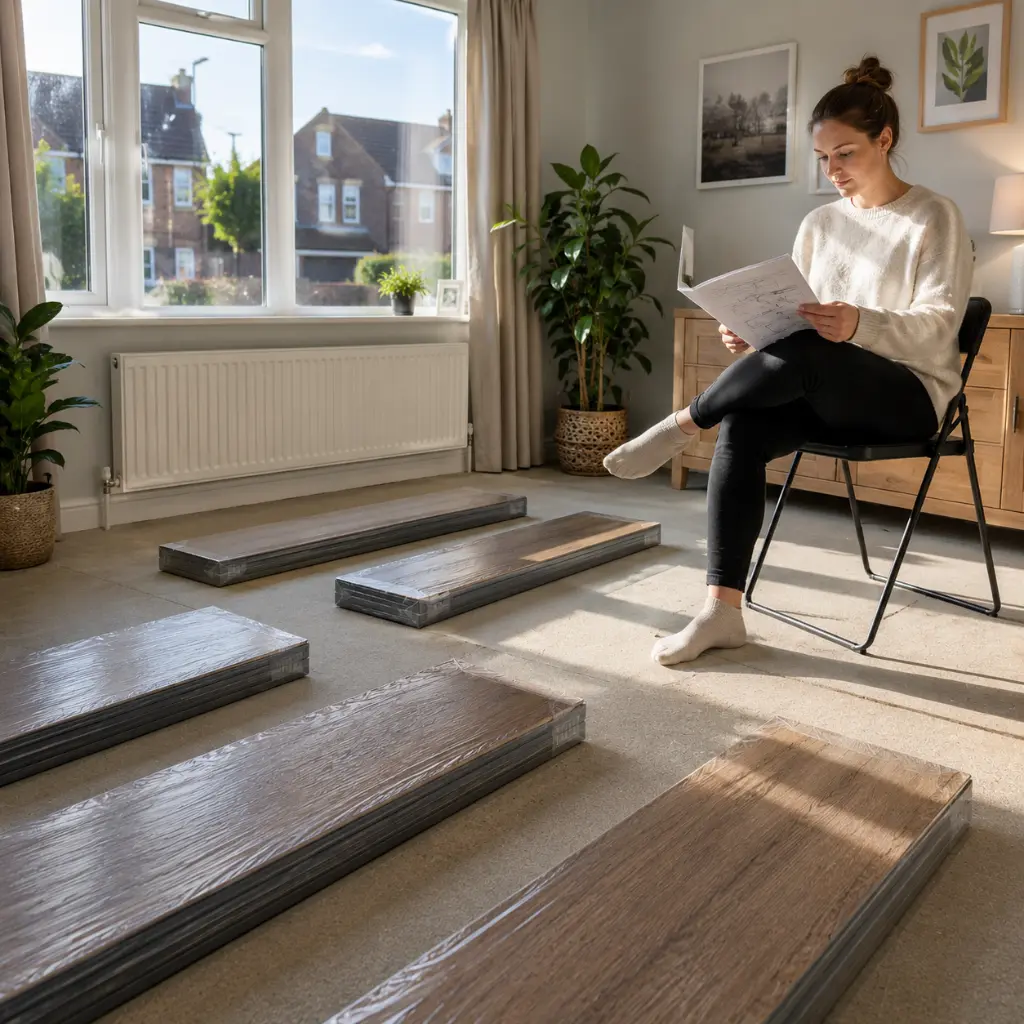
Store the packs in the exact room where the floor will be fitted, not a garage, conservatory or shed. Those spaces swing between hot and cold, and their damp air will not match the room you are flooring. The boards need to adjust to where they will actually live.
Lay the boxes flat on the floor with a small gap between them so that air can move around each one. Do not stand them on their edges or lean them against a wall, as this can bow the boards. Keep them in their original packaging too, so every board in the pack settles at the same rate.
Aim for a normal, lived-in room temperature, typically somewhere around 18 to 24 degrees, with moderate humidity. If the room has heating or underfloor heating, have it running at a steady setting for a few days beforehand. The idea is for the boards to settle in the same conditions the floor will face day to day.
Fresh plaster, screed or paint all release moisture into the air. Give that work plenty of time to dry out fully before you start the acclimation clock. Otherwise, the boards will be adjusting to damp conditions that will not last.
Over many years of fitting floors, the same few slip-ups come up again and again. The most frequent is storing the laminate somewhere convenient rather than somewhere correct, like a cold garage overnight.
Others open the packs early to admire the planks, which lets the outer boards adjust faster than the ones in the middle. Standing upright to save space is another, as is starting to lay the flooring straight after delivery on a wet day. A homeowner recently asked us why a previous floor had lifted, and it turned out the boards had gone down the same afternoon they arrived, still cold from the van.
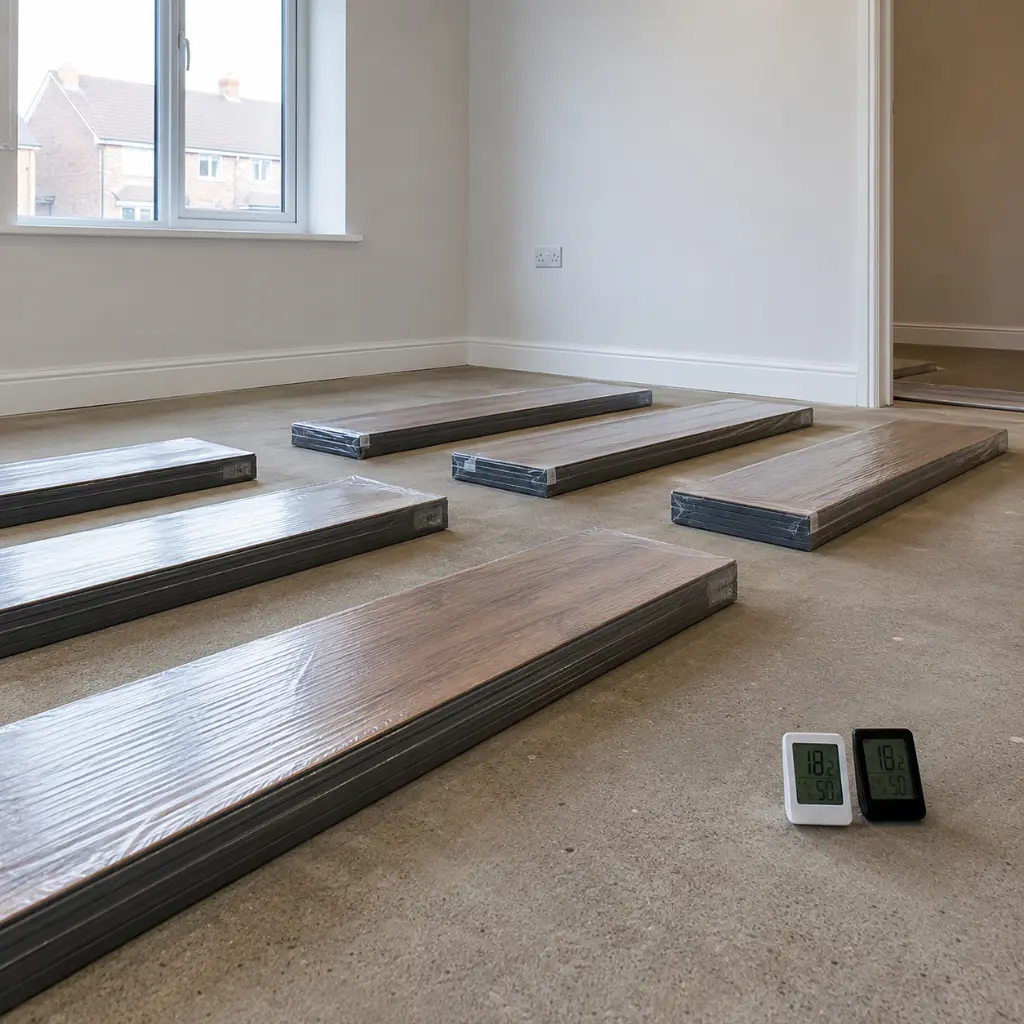
Acclimation and subfloor prep go hand in hand. While the boards settle, it is worth checking that the surface underneath is clean, level and dry.
Concrete subfloors in particular can hold moisture, so a damp proof membrane or suitable underlay is often needed. Fitting over a damp or uneven base undoes all the care you put into acclimatising the boards.
Skipping the step does not always show straight away, which is what makes it so tempting to ignore. The problems tend to appear in the weeks after fitting instead.
Expect gaps opening between planks, edges lifting or peaking, and a floor that creaks or feels springy underfoot. In the worst cases, the boards have to be lifted and relaid, which turns a saved afternoon into a much bigger job.
Homes around Rotherham come in all shapes, from older terraces with solid floors to newer builds on modern subfloors. Each brings its own quirks when it comes to moisture and temperature, which is exactly why acclimation is never a step to skip locally.
The wider South Yorkshire climate does not help either, with plenty of damp spells through the year. Giving your laminate time to settle in these conditions is one of the simplest ways to protect your new floor.
Acclimation is the least glamorous part of a flooring project and the easiest to skip. It is also one of the cheapest forms of insurance you will ever give a new floor.
Give your boards their couple of days, get the conditions right, and you have done the hard part before a single plank goes down. If you would rather leave the timings and subfloor checks to someone else, our team folds all of it into a supply and fit service so every stage, from acclimation to installation, is handled correctly.