Click LVT floats over the subfloor and snaps together, while glue-down LVT is bonded down with adhesive. Click is quicker and more forgiving over a less-than-perfect subfloor, while glue-down feels more solid and suits busy, larger rooms. The right method depends on your subfloor, the room and how the floor will be used.
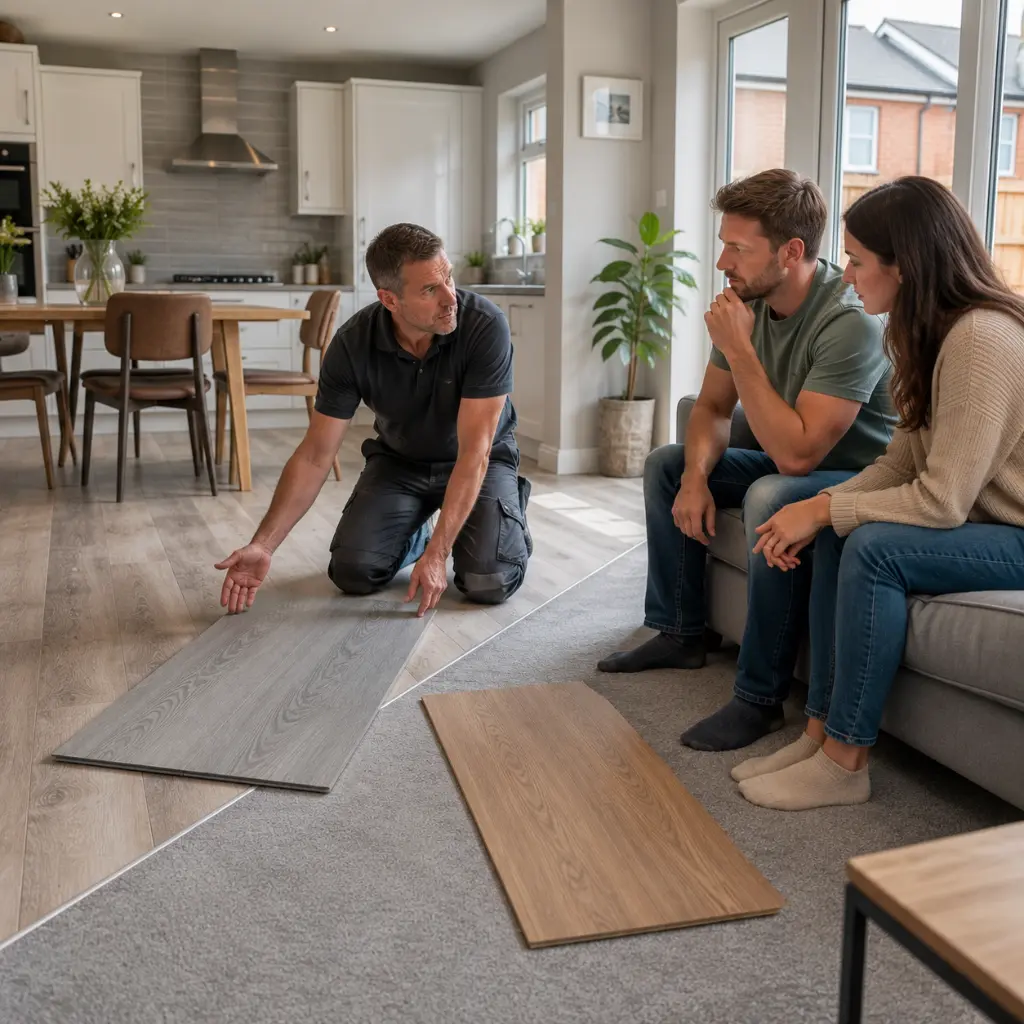
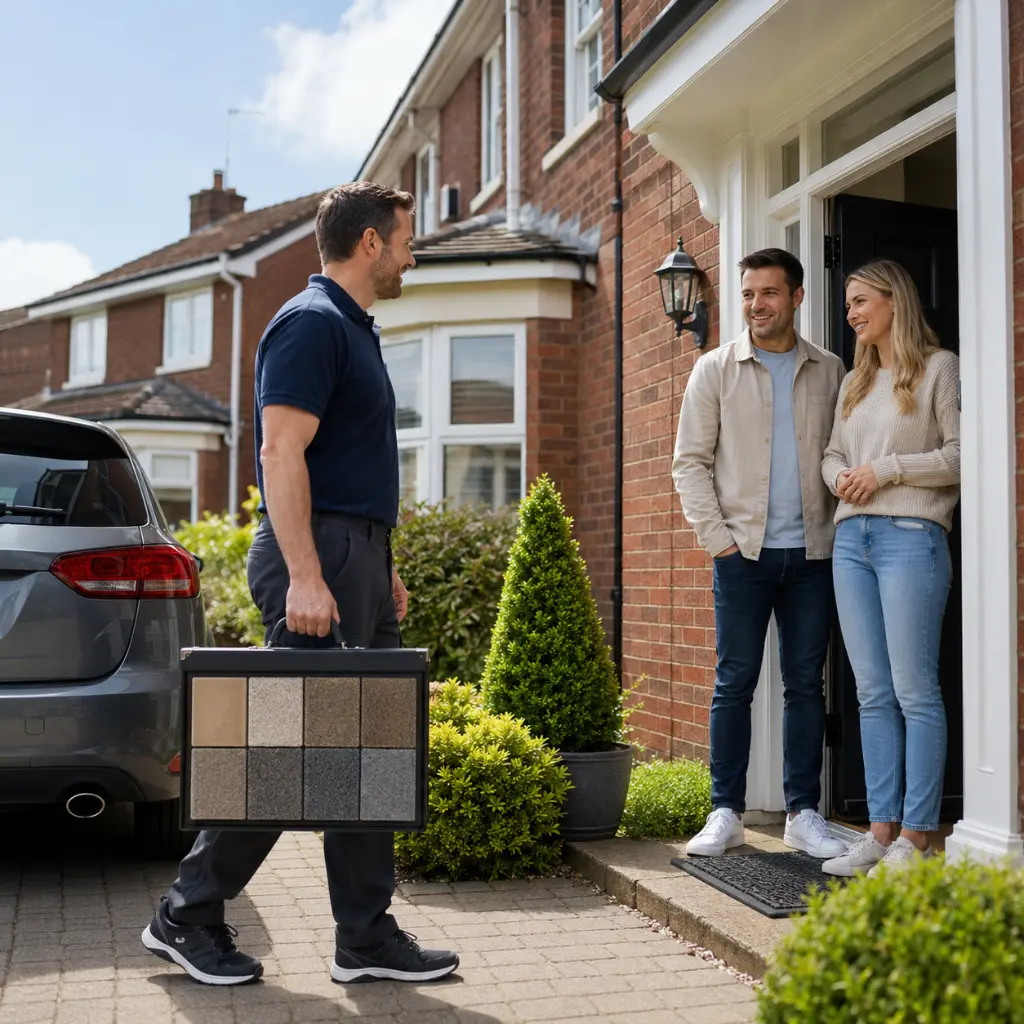
So you have settled on luxury vinyl tile, or LVT, for your new floor. Then comes the question that catches most people out, click or glue-down. Both use the same planks, so the difference is all in the fitting, and our flooring help for Rotherham homes can show you both in the room itself.
If you're still weighing up SPC against LVT, though, it's worth comparing SPC and LVT flooring before you get this far; the click vs glue-down question only comes up once LVT is the plan.
Choosing click LVT flooring or a glue-down finish is not about one being better than the other. It is about matching the method to your subfloor, your room and your plans. Here is how the two compare in plain English.
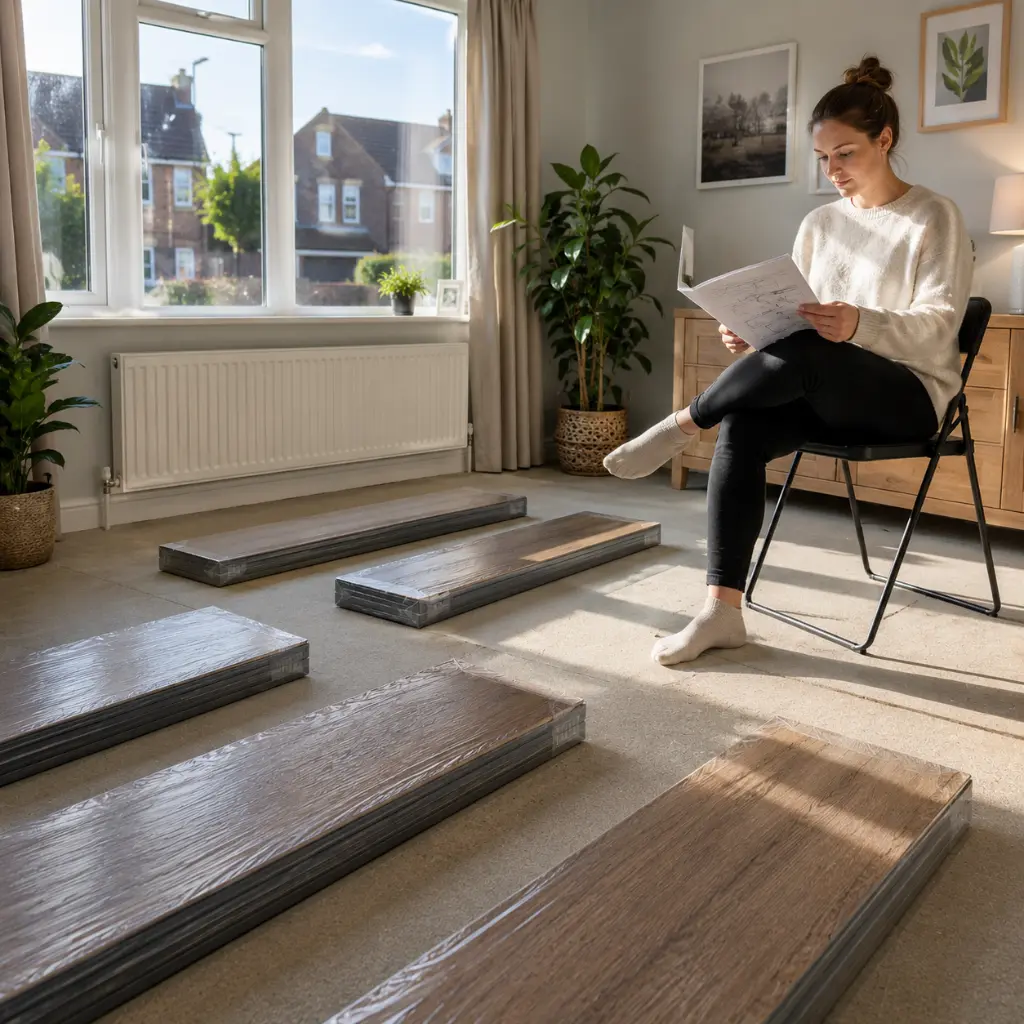
Click LVT is fitted as a floating floor, which means the planks lock together and simply sit on top of the subfloor rather than being stuck down. The edges use a click-lock system, a bit like laminate, so no adhesive is needed.
Because it floats, click LVT is quicker to lay and generally easier to repair or replace later. It is usually a little thicker than glue-down LVT and often works with an underlay for extra comfort and sound reduction.
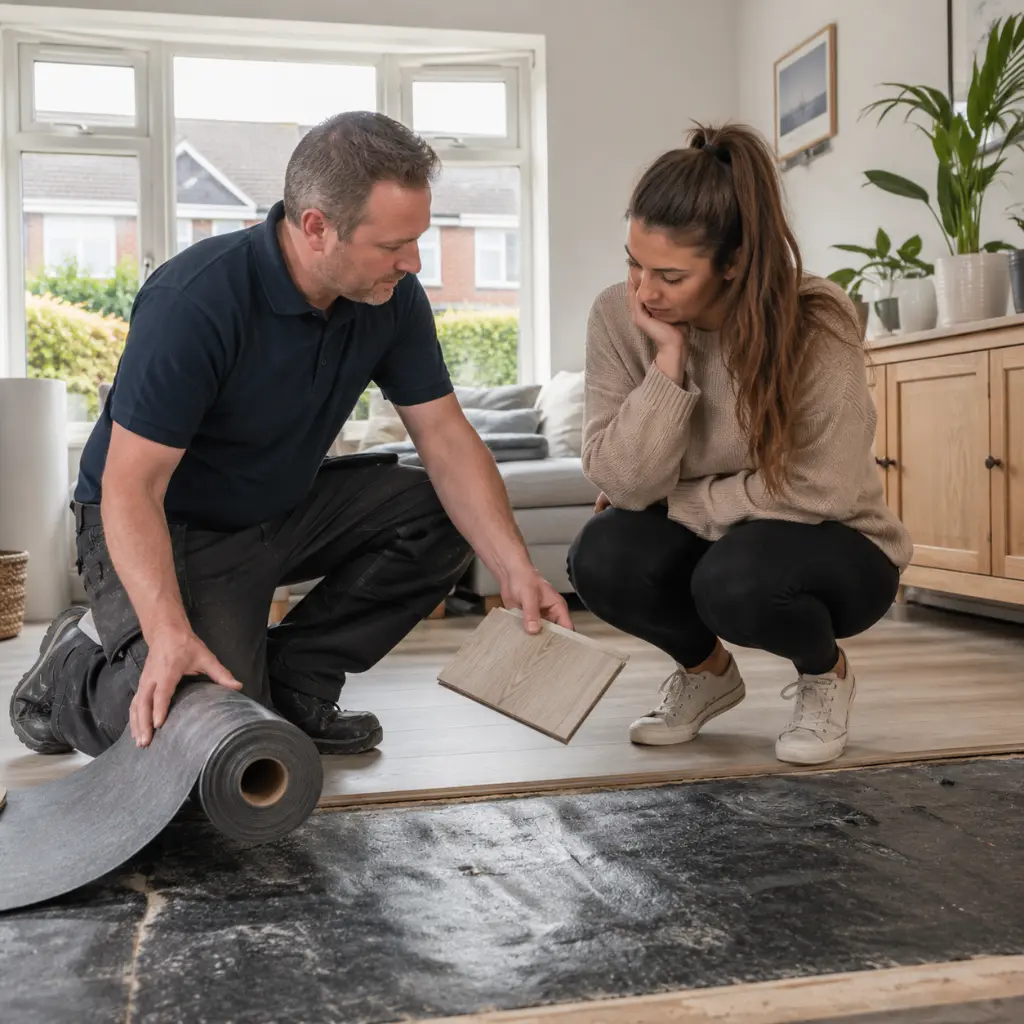
Glue-down LVT is bonded directly to the subfloor with a flooring adhesive. Each plank or tile is set into place, so once it is down, it stays firmly put.
This method gives a very solid, stable finish with no bounce underfoot. It tends to be thinner than click, and it asks for a smooth, well-prepared base to look its best.
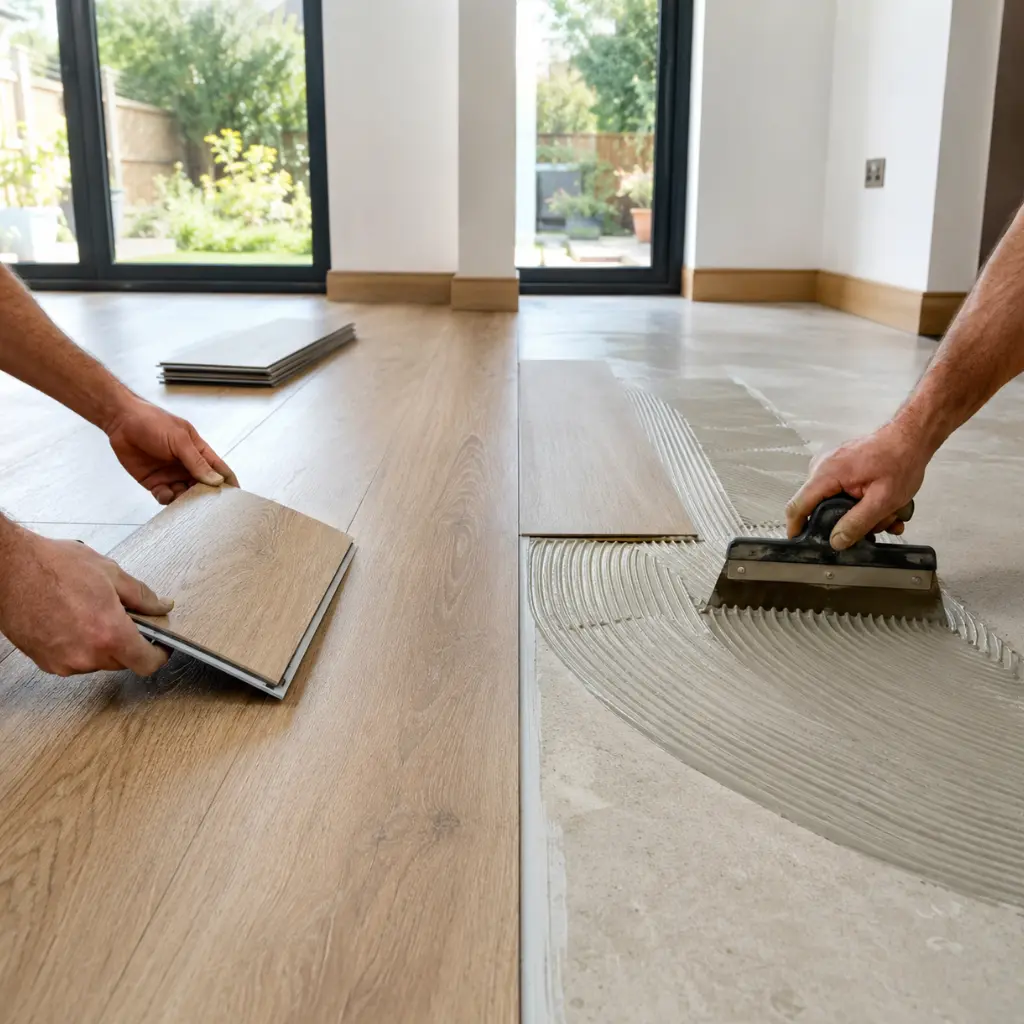
The planks can look identical once fitted, so the real differences are practical. They come down to a handful of things that affect how the floor performs.
This is the big one. Glue-down needs a smooth, flat and dry subfloor, because any lump or dip can show through or weaken the bond. Click LVT is generally more tolerant of minor subfloor imperfections, although both systems still require a clean, level and dry base for the best results. If the subfloor shows signs of moisture, it is also worth checking whether a damp proof membrane is needed before your new floor is fitted.
Glue-down feels solid and quiet, since it is bonded flat to the floor. Click can feel slightly softer with underlay, but a floating floor can sound a little hollow if the base or underlay is not right.
Both are water-resistant, which is why vinyl suits kitchens and bathrooms. Click LVT performs well in kitchens and bathrooms when installed correctly, although glue-down LVT is often preferred for areas exposed to frequent moisture.
One of click LVT's biggest advantages is flexibility. A damaged plank can usually be lifted and swapped without disturbing the rest. Glue-down is more permanent, so repairs and removal take more effort.
The appeal of click comes down to speed and simplicity. There is no adhesive, no drying time and far less mess, which makes it a friendly option for a quick room refresh.
It is also easier to lift and replace, handy for rentals or if you like to change your look every few years. With a suitable underlay, it can feel comfortable and warm underfoot too. For homes with a reasonably sound subfloor, it is often the more straightforward route.
Glue-down comes into its own where stability matters most. In busy hallways, large open-plan spaces and rooms with heavy or rolling furniture, a bonded floor stays put and resists movement.
Fitters often favour glue-down for underfloor heating, since the direct bond improves heat transfer though click systems can work too if the manufacturer permits it. It also gives the flattest, most seamless finish for tile and stone effects.
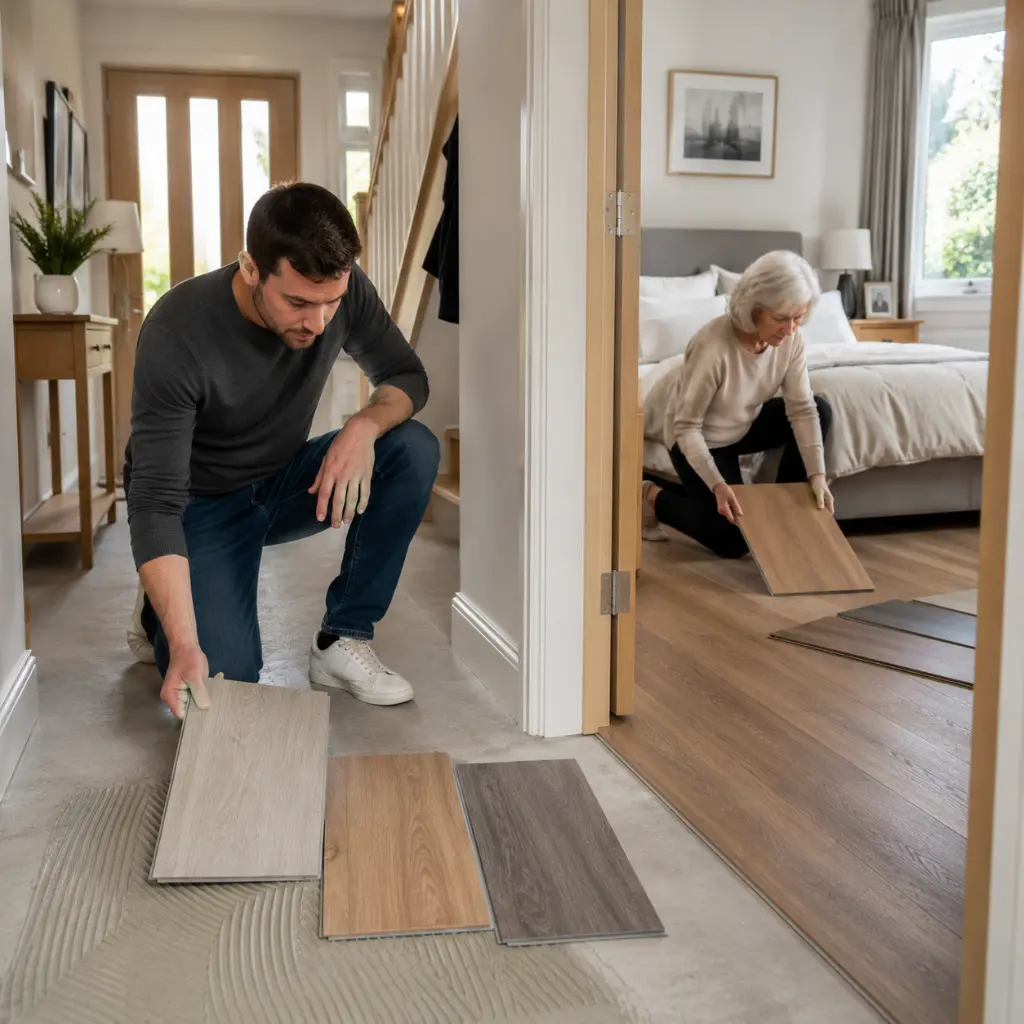
Thinking room by room makes the choice much easier. There is rarely one method that suits a whole house.
For bedrooms, lounges and quick renovations, Click LVT is often ideal. A homeowner recently asked us to sort out a hallway that saw constant muddy footprints and a home office upstairs. We suggested glue-down for the hallway's heavy traffic, and click for the office, since it was a weekend job and didn't need adhesive drying time.
If you are working with sheet vinyl rather than tiles or planks, the gluing rules are a little different. You can read our guide to gluing sheet vinyl for that side of things.
If your subfloor is smooth and you want a solid, long-lasting finish in a busy space, glue-down is a sensible pick. If you want a quicker, tidier fit that is easy to change later, click is a strong choice.
The deciding factor is usually the subfloor and how the room is used, not the planks themselves. Both are affordable, good-value ways to get a realistic wood or stone look that stands up to daily life.
If you take one thing from all this, let it be that the subfloor usually makes the call before your preferences do. A smooth base opens up glue-down, while click keeps its options open over trickier ground.
Get that part assessed honestly and the rest tends to fall into place. Our team checks the subfloor and recommends the fitting method that genuinely suits it, all as part of how we supply and fit.