A damp proof membrane, or DPM, is a moisture barrier laid between your subfloor and your new floor to stop rising damp. It matters most over concrete and ground floors, in kitchens, bathrooms and older homes. Whether you need one depends on your subfloor, so it is worth checking before any flooring goes down.
It is one of those questions that only comes up once the old floor is lifted. Do you actually need a damp proof membrane under the new one, or is it an extra you can skip? Get the answer wrong and moisture can quietly ruin a brand new floor, which is why our Rotherham flooring specialists check the subfloor before anything is fitted.
The short version is that it depends on your subfloor and your room. This guide explains what a damp proof membrane does, when it is needed, and how it is fitted.
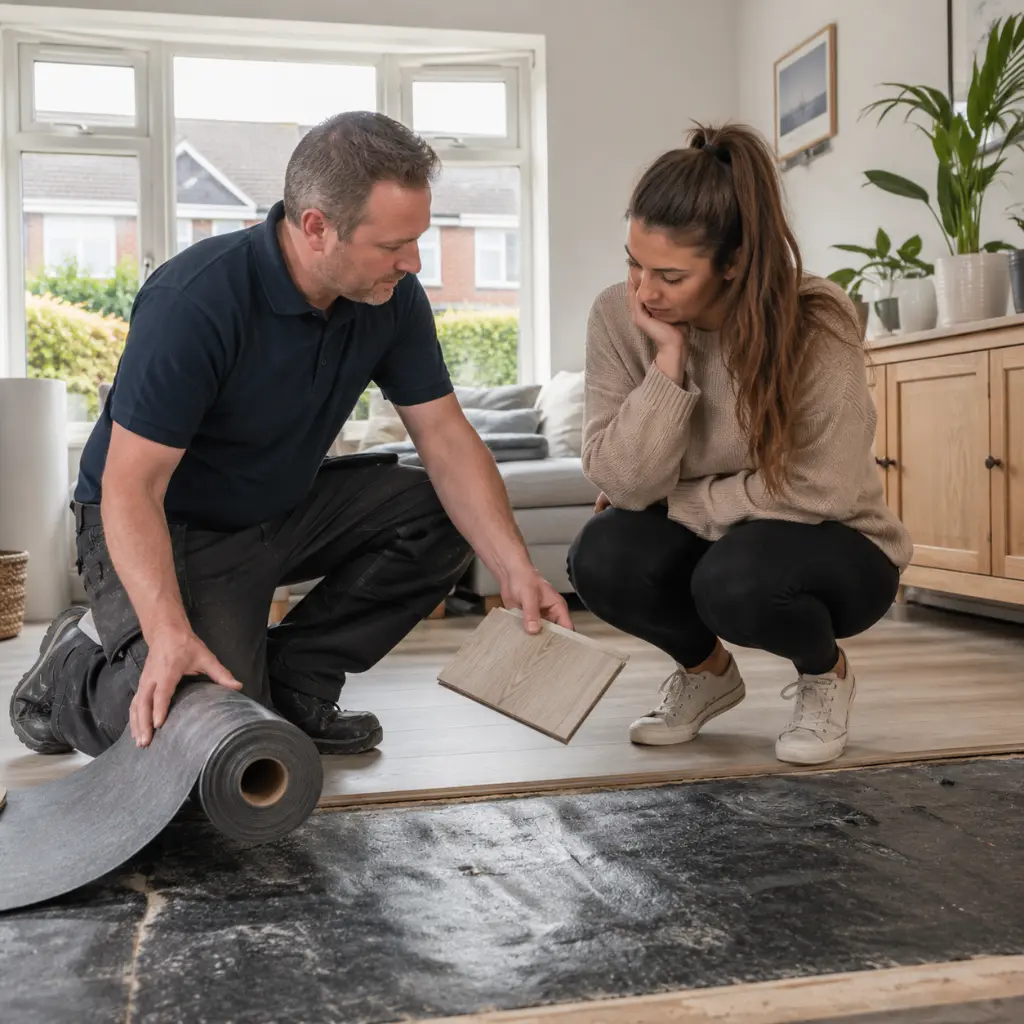
A damp proof membrane, usually shortened to DPM, is a moisture barrier that sits between your subfloor and your floor covering. Most often, it is a strong sheet of polythene, though it can also be a liquid that is painted on.
Its job is simple. It stops moisture in the subfloor, especially rising damp from the ground, from reaching your new floor. Left unchecked in the wrong spot, that moisture can cause warping, swelling, lifting, and even mold over time.
This is the question we hear most, and the honest answer is that it depends. The main factors are what your subfloor is made of, where the room sits, and whether damp is present.
As a rule, concrete and ground-floor subfloors are the ones to watch, since moisture can rise through them. Upstairs rooms with timber floors over heated spaces are usually far lower risk. New concrete or screed that has not fully dried, and older homes built before modern damp proofing was standard, both raise the chances of needing one.
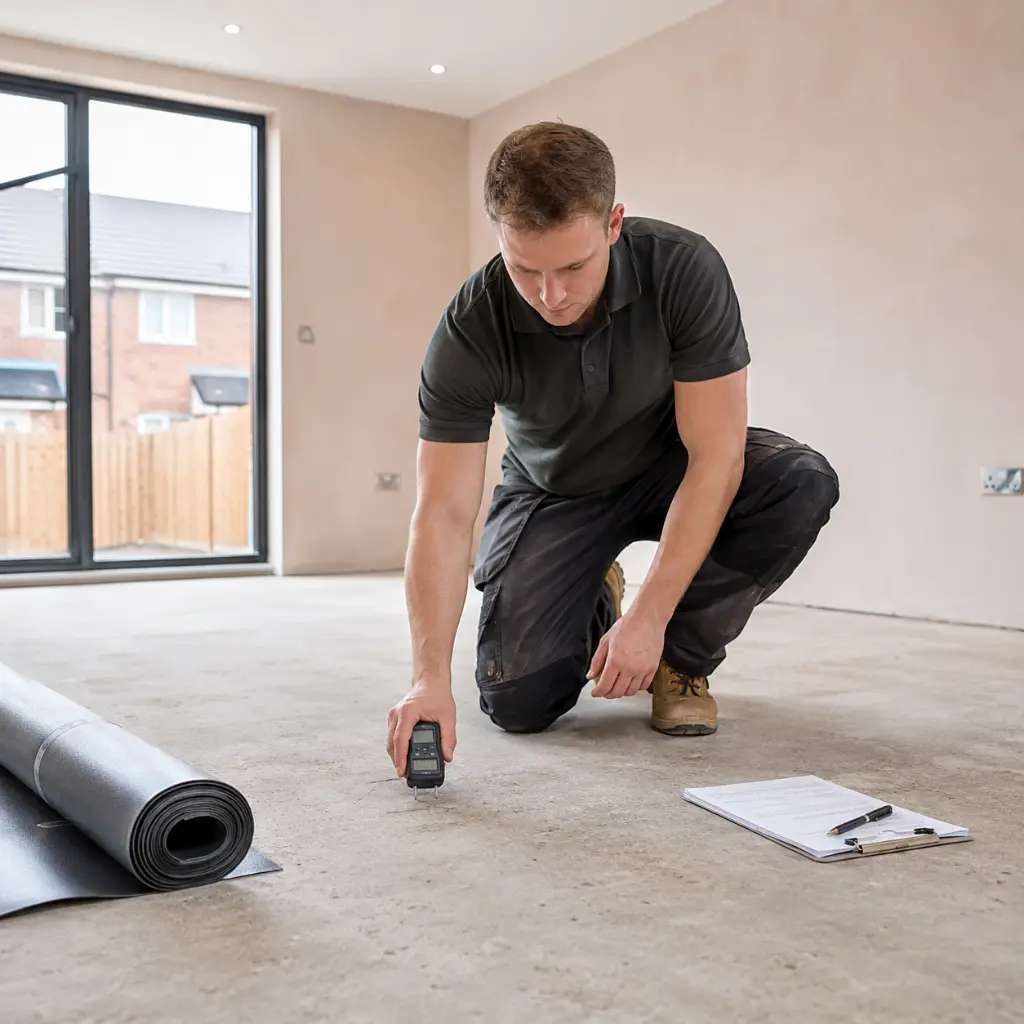
You cannot always see damp, which is why testing matters. Still, a few clues are worth watching before you lay a new floor.
Look out for dark patches on a concrete floor, a musty smell in the room, or a subfloor that feels damp to the touch. Any of these is a good reason to check moisture levels properly before fitting.
Some situations call for a flooring damp proof membrane far more than others. Knowing them helps you avoid an expensive mistake.
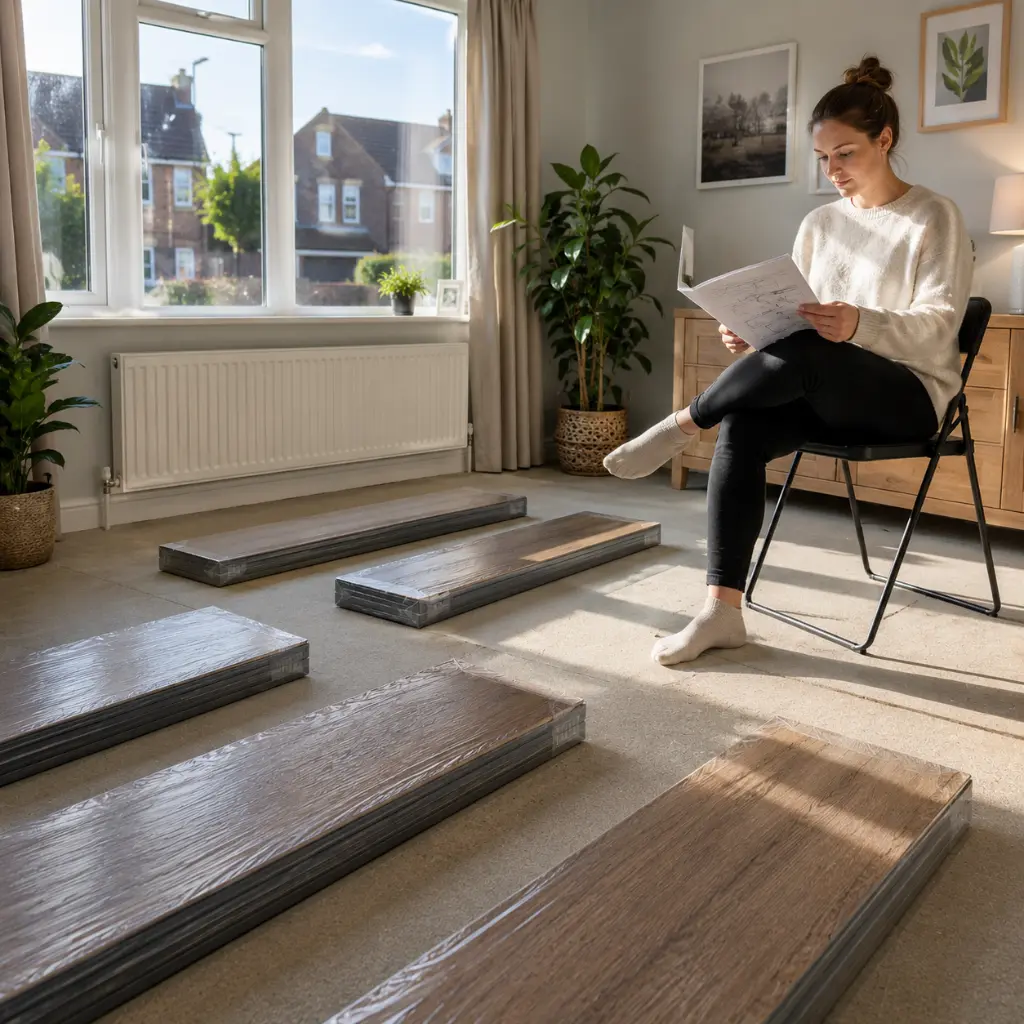
Concrete ground floors, basements and cellars top the list, as they sit closest to ground moisture. Kitchens, bathrooms and utility rooms add everyday moisture into the mix. New builds and extensions are another, because fresh screed often requires moisture testing before flooring is installed, even if it appears dry on the surface.
The need for a damp proof membrane flooring layer also changes with the floor you are fitting. Some floors are far more sensitive to moisture than others.
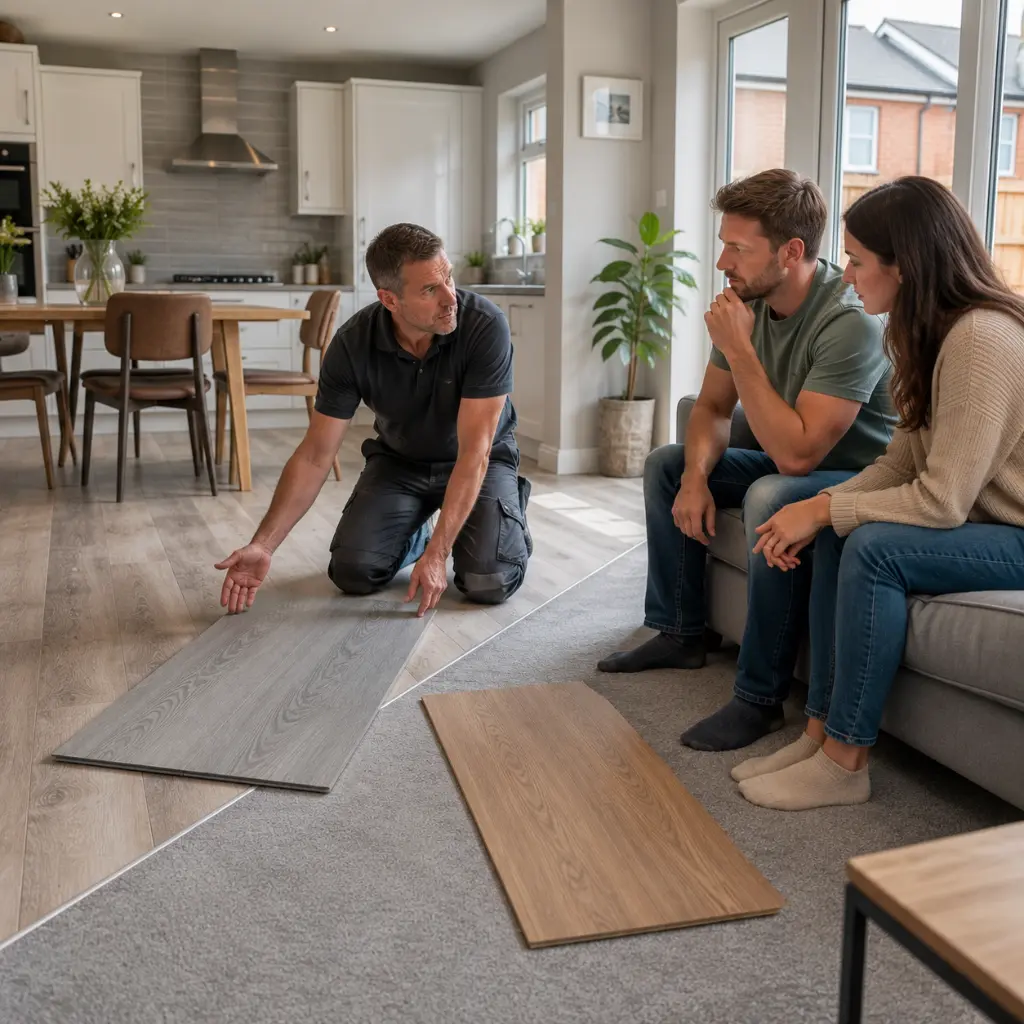
Laminate and engineered wood can warp or swell if moisture reaches them, so a barrier over concrete is often essential. Vinyl and LVT themselves are moisture resistant, but the subfloor beneath still needs protecting where moisture is present. Solid wood is the most sensitive of all, while tiles and carpet have their own considerations. Helpfully, many laminate and vinyl underlays now come with a DPM built in, so a separate sheet is not always needed.
If you are fitting LVT, it is also worth understanding the differences between click LVT and glue-down LVT , as the condition of the subfloor can influence which installation method is most suitable.
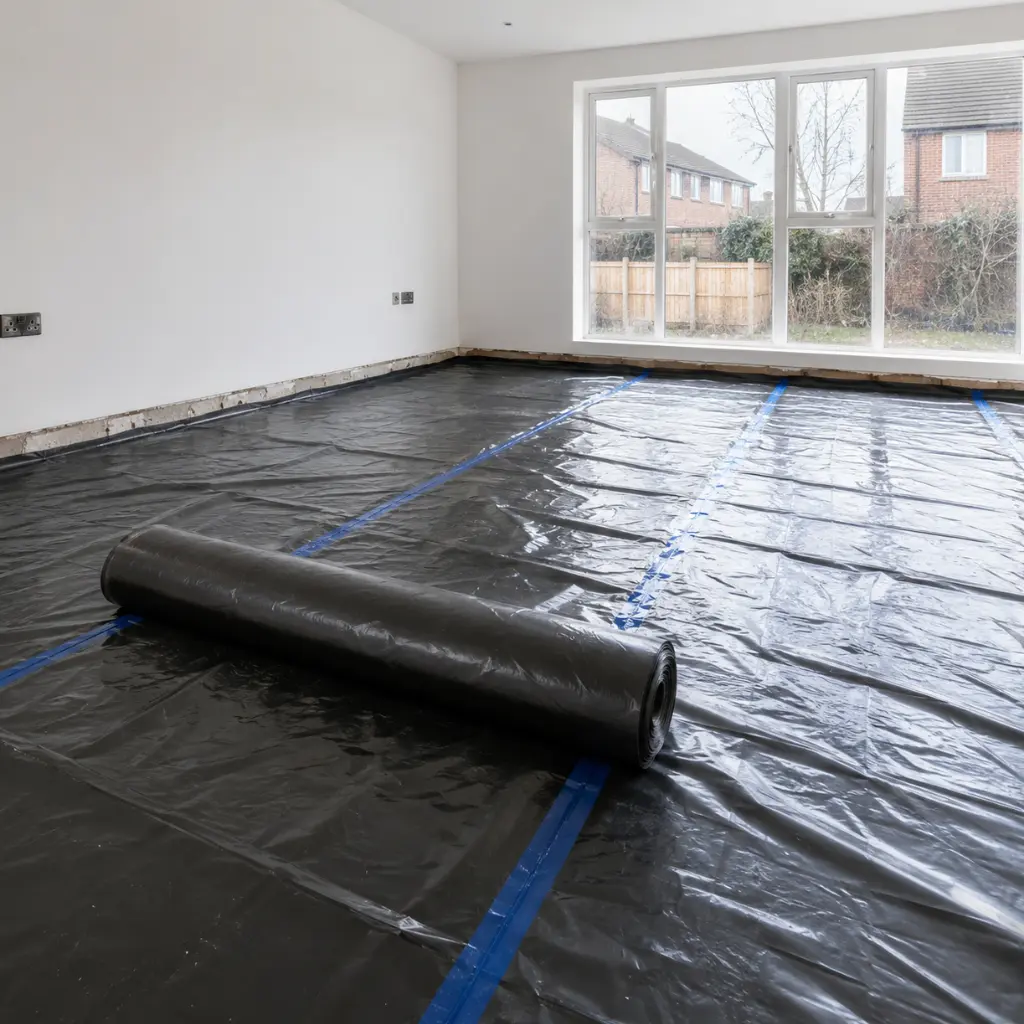
There are two main types, and the right one depends on the subfloor. A sheet DPM is rolled out over the subfloor, with the joints overlapped and taped, and the edges run up the walls behind the skirting.
A liquid DPM is painted on instead, which suits existing concrete where a sheet is tricky, or where residual moisture is higher. Whichever is used, the subfloor needs to be clean and sound first. A 1200-gauge polythene membrane is commonly used for domestic flooring applications in the UK, although the correct specification depends on the project and manufacturer's recommendations.
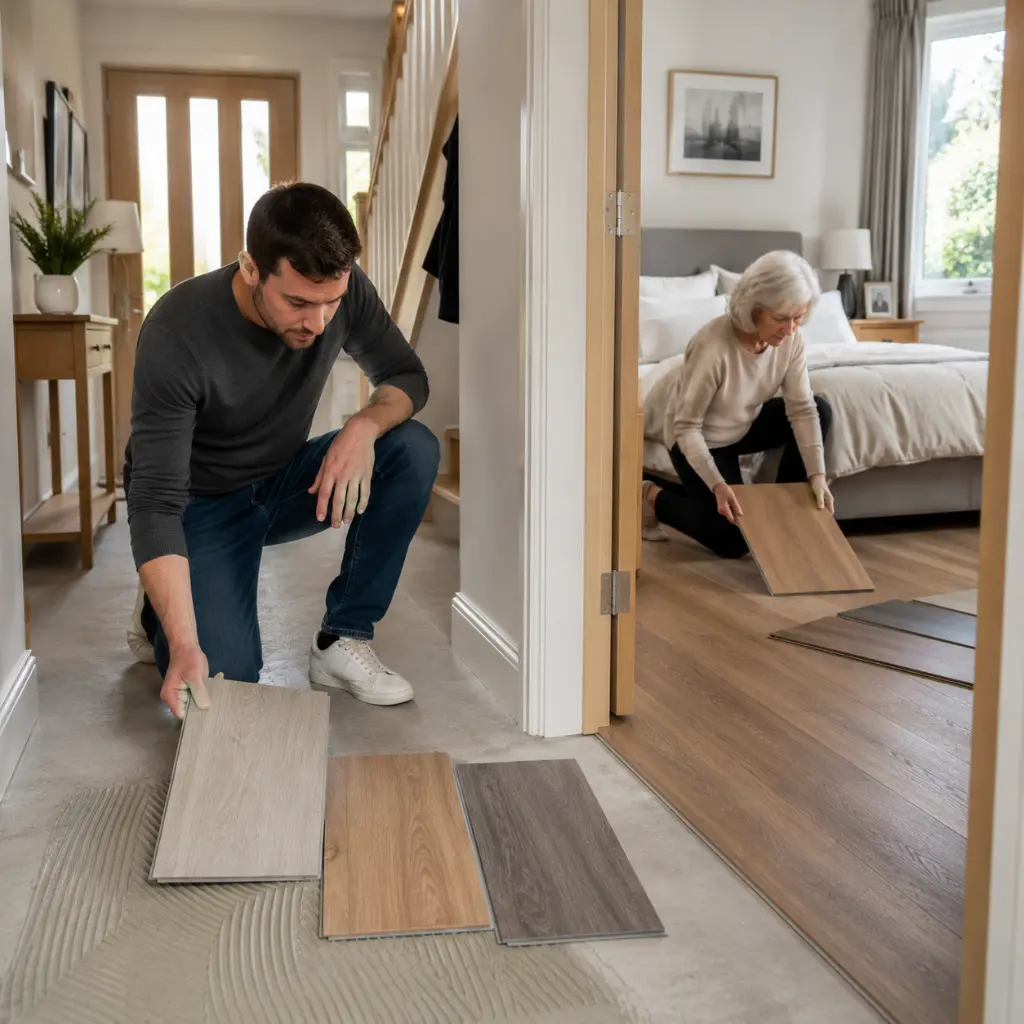
A damp proof membrane is easy to overlook and painful to add once a new floor is already down. Five minutes of checking the subfloor beforehand can save lifting the whole thing later.
So before you fall for a colour, it is worth knowing what is happening underneath it. Our team can test the subfloor and flag any damp proofing needed before you commit, which is exactly why we assess and fit in one visit.