Most period homes are not show homes. They are family homes with kids, pets and modern life sitting on top of a layout drawn up well over a century ago. A Victorian terrace, Georgian townhouse, Edwardian semi or country cottage each has its own character, and the floor sets the tone for the room above it. The right flooring respects the building without trying to turn it back into a museum. What follows is a room-by-room walk-through of what works in a Victorian or traditional home, the preparation older floors really need, and the mistakes worth avoiding. For homeowners comparing finishes, underlay and practical options for older properties, professional flooring installation advice can help make sense of what actually suits the building instead of just what looks good in a showroom.
Period homes used different flooring in different rooms, and the era shaped the choices. Georgian houses had wide oak floorboards, around 200 to 300mm across, in formally proportioned rooms. Victorian terraces had narrower pine boards (100 to 150mm), geometric tile in the hallway and parquet in better houses. Edwardian homes carried the look forward with slightly wider boards and more parquet. Country cottages relied on flagstone, quarry tile or worn elm boards. Post-war houses introduced sheet vinyl in kitchens and bathrooms. The thread running through every traditional home floor plan is the same: read the room first, then choose the floor.
A floor in a period property is rarely just a floor. Underneath sits a suspended timber subfloor over joists, often well over a century old. Boards have shrunk, joists may sag, draughts rise from the airbricks below, and damp can sit in corners where ventilation has been blocked off.
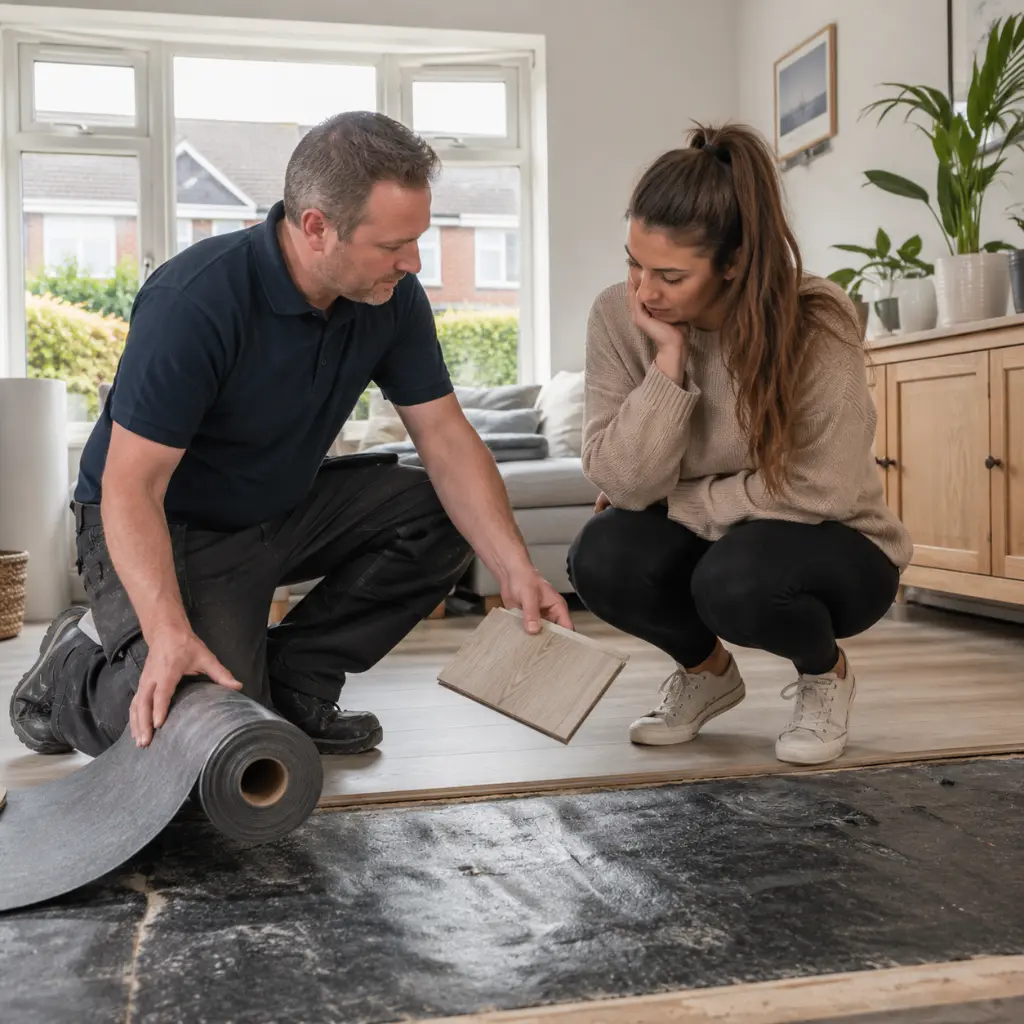
Before new flooring goes down, the older floor needs checking for level, springiness and dampness. Loose boards get screwed back, rotten boards get replaced, and a proper underlay takes the edge off draughts and small unevenness. Preparing the room properly before the fitter arrives saves time during installation and helps protect the finished floor for years afterwards.
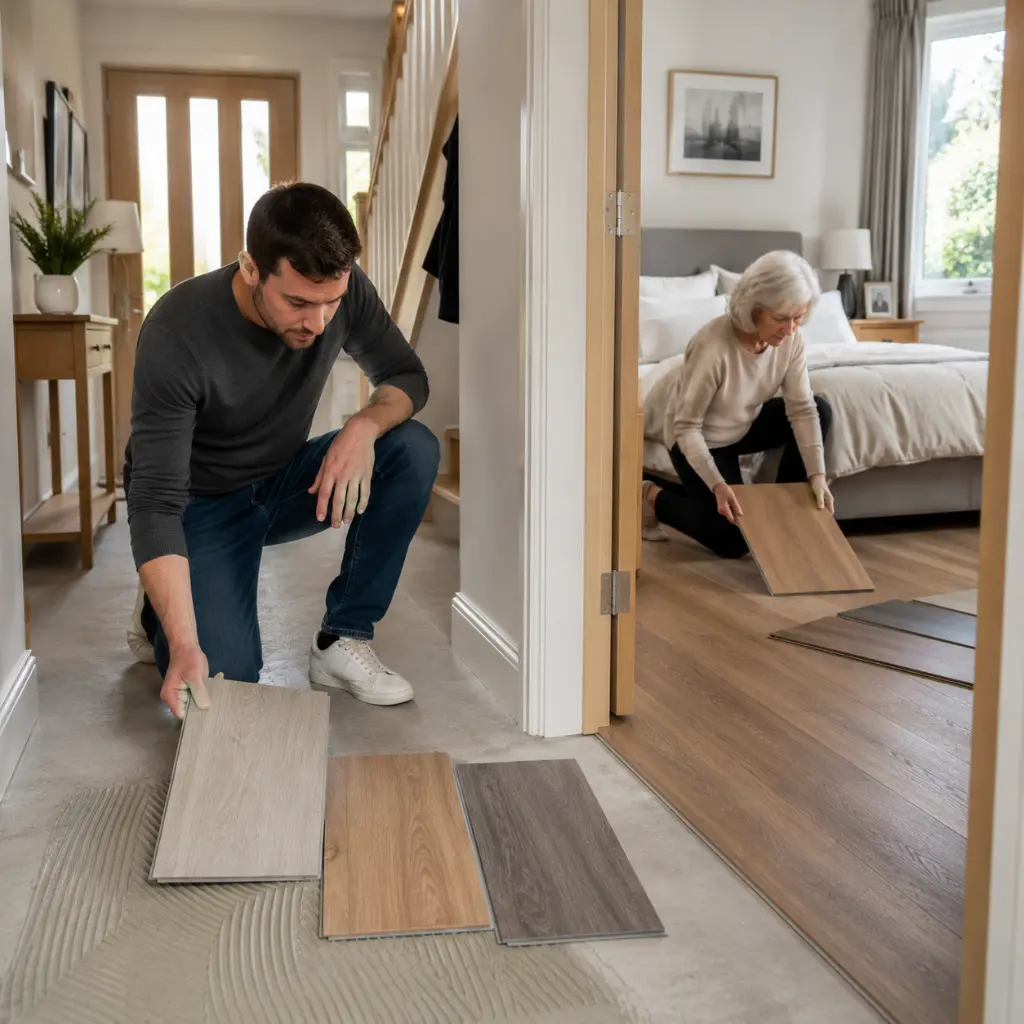
Hallways set the first impression in a period home. Victorian and Edwardian houses had geometric tile in black, white, terracotta and cream. Georgian halls leaned toward stone flags or wide oak boards. Where the originals survive in good order, restoration is the right call. Where they have gone, geometric-pattern LVT in classic period colourways gives the same effect for far less and fits in a day.

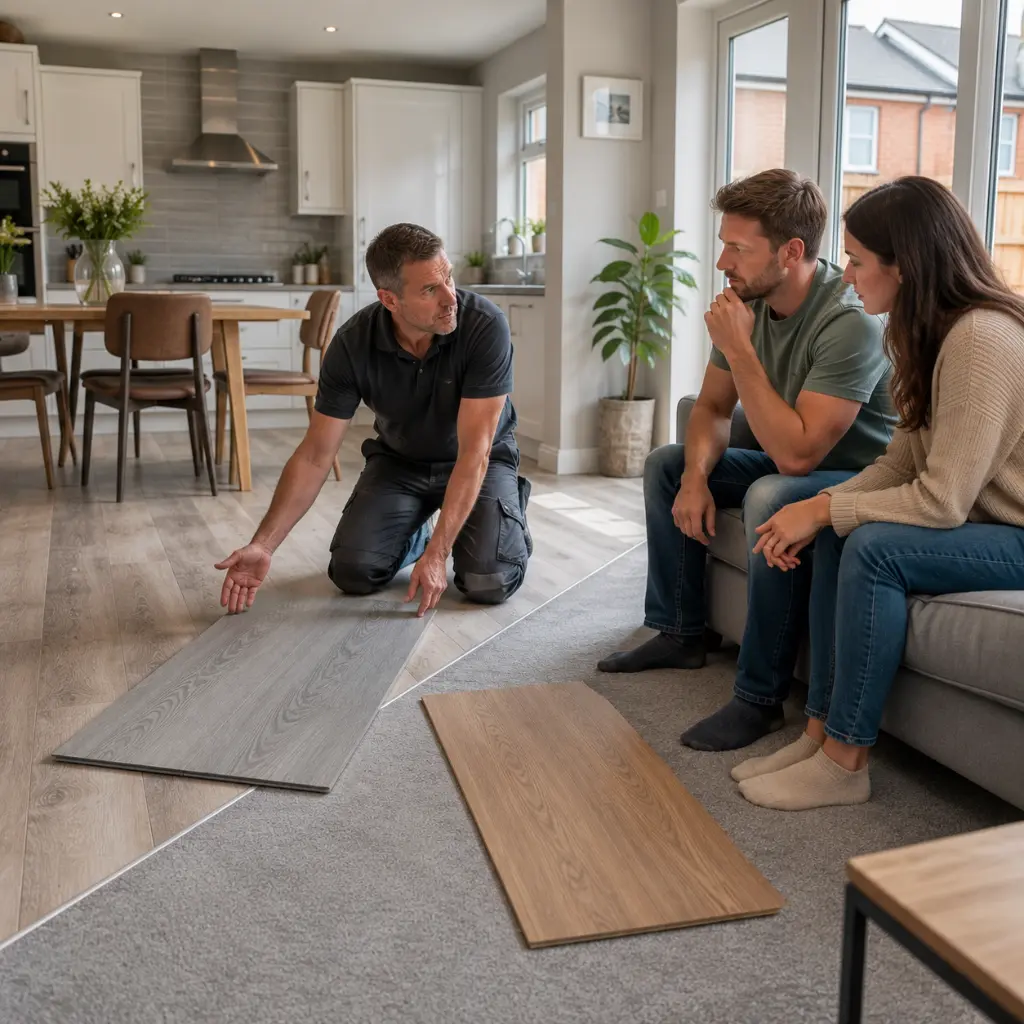
The main reception rooms give you the most freedom. Wood-effect laminate or LVT in a mid to dark oak suits most period proportions; wider planks flatter Georgian rooms, narrower planks sit naturally in Victorian and Edwardian terraces. A patterned woven carpet in a traditional design also works in dining and drawing rooms. Avoid anything glossy or too contemporary.
Stairs are a period trademark, and a runner with painted or stained edges is the most period-appropriate finish across Georgian, Victorian and Edwardian houses alike. A patterned stair runner is kinder underfoot than bare timber and quieter in a busy household. Carpet tiles are not the answer. A proper stair carpet, professionally fitted with grippers and good underlay, outlasts almost anything else in the house.
Bedrooms are where carpet earns its place. A soft, warm carpet is what most owners want first thing on a winter morning, and it suits the proportions of a period bedroom far better than hard flooring. Plain wool twist, traditional patterned designs or a neutral cut pile all work. Underlay matters; a good one makes a budget carpet feel premium.
Original period kitchens were quarry tile, stone flag or scrubbed timber. A modern kitchen in a traditional home wants waterproof flooring, easy cleaning and warmth underfoot. Stone-effect or tile-effect LVT delivers all three. Wood-effect LVT, in plank or herringbone, also works well, particularly in a kitchen that flows into a dining or family area.
Bathrooms in period homes need a fully waterproof floor that still provides grip underfoot when wet. More than almost any other room in the house, the choice between a wet room finish and a standard bathroom floor has a major impact on long-term practicality. Safety vinyl or sheet vinyl with sealed joints is the practical, period-appropriate answer. Pattern-effect LVT in a small geometric or hex design also works, as long as the joints are sealed. Skip laminate in a bathroom; the joints will never seal tightly enough.
The table below shows which modern flooring recreates each original period look, and where it belongs in a traditional home.
| Original period look | Modern flooring that recreates it | Best for |
| Wide Georgian oak floorboards | Wide-plank wood-effect laminate (180mm+) | Georgian living and dining rooms |
| Narrow Victorian pine boards | Wood-effect laminate in 100 to 150mm planks | Victorian living and dining rooms |
| Edwardian parquet | Laminate or LVT in herringbone format | Edwardian dining rooms, studies |
| Geometric tile hallway | Geometric-pattern LVT in black and white or terracotta | Hallways, entrances, porches |
| Patterned drawing room carpet | Traditional patterned woven carpet | Dining rooms, drawing rooms, master bedrooms |
| Stair runner over painted treads | Wool or polypropylene stair carpet runner | Stairs and landings |
| Quarry tile or flagstone kitchen | Stone-effect or tile-effect LVT | Kitchens, utility rooms |
| Encaustic bathroom floor | Geometric or hex-pattern LVT, or sheet vinyl | Bathrooms, en suites |
Yes, in the right rooms. Wood-effect laminate works well in living rooms and bedrooms; herringbone suits dining rooms. Skip laminate in bathrooms and avoid high-gloss finishes that fight the architecture.
Often yes, provided the boards are sound and screwed down. A good underlay on top quietens creaks and softens the feel. Rotten or damaged boards need repair first, or the new floor will fail too.
No. Restoring is worth the cost only when the boards are largely intact, and you accept a surface well over a century old, character and all. If they are damaged or you want a smoother finish, wood-effect laminate over prepared boards is the practical answer.
A patterned wool stair carpet runner is the most period-appropriate choice and the kindest underfoot. The treads on either side are painted, stained or varnished. Pick a pattern in colours that echo the hallway floor below.
Laminate and LVT do most of the work for less. Wood-effect laminate for the main rooms, geometric LVT for the hallway, sheet vinyl for the bathroom and a quality carpet on stairs and in bedrooms gives a real period feel for less.
A period home is a layered building, and the floor underneath ought to be just as thoughtful as the cornicing above. Prepare the subfloor properly, match each room to a finish that fits the era, and the flooring quietly carries the rest of the room. For room-by-room help choosing the right finish, the Floor Coverings Local team can come to your home, take measurements and bring samples to look at in the actual light of your own rooms.