Most flooring jobs that overrun do so for one reason: the room was not ready when the fitter arrived. Half a day moving a sofa or hunting for a meter key is half a day off the install. Preparing your room for flooring installation is the cheapest way to keep to the date promised and the price quoted. What follows is what you actually need to do, and when, so the floor goes down on time and you get the finish you paid for. Homeowners planning a new floor can also read more about flooring installation services and fitting advice before fitting day arrives.
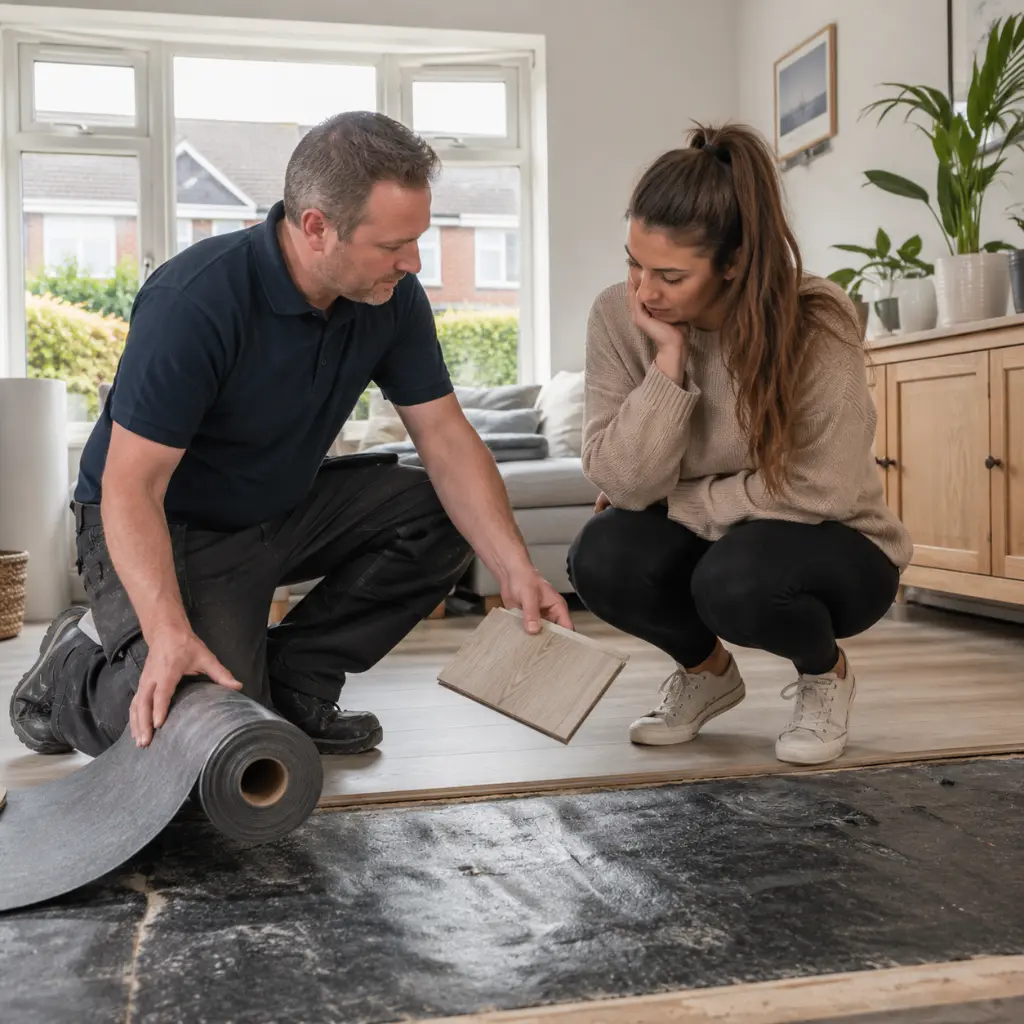
Drawing the line early prevents most of the confusion on the day. The fitter arrives with the flooring itself, underlay, adhesive, tools and trims, and handles the technical work: lifting the old floor, levelling the subfloor, trimming doors so they clear the new floor, and finishing edges with scotia or beading.
What they will not handle, unless agreed in advance, is anything personal. Furniture, electronics, curtains, pictures, pets and access to the property are all yours to sort. Preparing for flooring installation is mainly about turning the room into a clean working space; the rest the fitter brings with them.
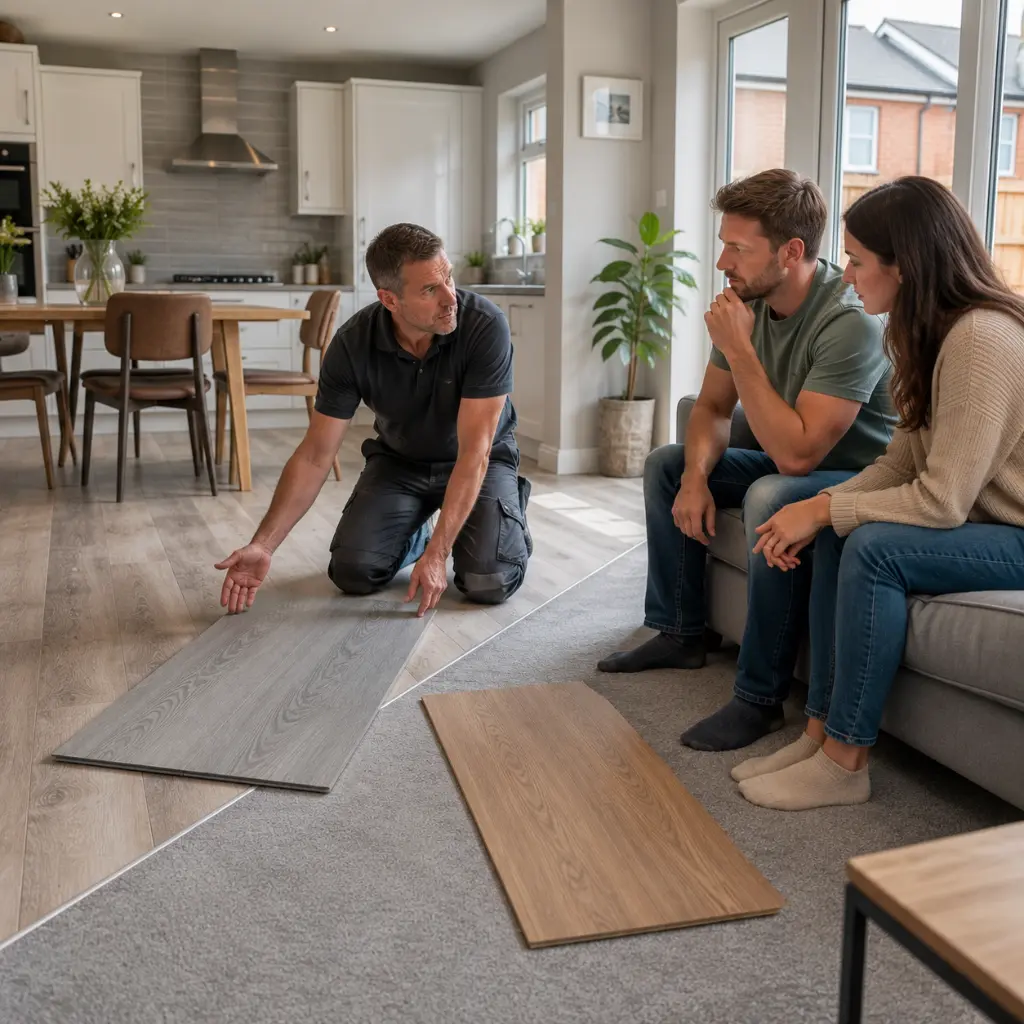
This is the planning week and the heavy-lifting week. Confirm with the supplier exactly what is being delivered and when. Decide what is happening with the skirting boards: removed, replaced, or left in place with scotia. Agree whether doors will need trimming. Sort parking for the fitter's van and check there is somewhere to leave the old flooring if they are taking it away.
Start moving heavier items early. Wardrobes and large units are far easier to shift once emptied, and clearing the room gives you a chance to inspect the existing floor properly. Loose boards, separating joints, or uneven areas are much easier to spot when furniture is out of the way. Decide where furniture is going during the fit; another room, the garage in dry weather, or even the garden, all work. Anything fragile and irreplaceable should be boxed and labelled.

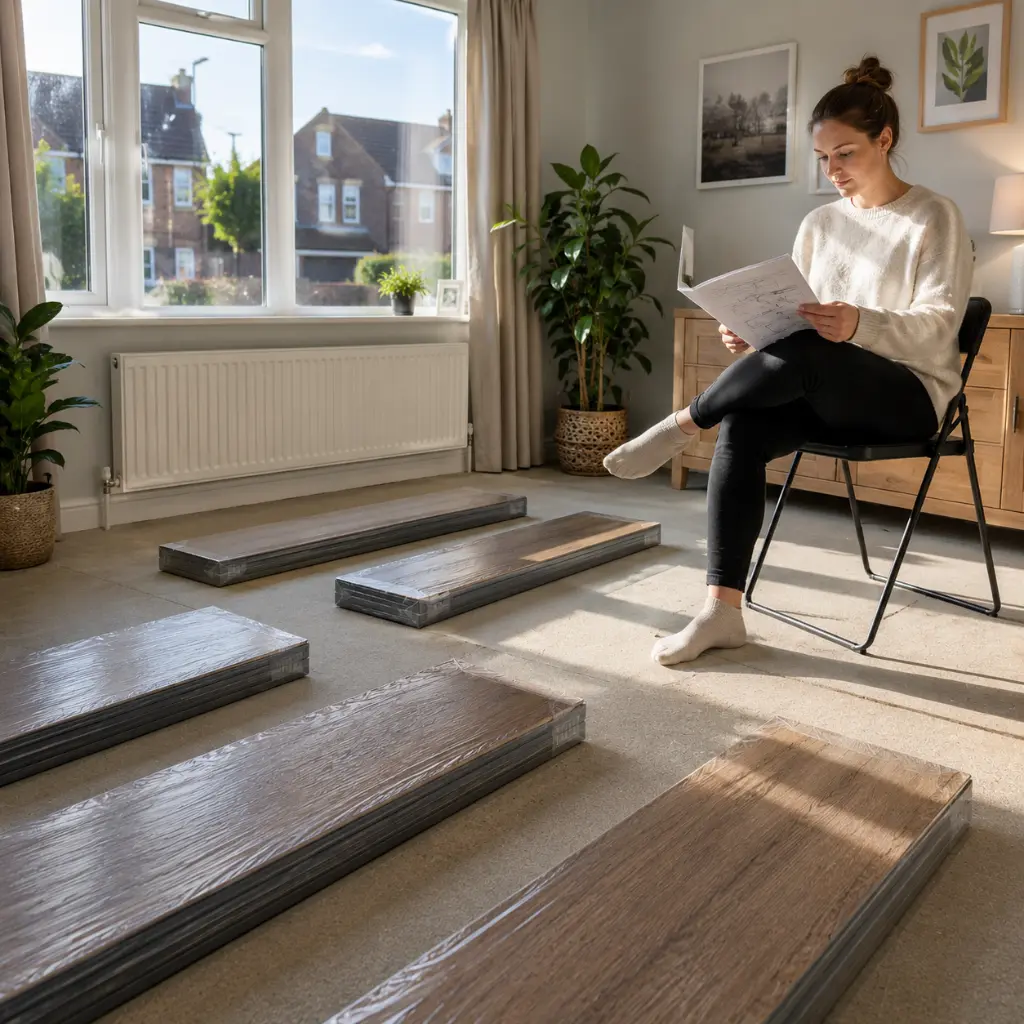
This window is mainly about acclimation and the last of the moving. Hard floor types like laminate, LVT and engineered wood need a day or two sitting unopened in the room they are being fitted in so that they can settle to the temperature and humidity. The fitter will confirm the right window for your product, but if in doubt, have the boxes delivered ahead of time and stacked flat in the actual room.
Once acclimation is underway, finish the move. Take down curtains, blinds and pictures so they are not in the way of any skirting work. Unplug and store electronics, and take a photo of the cables behind the TV before you start; future-you will be grateful when it comes to plugging everything back in.
Five last things before the van arrives:
The subfloor itself is the fitter's job. They will check it for level, deal with squeaks, screw down loose boards and apply self-leveling compound where needed. What you can do beforehand is sweep or vacuum the floor thoroughly and mention any known issues honestly, such as damp patches, previous leaks, or awkward height changes at doorways. In older homes, suspended timber subfloors supported by century-old joists often need additional preparation before new flooring can be installed properly. Telling the fitter in the morning is far better than them discovering an hour into the install.
For rentals, voids between tenants and managed properties, the prep is different because nobody is on site to make decisions. The job runs smoothly when everything is agreed in advance.
Agree on tenant access in writing with a clear arrival window. Photograph the room and send the photos to the fitter ahead of time, so there are no surprises. Make sure the property is empty of belongings, or boxed and labelled in another room; fitters charge for time spent moving tenant possessions. Confirm parking, key collection and a phone number that will be answered on the day. If the fitter cannot get in, there is almost always a charge for a return trip.

No, unless you have agreed to it in writing. Most fitters either remove and refit the skirting themselves or use scotia beading to finish the edge. Pulling skirting yourself can damage the plaster and add to the bill.
Often yes, but only if it has been agreed when you booked. Removal and disposal usually carry a small charge, and the fitter needs to know how to bring the right vehicle. Confirm this before the day, not on it.
Not for the whole time, but it helps to be there at the start and the end. The first half hour is when last-minute questions come up. The handover at the end is when you sign off on the work and pay any balance.
Some fitters will move it, some will not. Always ask when you book the job. If they agree, expect to pay for the extra time. The simplest answer is to have it out of the room before they arrive.
Most laminate, LVT and engineered wood need 24 to 48 hours in the room where they are being fitted. Carpet and vinyl sheets usually do not need any acclimation. Your fitter will confirm the product you have ordered.
Preparing properly is the difference between a flooring fit that runs on time and one that costs you extra. Do the planning a week before, the moving a day or two before, and the small housekeeping jobs in the morning. For a home visit, an honest measure-up and a quote on the right product for your room, the Floor Coverings Local team can come to you with samples and confirm exactly what prep your floor will need before fitting day.