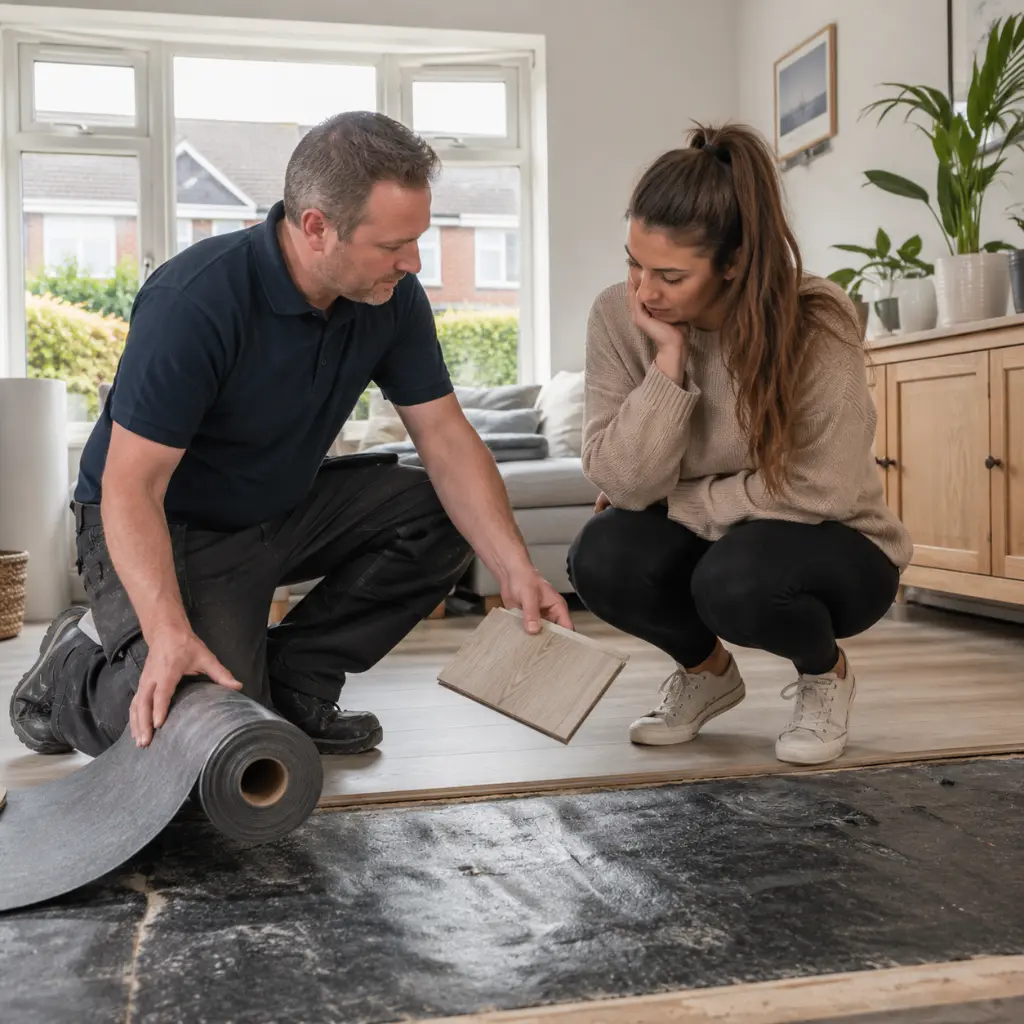
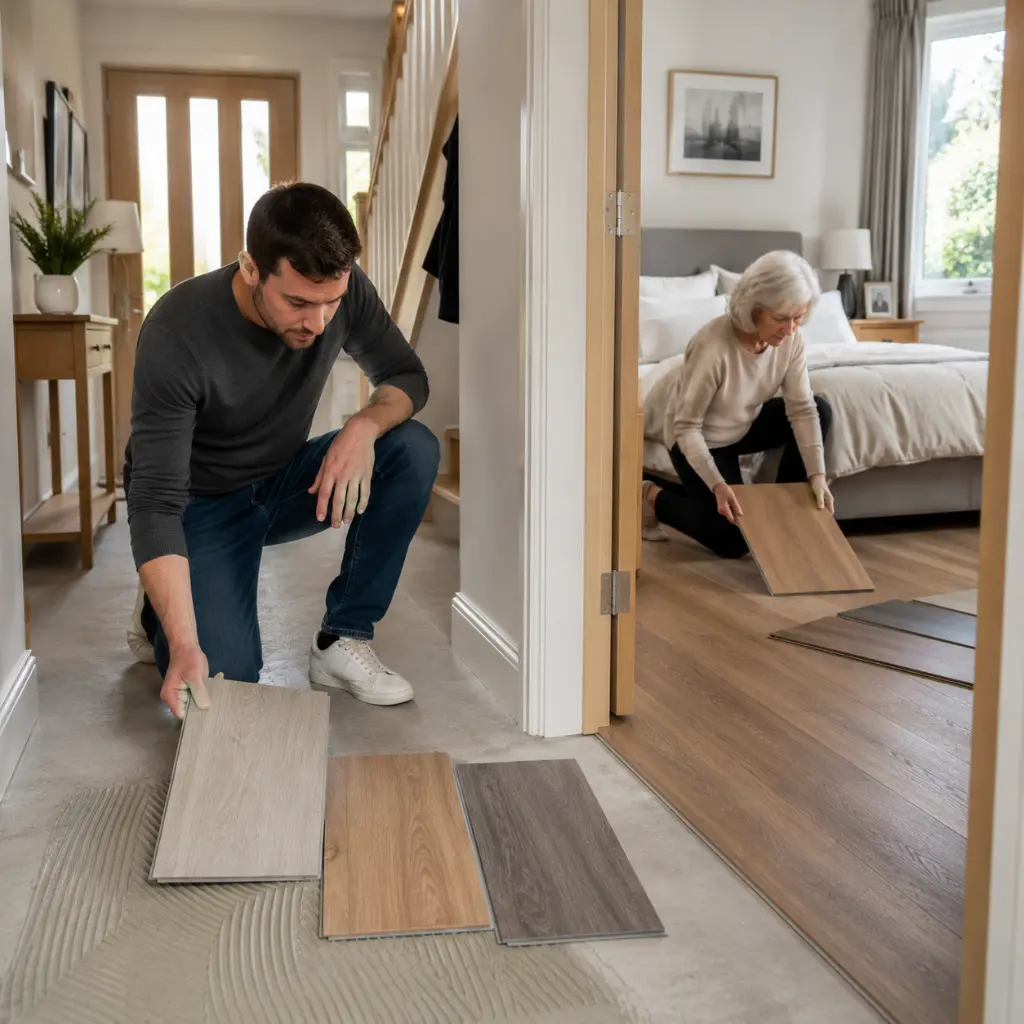
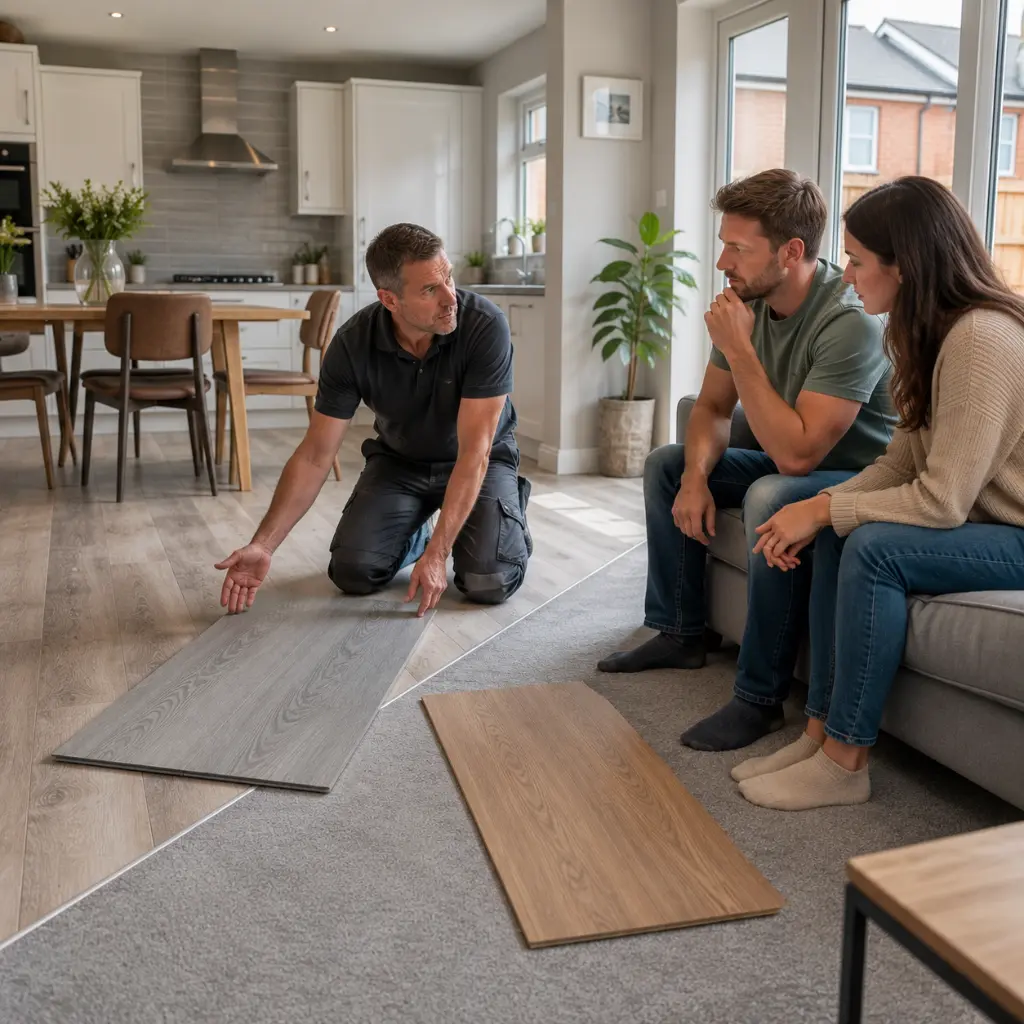
Yes, almost always. Most gaps in a floor can be fixed without lifting the whole thing, and even gaps that look serious from the doorway are often quick repairs once you know the cause. There are exceptions, where the gap signals something underneath has gone wrong, but those are the minority. This covers how to fix a gap in flooring across laminate, LVT, vinyl, wood and carpet, plus the perimeter gap along the skirting. For homeowners planning repairs alongside a wider upgrade, professional help with floor fitting and replacement services can also uncover whether the issue is cosmetic or tied to the subfloor underneath. Humanity really did invent entire categories of problems by putting wood, water and central heating in the same building.
The answer breaks down like this. Gaps between planks inside a room are usually fixable in an hour with the right tool. Gaps along skirting boards are nearly always cosmetic and quick to close. Gaps caused by water damage, a failing subfloor, or wholesale board buckling are the exceptions and almost always mean a fitter has to lift and replace the affected area. Knowing which group your gap belongs to is the first job.
Three quick questions answer most of it.
What flooring is it? Laminate and LVT click together, vinyl is glued or laid loose, wood is nailed, glued or floating, carpet is stretched and gripped. Each behaves differently.
Where is the gap? Inside the room or at the edge where the floor meets the skirting? Each has different causes and fixes.
What caused it? Seasonal movement is the usual suspect in winter. Installation errors show up early. Subfloor problems get worse over time.
Gaps that show up between boards or tiles inside the room are the most common problem, and almost all of them can be closed without replacement.
Most laminate and LVT gaps appear because a plank has shifted, not because the floor is faulty. A rubber mallet and a tapping block, used along the long edge of the plank, can usually nudge it back. Work along the row from one end toward the gap so the planks tighten up together. If a single click has failed, the plank can be lifted and re-engaged. Avoid filler in a click floor; the joint is designed to move.

Vinyl gaps usually mean the material has shrunk or the adhesive has let go. A heat gun on a low setting, or a hairdryer for small areas, softens the vinyl enough to be pressed back into place with a seam roller. If the join has separated, a small amount of vinyl seam adhesive will hold it back together. Sheet vinyl that has shrunk significantly is a bigger job and often signals an issue underneath worth checking.
Small seasonal gaps in wood flooring are normal during winter and often close again in summer. Filling them while they are at their widest can lead to splitting once the boards naturally expand again.
These gaps are also where cold draughts tend to rise most noticeably from the subfloor below, particularly in older homes with suspended timber floors.
Hairline gaps that stay all year can be filled with a flexible wood-coloured filler matched to the darkest tone of the board, not the average. Wider gaps in nailed-down wood may need re-fastening rather than filling. Floating engineered wood gaps are usually solved by adjusting the perimeter expansion, not surface fillers.
Carpet rarely gaps in the middle, but seams between two pieces sometimes split open over time. The fix is a heat-activated seam tape laid under the join and pressed back together with a seam iron. Done well, the repair is invisible. If the carpet has pulled away from a floor, a stretching tool re-tensions it back onto the gripper. Both jobs are usually best left to a fitter.
This is the gap most people are searching for and the easiest to fix. It usually appears for one of three reasons: the floor has settled, the expansion gap left during installation was too generous, or the scotia bead originally fitted has lifted or fallen off.
Three practical fixes:
A paintable flexible filler is the simplest. Squeeze a thin bead into the gap, smooth with a damp finger, and paint once dry. This handles gaps up to around 5mm.
Wider than that, fit a new scotia or quadrant bead. Both hide the gap completely and can be painted to match the skirting.
If the original scotia has simply lifted, glue and pin it back in place rather than replacing it. Often a five-minute job.
Some gaps tell you the floor is moving rather than just settled. Watch for any of these:
Any of those, and the underlying issue is the subfloor, the installation, or moisture, none of which a tube of filler will solve. The fitter needs to lift the affected boards, check what is underneath, and reinstate the floor properly. Carrying on with cosmetic fixes only delays a bigger bill later.
Continuing with cosmetic fixes at this stage usually only delays a more expensive repair later. When that happens, having the room cleared and prepared before the fitter arrives helps keep the work faster and the disruption shorter.
The table below pulls everything into one quick reference.
| Where the gap is | Flooring | Fix you can try | When to call a fitter |
| Between planks | Laminate or LVT | Mallet and tapping block to close the joint | Multiple planks moving as a unit |
| Between boards | Wood or engineered wood | Flexible wood filler matched to the darkest tone | Springiness or gap widening over months |
| Open seam | Vinyl or sheet vinyl | Heat the area and apply seam adhesive | Sheet has shrunk over a large area |
| Seam split | Carpet | Heat seam tape and a seam iron | Carpet pulled away from grippers along a wall |
| Floor to skirting | Any flooring | Paintable flexible filler or new scotia bead | The skirting itself is moving |
| At a doorway | Any flooring | Threshold trim or replacement transition bar | Subfloor stepped between rooms |
| Around a fitted unit | Any flooring | Flexible filler or matching trim strip | Unit has shifted on its feet |

Anything wider than about 2 to 3mm in the middle of a floor is worth attending to. Hairline gaps in wood that come and go with the seasons are normal. A gap that does not close back up by summer, or any gap wider than the edge of a credit card, is worth a closer look.
Sometimes. Wood and laminate both expand slightly in warmer, more humid months, so small seasonal gaps in winter can close on their own in summer. Gaps caused by installation problems, water damage, or a failing subfloor usually do not close up on their own and often become wider over time. If those gaps are also allowing cold draughts through from below, it is worth improving the floor insulation at the same time to reduce heat loss through the subfloor.
Silicone sealant can work along the edge of the room where a small amount of movement is expected. For a gap between planks, use a flooring-grade flexible filler matched in colour rather than household silicone, which tends to look glossy and pick up dirt.
A scotia bead replaced around a single room is normally well under a hundred pounds. A few planks lifted and re-engaged are similar. Subfloor work that has caused widespread gapping is more involved and depends on what is found once the floor is lifted. A free assessment is usually the best first step.
Rarely. Most gaps affect a single plank or a stretch of edge and can be repaired in place. Full replacement is only needed when water damage has spread, the subfloor has failed, or the locking system on a click floor has broken across a large area.
Most flooring gaps look worse than they are. A bead of filler, a tapping block, or a fresh piece of scotia handles the great majority of them in an afternoon. The ones worth taking seriously are the gaps that grow, the ones that bring a spring underfoot, and any gap with damp nearby. For an honest assessment of what your gap actually needs, the Floor Coverings Local team can come and tell you straight whether it is a quick fix or something more.