Choosing new flooring is a significant investment, and the difference between a product that lasts and one that lets you down within a year often comes down to what you check before purchasing. Knowing how to spot poor quality flooring is not about being overly cautious. It is about making an informed decision with your eyes open. This flooring buying guide walks through the practical tests and quality indicators that separate a floor worth investing in from one that looks appealing in a showroom but disappoints once it is down and in use across a real UK home.
Cheap flooring and quality flooring can look remarkably similar on a product page or in a sample rack. The difference becomes apparent once it is laid and being lived on. A substandard floor wears quickly in high traffic areas, reacts badly to the temperature shifts and condensation that are common in UK homes throughout the year, and becomes difficult to maintain within months of fitting. Taking time to evaluate what you are actually buying before you commit is one of the most straightforward ways to avoid an expensive mistake.
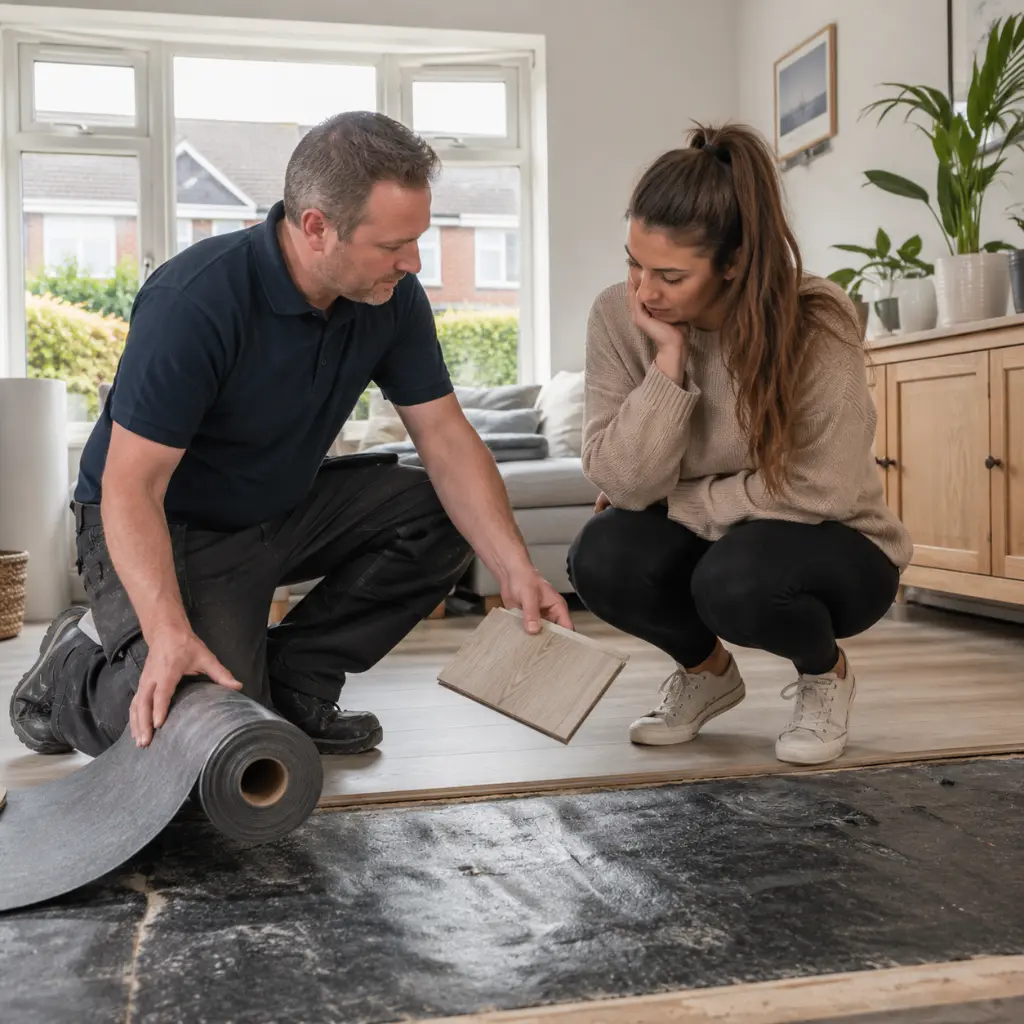
The most reliable way to assess a flooring sample is to handle it directly. A quality laminate or vinyl product should feel substantial and dense when you flex it. Thin, flimsy samples that bend easily under light pressure indicate a lower grade product that will not hold up well once it is fitted and in regular use. Press a fingernail lightly into the surface. A quality wear layer should show no mark. If the surface dents or scratches with minimal effort, the product will struggle in a busy household with children, pets, or heavy foot traffic.
For carpet samples, run your hand firmly across the pile and observe whether the fibres spring back or remain flattened. A resilient pile that recovers quickly is a sign of sound construction. A sparse or loosely tufted carpet will flatten permanently under regular use and is unlikely to hold its appearance for long, particularly on stairs or in hallways.
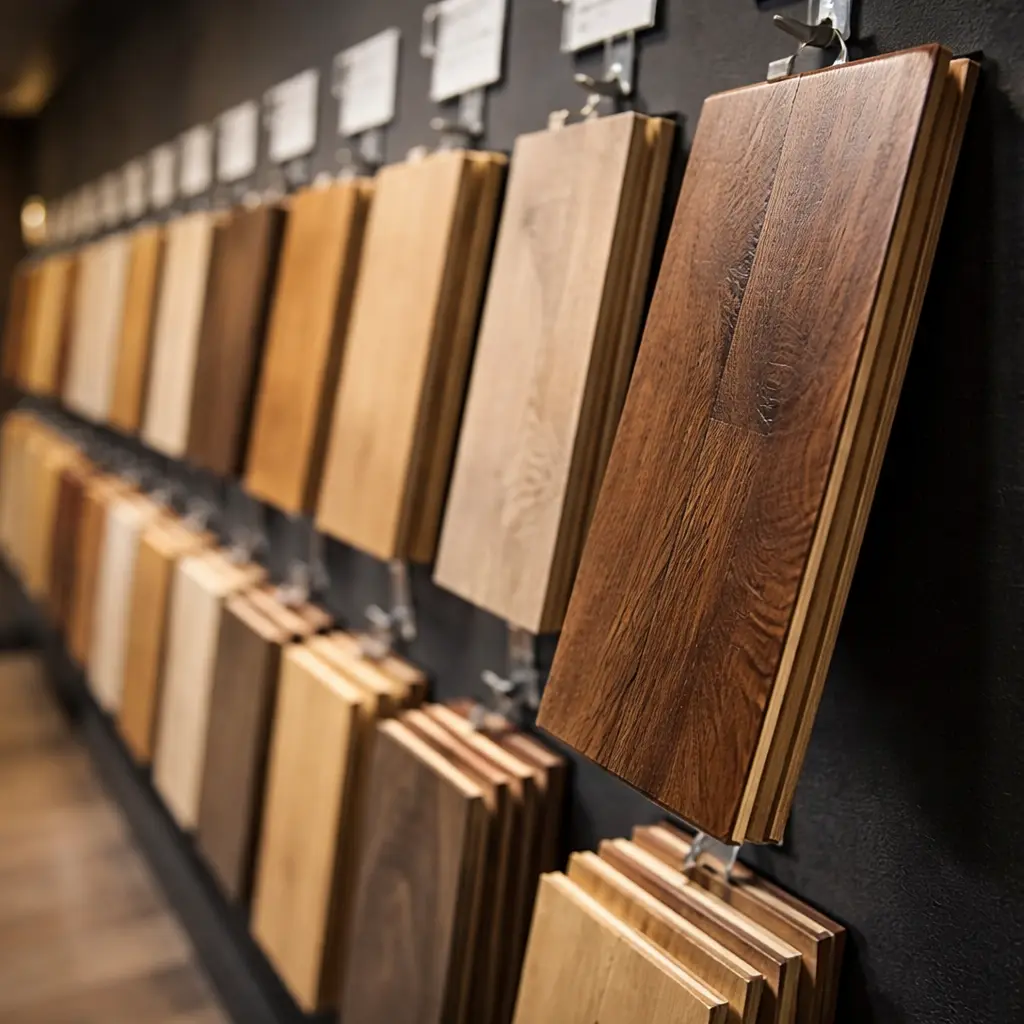
On laminate and vinyl products, the wear layer is the transparent protective coating that sits above the decorative surface. It takes all the daily punishment, and its thickness directly determines how the floor performs over time. When comparing products, always ask for the wear layer specification. A product with a thicker, higher grade wear layer will consistently outperform a cheaper alternative in scratch resistance, scuff resistance, and long-term appearance. If a retailer cannot tell you the wear layer grade, that alone tells you something about the product.
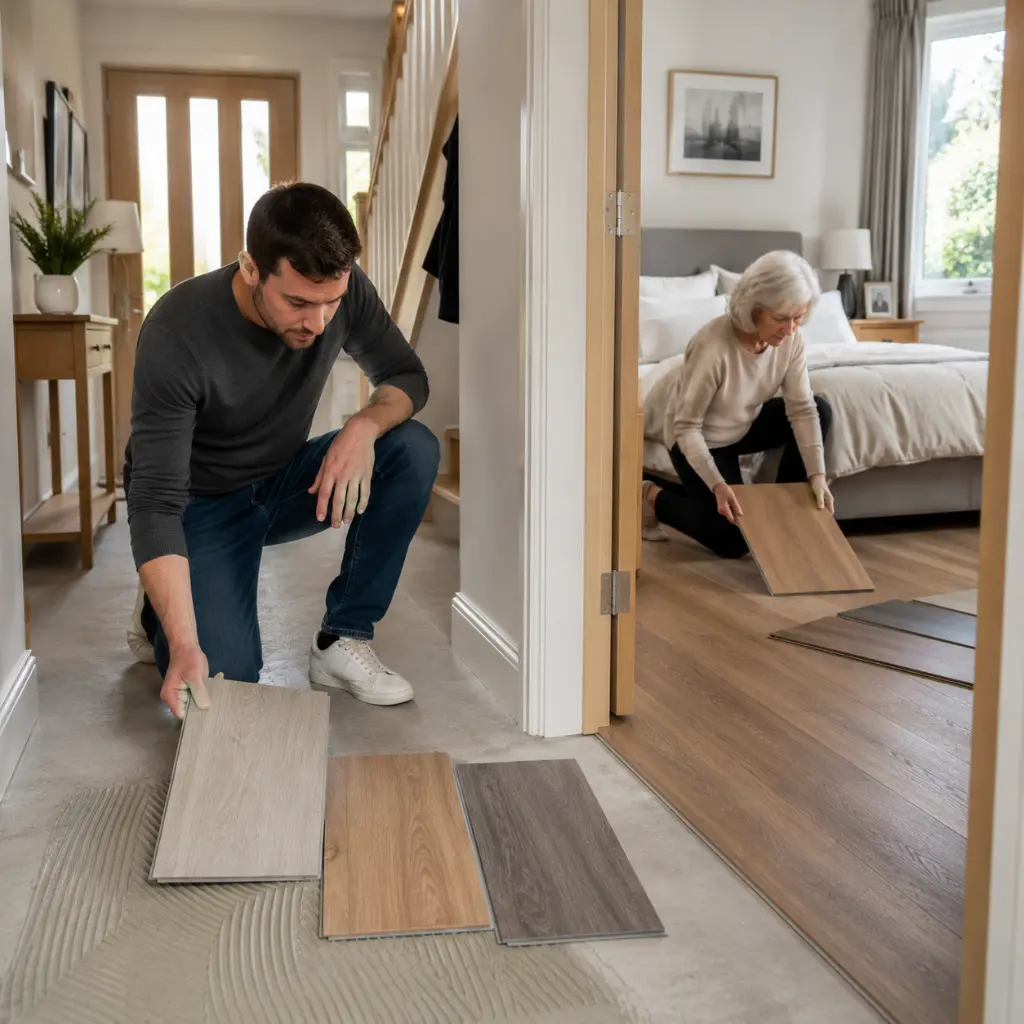
A floor that looks appealing under showroom lighting can appear quite different once it is laid in your home. Always check flooring samples in natural daylight as well as artificial light before making a final decision. Take samples home if possible and place them in the intended room at different times of day. Poor quality products often reveal colour inconsistency, surface blemishes, or obvious pattern repetition far more clearly under natural light, and these issues become considerably more noticeable once the floor is fully laid across the whole room.
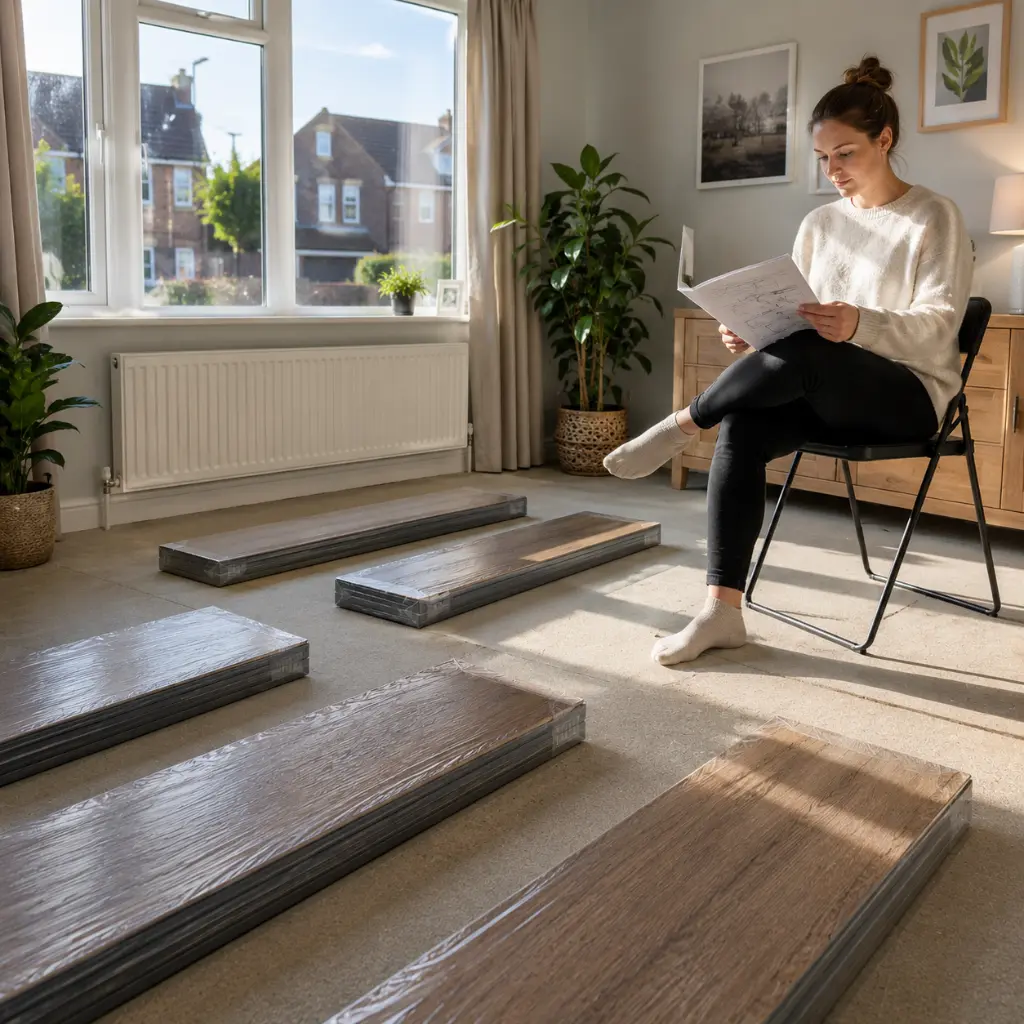
UK homes experience genuine seasonal variation, from cold damp winters to warmer summer months, and flooring materials expand and contract accordingly. Poor quality laminate is particularly prone to gapping in cold conditions and buckling in warmer weather when the product construction is not up to standard. When reviewing any product, check whether it carries a clear specification for temperature and humidity tolerance. Flooring compatibility with underfloor heating is also worth confirming at this stage if relevant to your property. A well-made floor will be engineered to remain stable across a reasonable range of conditions. If that information is absent from the product details, treat it as a warning sign.
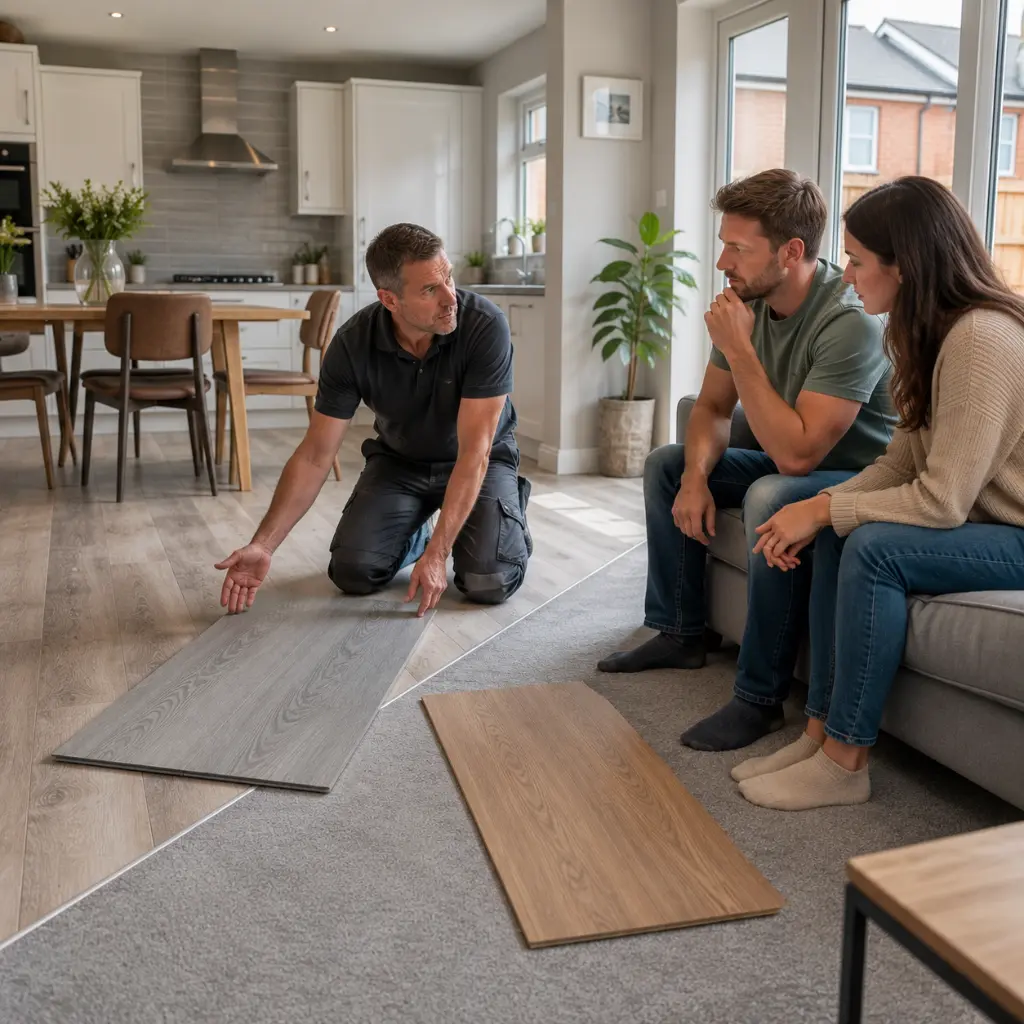
If you are finding it difficult to evaluate what you are looking at, Floor Coverings Local is happy to guide you through product specifications, wear layer grades, and the practical differences between options before you spend anything.
Understanding what separates a poor quality product from a well-made one makes the selection process considerably more confident. The table below sets out the key differences across the features that matter most in daily home life.
| Feature | Poor Quality Flooring | Quality Flooring |
| Wear layer | Thin, marks and scratches easily | Thicker grade, resists wear effectively |
| Flexibility | Flimsy, bends under light pressure | Dense and firm when handled |
| Surface finish | Inconsistent, visible blemishes | Even, consistent across the board |
| Temperature response | Gaps or buckles with seasonal shifts | Stable across a reasonable range |
| Pile recovery (carpet) | Flattens and stays compressed | Springs back after compression |
| Click joints and edges | Rough or uneven profiles | Clean, tight fitting and secure |
Laminate is one of the most widely purchased flooring types in UK homes and also one where the variation between products is most pronounced. When assessing how to choose a quality laminate floor, these are the key indicators to work through before making any decision:

Taking samples home is one of the most valuable steps in the flooring selection process and one that is often skipped in favour of a quick showroom decision. To get the most out of your samples, work through the following before committing:
Taking time to assess flooring before you buy properly is one of the most reliable ways to avoid disappointment further down the line. The physical tests, wear layer checks, lighting assessments, and sample comparisons in this guide give you a solid foundation for any flooring decision. If you are also considering practical needs such as durability, comfort underfoot, or even a soundproofing floor solution to reduce noise between rooms, evaluating samples in advance becomes even more important.
At Floor Coverings Local, we know that buying flooring can feel overwhelming when you are faced with a wide range of products and specifications. We are here to make that process simpler. Speak to our team before you commit and we will help you find the right product for your home, your budget, and the way you actually live in it.