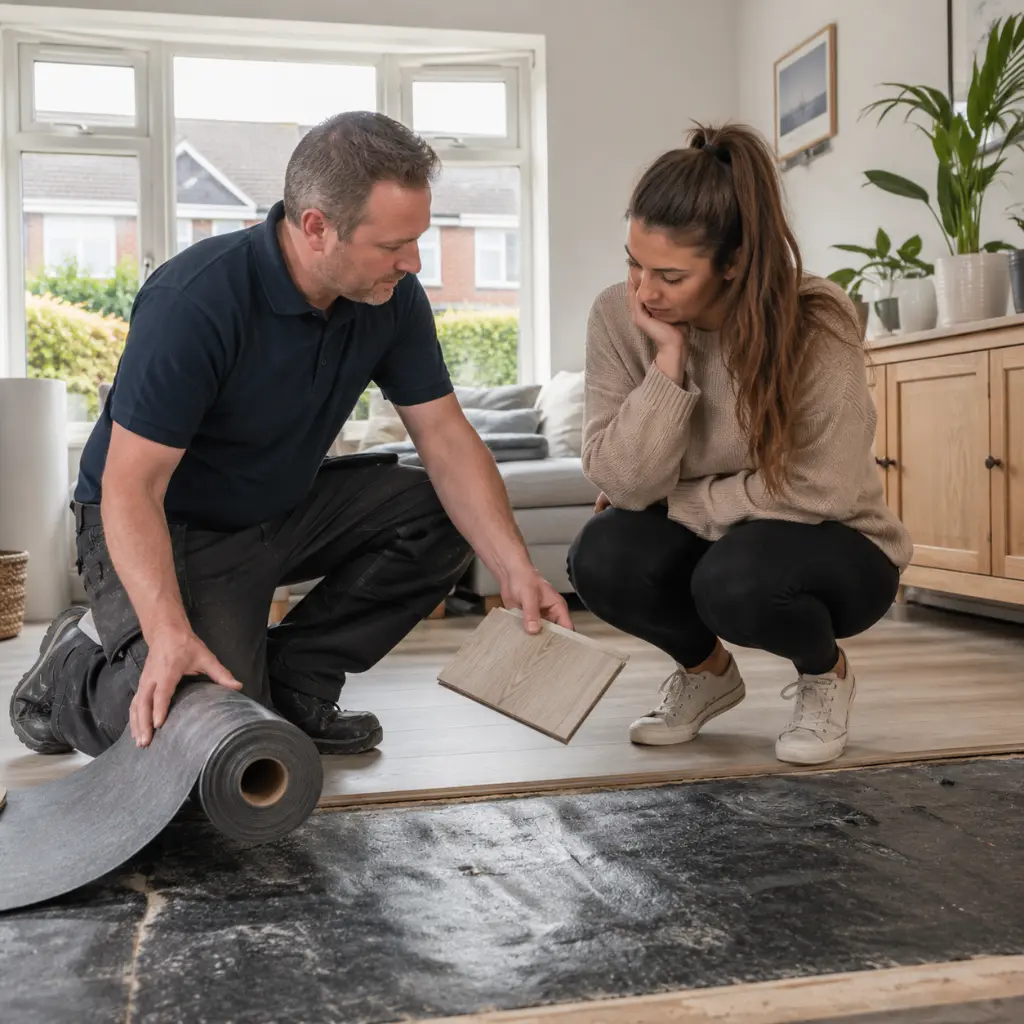
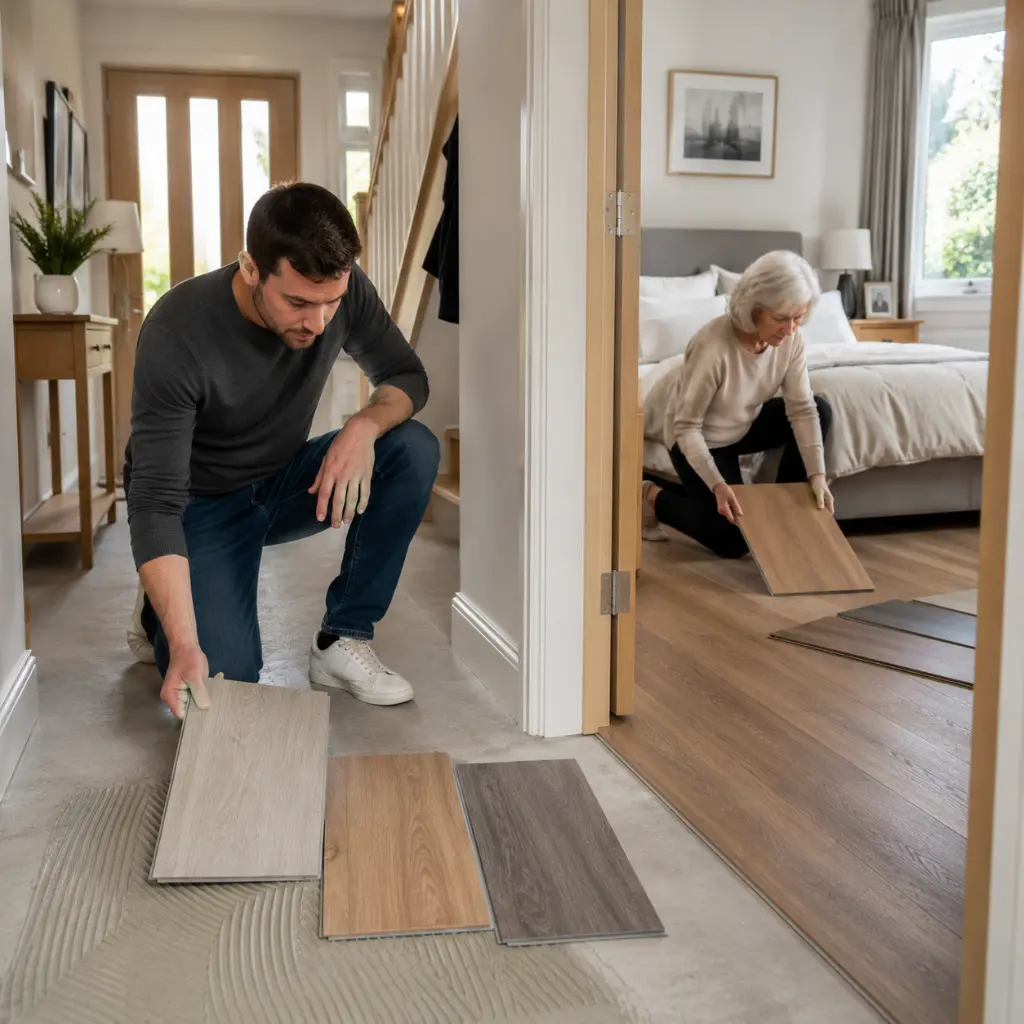
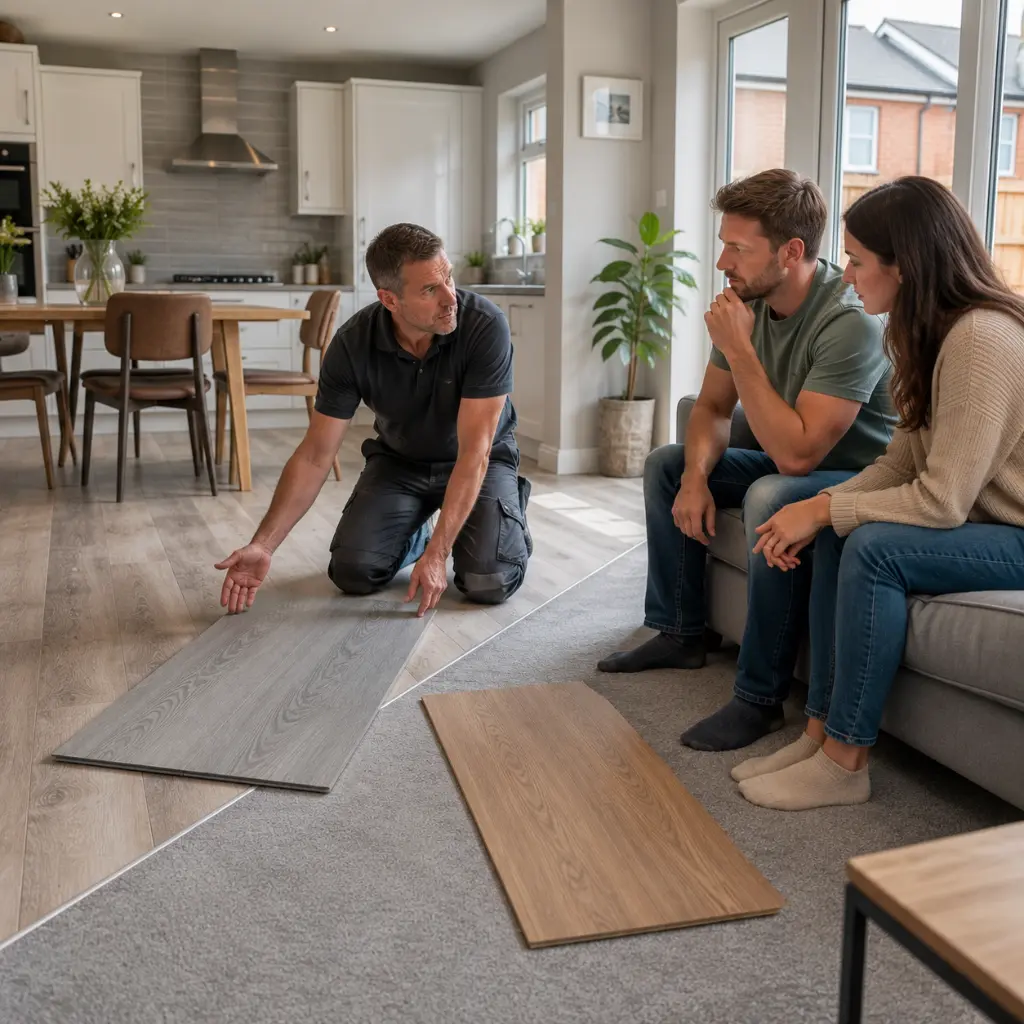
Choosing between carpet and vinyl flooring seems simple enough until you're actually faced with the decision. Every room has different demands, every household has different habits, and both materials have a strong case to make. What works perfectly in one space can be a poor fit in another.
Here's a straightforward breakdown to help you decide, covering how to choose the right flooring for each room based on how you actually live in it.
| Factor | Carpet | Vinyl |
| Lifespan | 5–10 years | 10–20 years |
| Underfoot comfort | Excellent | Moderate (cushioned options available) |
| Cleaning effort | High | Low |
| Best rooms | Bedrooms, lounges, studies | Kitchens, hallways, bathrooms, family rooms |
| Suitable for pets/children | Manageable | Easier |
At first glance, the price difference between carpet and vinyl flooring is smaller than most people expect. You can find budget options for both below £10 per m², and premium versions of each pushing well past £25 per m² for materials alone.
The real cost gap opens up over time. Carpets in a busy hallway or family room typically need replacing within five to seven years. A quality vinyl, fitted correctly, can last twice that. Add in periodic professional carpet cleaning, the odd stain treatment, and the faster pace at which carpet wears in heavy-use areas, and is vinyl cheaper than carpet over a full decade? For most households, yes.
That said, carpet holds its own value in the right setting. For a rarely-used guest bedroom, a decent mid-pile carpet will feel infinitely more welcoming than budget vinyl, and it won't cost a great deal more to buy.
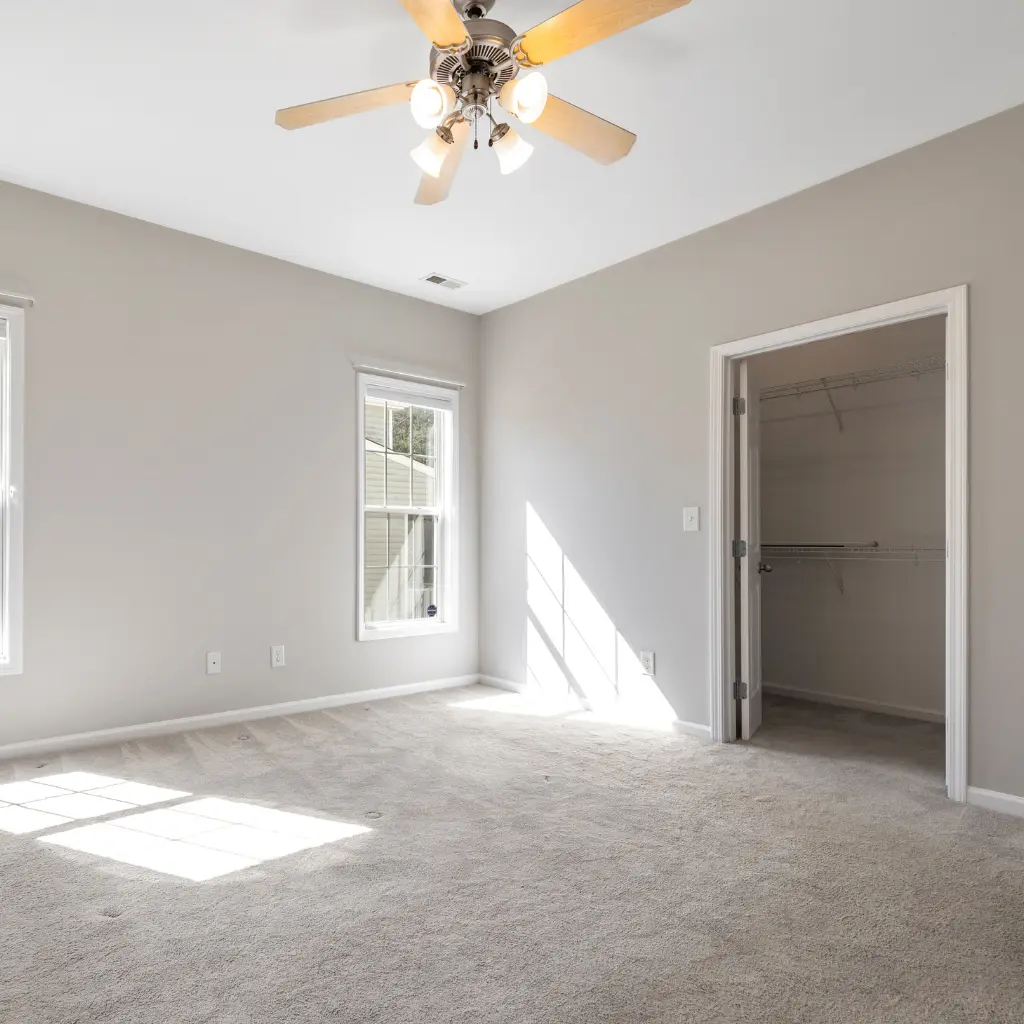
Living rooms create a genuine dilemma because they serve two very different purposes. They're spaces where you want warmth and comfort, but they also take more daily punishment than almost any other room in the house.
Carpets suit living rooms well when comfort and atmosphere take priority. A wool-blend or mid-pile synthetic carpet adds warmth underfoot, softens the acoustics of a room, and gives the space a cosiness that vinyl rarely replicates. In older UK homes without underfloor heating, the difference carpet makes to how a room feels in January is noticeable.
Vinyl makes more sense if the room sees heavy traffic, especially in households with dogs or young children. A good quality wood-effect LVT handles muddy boots and drink spills without any drama, and it holds its appearance far longer than carpet does under that kind of daily use.
The practical split most households land on: carpet in a quieter formal lounge, vinyl in a busy open-plan living and dining area.
For most bedrooms, carpet is the obvious choice, and it's hard to argue against it.
Bedrooms are low-moisture, low-footfall spaces. The practical advantages vinyl offers elsewhere simply don't come into play much here. What does matter is comfort: the softness underfoot when you get up in the morning, the warmth on a cold floor, the way carpet absorbs sound in a semi-detached or flat. Carpet or vinyl flooring in the bedroom decisions ultimately come down to this: if the room is calm and dry, carpet wins.
The one exception worth noting is a young child's bedroom used as a play space. Where mess is frequent, and the floor takes a beating, a cushion-backed vinyl or a stain-treated polypropylene carpet is a more sensible fit than a plush pile that holds onto everything.
Vinyl, no debate needed. Carpets in a kitchen or bathroom are a poor choice regardless of the style. Moisture, steam, and daily splashes will cause the carpet to hold damp, deteriorate from the backing upwards, and eventually develop mould that's difficult to address without replacing the floor entirely.
Vinyl handles all of it without complaint. It's waterproof, easy to wipe down, and built for rooms where water gets onto the floor regularly. Tile-effect vinyl deserves a particular mention. The quality of modern embossing and printing means a good LVT is genuinely difficult to distinguish from real ceramic up close, at a considerably lower cost to buy and fit.
In bathrooms, especially in rental properties or family homes, vinyl is also far more practical around sinks, baths, and toilets, where water sits on the floor more often than you'd like.
Vinyl has a clear structural advantage. Its wear layer, the protective surface coating, resists scratching, scuffing, and staining in a way that carpet simply cannot. A mid-range luxury vinyl with a 0.3mm wear layer will hold up well under normal residential use. For heavier use, a 0.5mm or 0.7mm wear layer is worth the extra spend.
Carpet durability swings widely depending on fibre and pile construction. Nylon holds its shape best in busy areas. Polyester is softer but flattens faster. Wool is naturally resilient and recovers well from compression, but it costs more and needs careful upkeep.
Even a good quality carpet in a hallway starts to look flattened and worn within a few years. Vinyl in the same spot will typically still look presentable at year seven or eight.
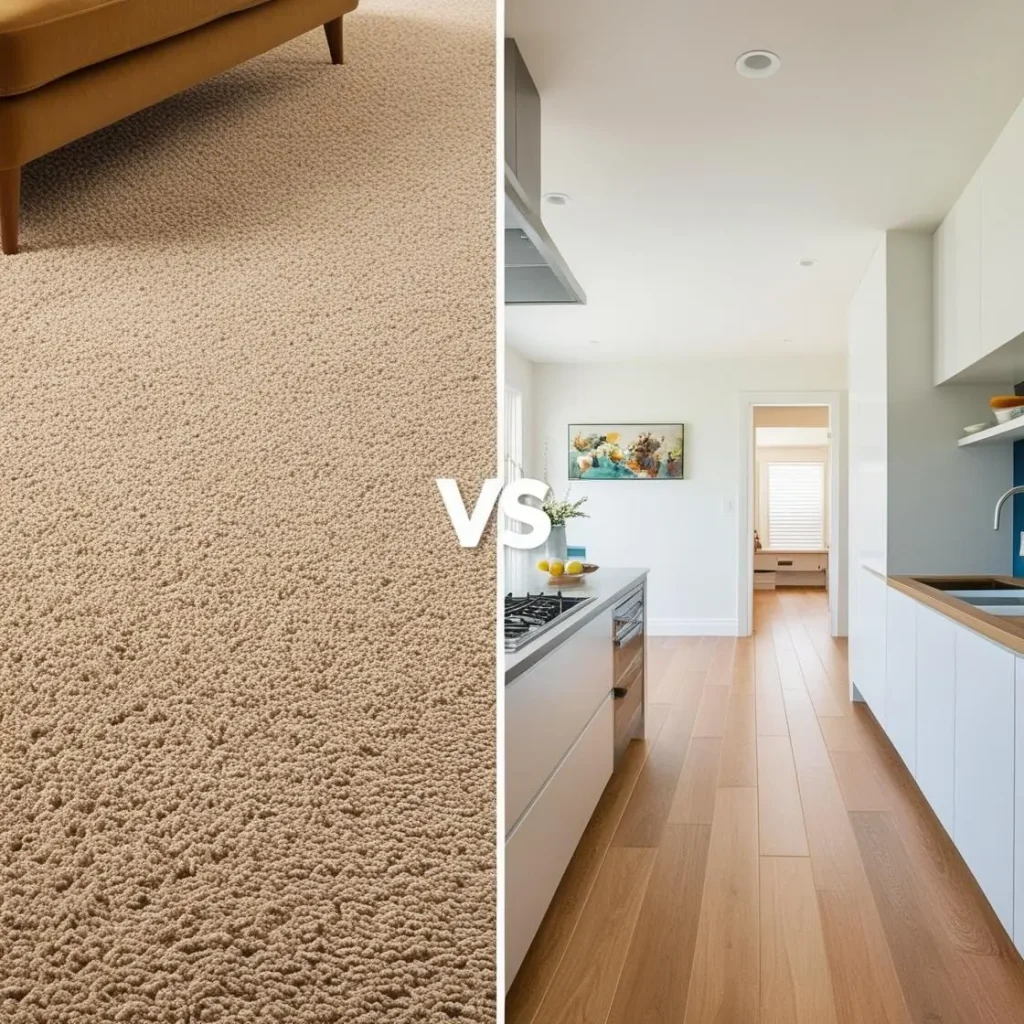
Vinyl, and there's not much competition.
A spill on vinyl is dealt with in seconds. The same spill on carpet, particularly anything with colour, means blotting, product, waiting, and hoping. Pet accidents are especially difficult on carpet; the odour works into the underlay and can be almost impossible to remove fully.
Day-to-day, vinyl asks very little of you. A sweep and a mop are all it needs. There's no pile to harbour pet hair, no fibres to trap dust mites, and no surface texture that holds onto grime.
The allergy question is slightly more nuanced. Carpet does capture airborne particles and allergens within its pile, stopping them from circulating in the air. The problem is that it only works consistently if the carpet is vacuumed and deep-cleaned on a regular schedule. Let that slip, and the carpet stops acting as a filter and starts acting as a store. Vinyl, kept clean, simply reduces the overall amount of allergen material in a room.
Not all vinyl is equal. When comparing different vinyl flooring types for your home, the wear layer thickness is the most important specification to check. For a quiet bedroom or study, 0.2–0.3mm is usually adequate. For a kitchen, hallway, or family room, look for at least 0.5mm. For commercial settings or very heavy residential use, 0.7mm and above is the safer choice.
Beyond that, check whether the product has a rigid core (SPC or WPC). Rigid core vinyl is more stable underfoot, handles minor subfloor imperfections better, and doesn't expand and contract as noticeably with temperature changes as older sheet or click vinyl does.
Fibre and construction shape how a carpet performs far more than its price tag alone.
Saxony Carpet is known for its deep, plush pile and luxurious finish. It creates a smooth, elegant look that works beautifully in bedrooms and formal living areas. When made in wool, Saxony offers both comfort and durability, making it ideal for spaces where softness and sophistication matter most.
Berber Carpets, with their looped construction, are built for practicality. The textured surface resists flattening and shows less shading, making it well-suited to stairs, hallways, and busy family spaces. Wool Berber carpets combine durability with natural warmth, offering performance without sacrificing quality.
Choosing the right option comes down to how the room is used. For comfort and luxury, wool Saxony is ideal. For resilience and everyday practicality, Berber styles offer long-lasting performance, while commercial carpet tile offers flexibility and durability in demanding spaces.
Most homes already do, and it works well. Carpet in the bedrooms and sitting rooms, vinyl in the kitchen, bathrooms, and hallways. It's a sensible split that plays to what each material is actually good at. Used together, vinyl and carpet flooring cover every room type without either material being pushed beyond what it's designed for.
The detail worth getting right is the transition between the two. A flush or ramp transition strip, fitted properly, makes the join look considered. Fitted badly, or skipped entirely, it becomes a visible fault line and a minor trip hazard.

What flooring is best for high-traffic areas?
Vinyl, particularly luxury vinyl planks or tiles with a robust wear layer. It handles sustained daily use without the visible deterioration that carpet shows over the same period.
Is vinyl flooring better than carpet?
In practical terms, vinyl outperforms carpet on durability, moisture resistance, and ease of cleaning. The carpet offers more comfort, warmth, and acoustic softness. If you are planning to remove carpet, vinyl can be a practical alternative, but the better option depends entirely on how the room is used.
Can vinyl go on stairs?
It can, but carpet remains the more popular choice for UK staircases, softer underfoot and better grip. If you do use vinyl on stairs, the nosings need to be fitted with care to avoid any slip risk.
How long does vinyl flooring last?
A good quality luxury vinyl, properly fitted, will last 15 to 20 years in a home. Budget vinyl under regular use typically needs replacing between eight and ten years.
Choosing the right residential floor coverings is about balancing appearance, durability, and practicality. Every room in your home has different demands, and the best flooring choice supports how you actually live day to day. From comfort underfoot to long-term performance, taking the time to weigh your options ensures you invest in something that will look good and last.
If you’re unsure which style or material is right for your space, getting professional advice can make the decision much easier. At Floor Coverings Local, we’re here to guide you through the choices and help you find flooring that works beautifully for your home.