When new flooring is on the horizon, one question tends to come up almost immediately: Should you attempt the work yourself, or bring in a professional? It is a genuinely important decision, and the right answer depends on far more than budget alone. The type of flooring, the condition of your subfloor, the layout of your property, and your own level of practical experience all play a role. If you want to understand what a professional installation service typically involves, it can be helpful to review a local flooring service as a reference. This guide looks at both routes honestly, so you can make an informed choice that suits your home and your circumstances.
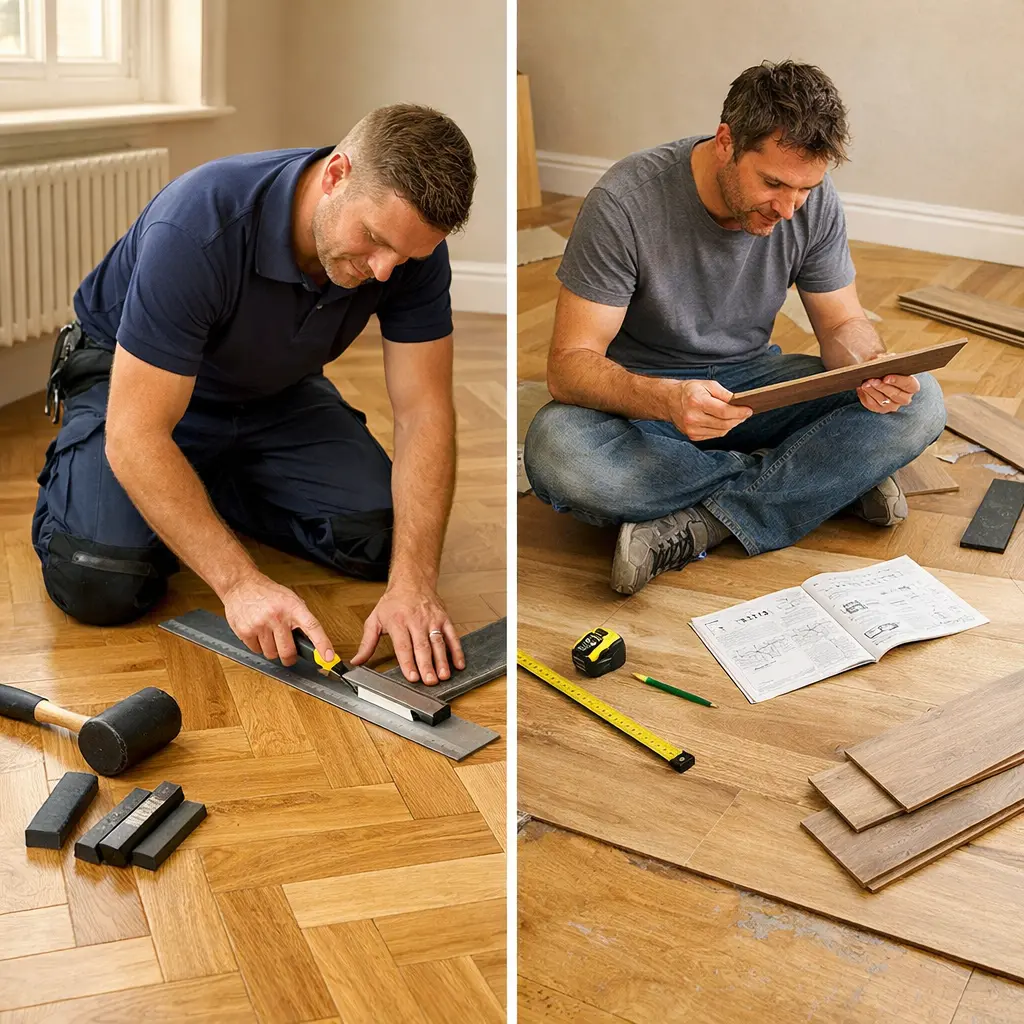
DIY fitting has grown in popularity, particularly with the rise of click-lock laminate and luxury vinyl products that are marketed as straightforward to lay. For smaller rooms or simple rectangular spaces, confident and practically minded homeowners may find it a manageable option. It can save on floor fitting labour costs and gives you full control over the pace of the project.
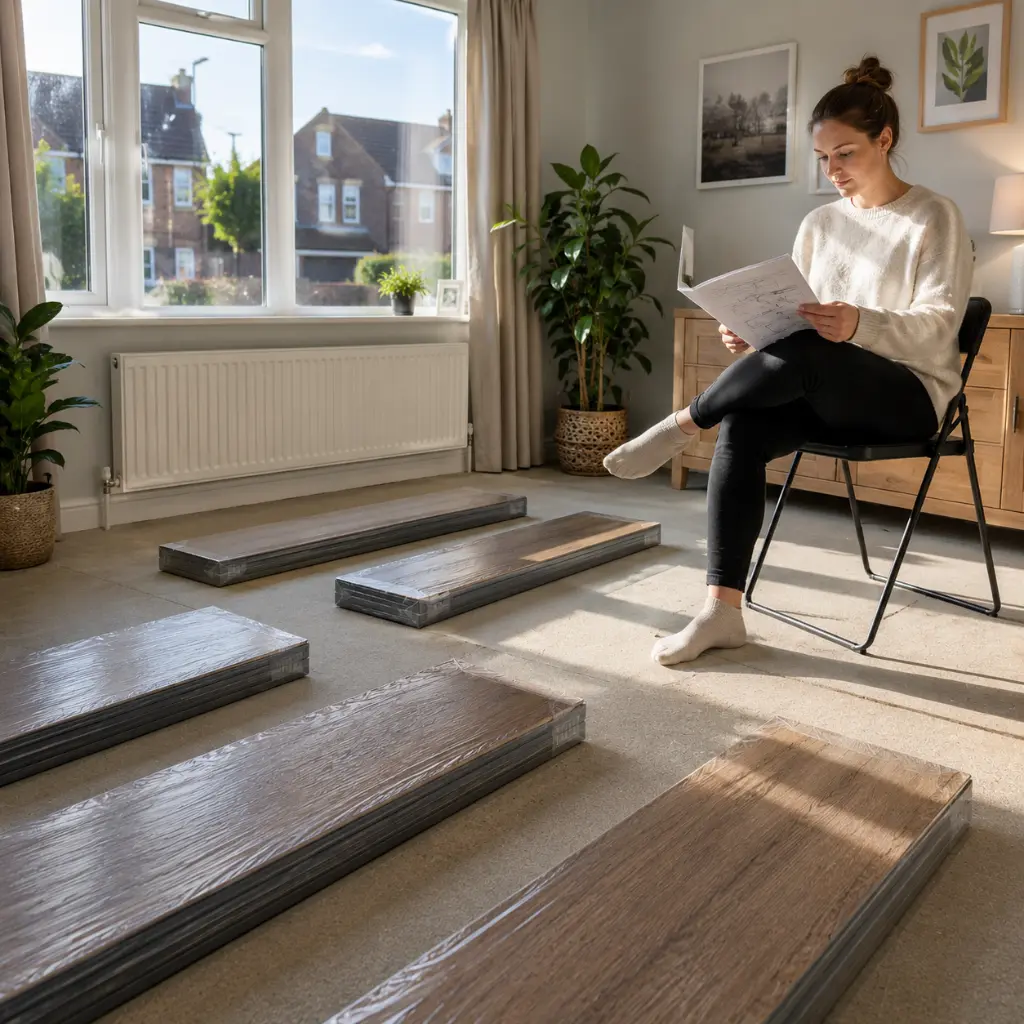
Laying your own floor is not simply a case of clicking boards together and trimming the edges. A proper installation includes accurate measurement and cutting, thorough subfloor preparation, correct underlay selection, and careful attention to expansion gaps and room transitions. Skipping any of these steps can cause problems further down the line, from uneven surfaces to boards lifting or buckling under normal use.
Before deciding to lay laminate flooring yourself or tackle any other flooring type, it helps to weigh things up realistically.
In properties with uneven subfloors or older Victorian layouts, DIY becomes considerably more demanding. UK homes are rarely simple, and even experienced DIYers can encounter issues that require professional remediation.
This is where many DIY guides fall short. The difficulty of fitting a floor varies enormously depending on the product, and it is worth understanding those differences before you commit.
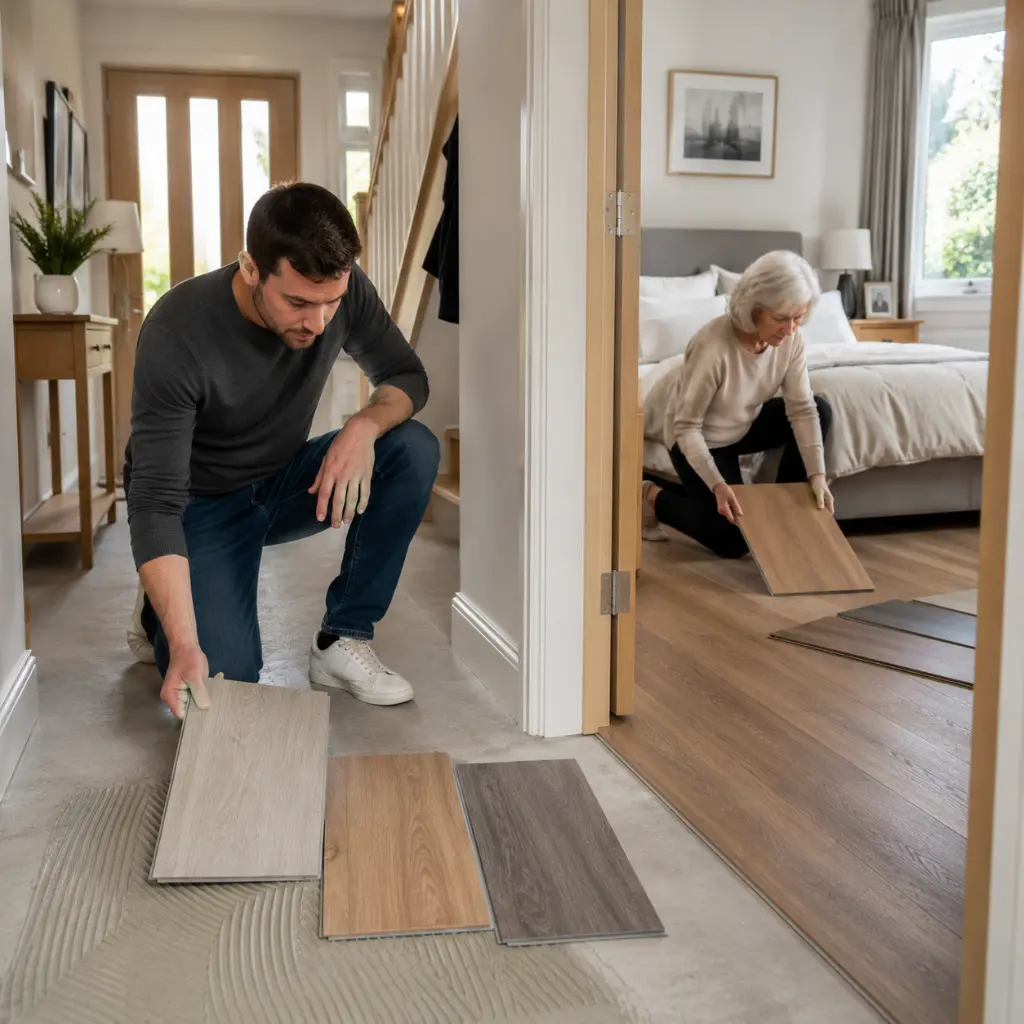
These are the most DIY-friendly options on the market. LVT and click-lock laminate are designed for straightforward installation, with systems that do not require adhesive in most cases. On a flat, dry subfloor in a new build or recently renovated space, a competent DIYer can achieve a respectable result. That said, cutting around doorframes, pipework, and awkward angles still requires care and the right tools.
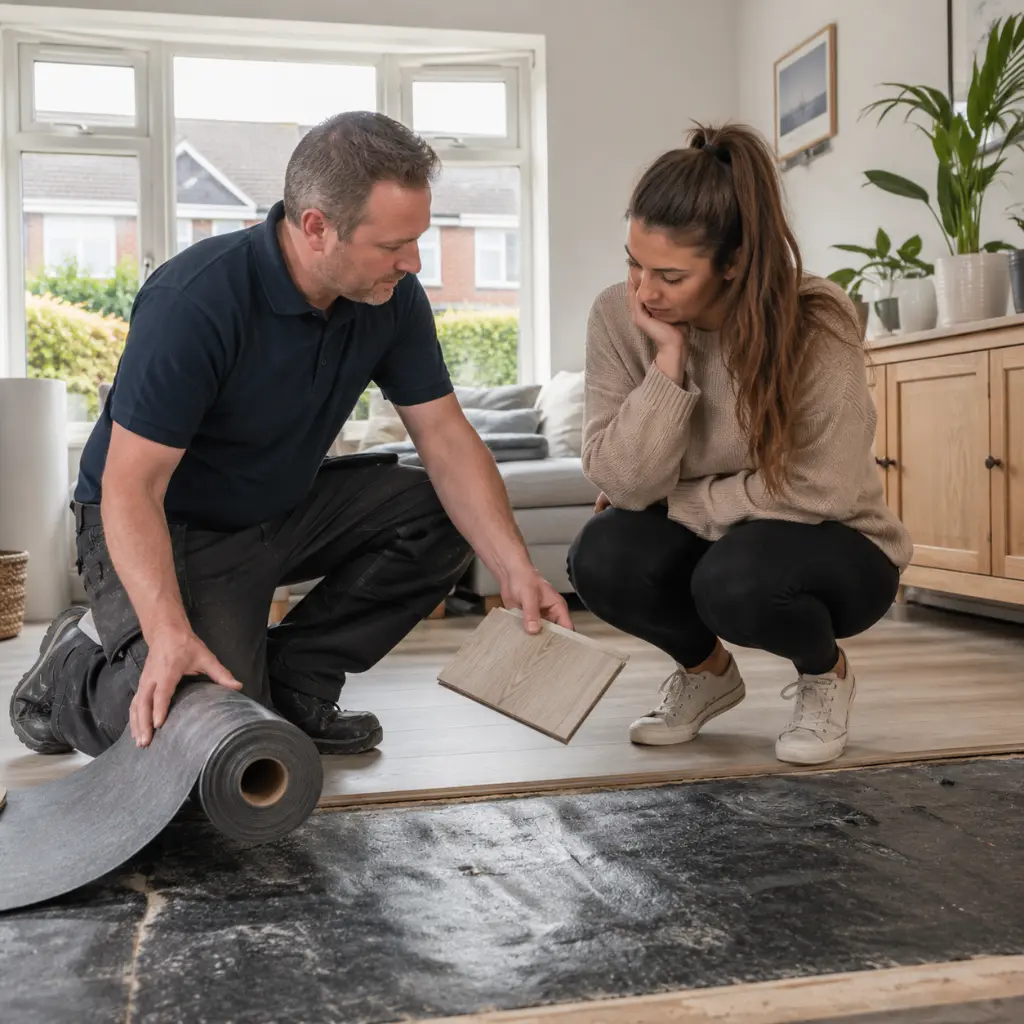
Sheet vinyl installation requires a high level of precision. The material is supplied in large rolls, which means accurate measuring and templating are essential before cutting. Any incorrect cut can result in the loss of a costly section of flooring. Achieving neat, almost invisible seams in larger rooms also requires experience and careful technique. Without proper subfloor preparation and skilled installation, issues such as bubbling, lifting edges, or uneven surfaces can easily occur.
Carpet fitting looks deceptively simple but relies on correct tensioning, proper use of gripper rods, and accurate seaming where joins are needed. Poor tension leads to rippling over time, and mishandled seams are visible and difficult to correct without starting again. In most cases, professional fitting delivers a significantly better result and a longer-lasting finish.
Carpet tiles are among the more accessible options for a confident DIYer, particularly in square or rectangular rooms. The key is getting the layout right from the outset, as poor planning leads to awkward cuts at the perimeter and a finish that looks unbalanced. Following the correct installation pattern also affects how the tiles wear over time.
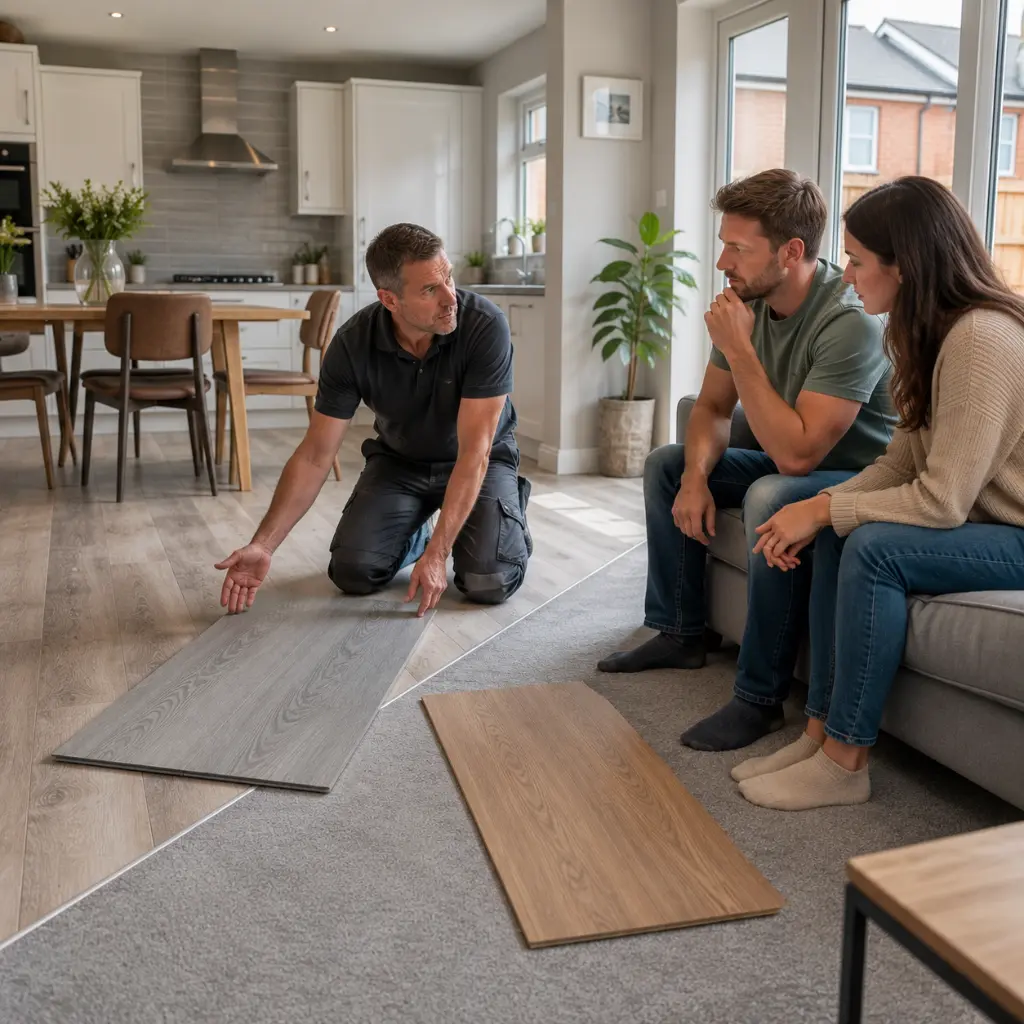
For larger areas, complex room shapes, or whole-house projects, the case for bringing in experienced fitters is strong. It is not simply about getting a neater edge. Professional fitters assess the subfloor before anything goes down, identify issues that would otherwise surface later, and select the right preparation method for the conditions they find.
In UK homes, where damp winters, condensation, and seasonal temperature shifts can affect moisture levels beneath a floor, proper subfloor assessment is especially important. A professional will check for movement, damp, and levelness before laying a single board. That groundwork is what separates a floor that lasts from one that starts failing within a year.
A DIY flooring project can stretch across several weekends, particularly in a larger semi-detached home or a terraced property with multiple rooms and awkward hallways. Professionals work efficiently and complete the same job in a fraction of the time, reducing disruption to the household and getting your rooms back to normal quickly.
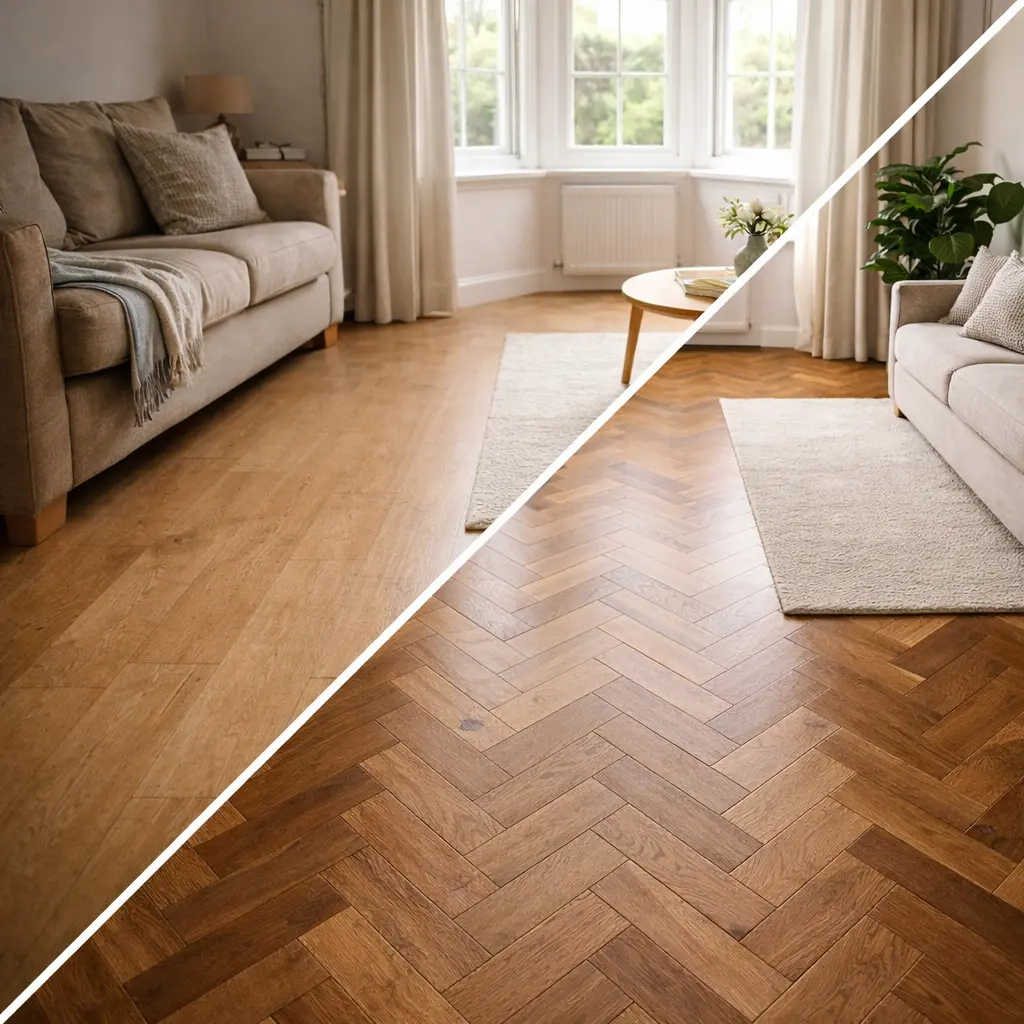
Many flooring manufacturers require professional installation as a condition of their product warranty. Fitting the floor yourself can invalidate that cover entirely, meaning any defect that emerges is yours to resolve at your own cost. When you are spending a meaningful amount on quality flooring, that is a risk worth thinking carefully about before picking up a tapping block.
If your current floor is starting to show its age or you are planning a larger refresh, it is worth speaking to Floor Coverings Local before you commit to a DIY approach. We can give you an honest assessment of what your project involves and whether professional fitting makes sense for your property and budget.
DIY may appear cheaper on paper, but the full picture includes tool hire or purchase, underlay, adhesives, trims, and the time investment itself. If errors occur, remediation can be expensive. Replacing damaged boards, re-laying sections, or correcting subfloor problems that were missed at the start can quickly push the overall cost beyond what professional fitting would have been from the outset.
DIY flooring is a realistic option for the right person, the right room, and the right product. But for most UK homeowners tackling a full room, a whole floor, or a property with any degree of age or character, professional fitting is the more reliable route when viewed over the life of the floor. The difference between a floor laid well and one laid hastily is visible every single day. A well-installed floor does more than enhance appearance; it provides the stable, durable foundation that every room depends on, ensuring comfort and performance for years to come.