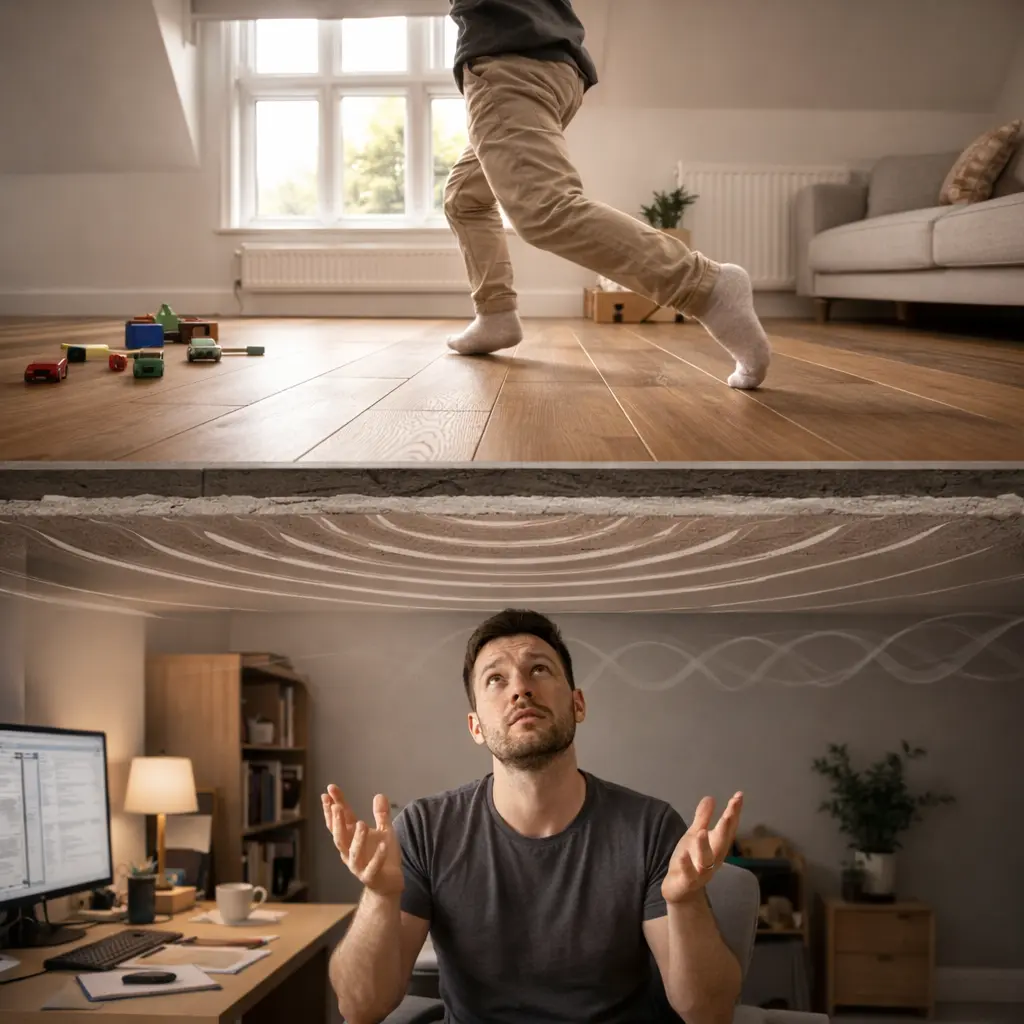
If you can hear every footstep from the floor above, you are not alone. Noise travelling between floors is one of the most common complaints in two-storey UK homes, from Victorian terraces to modern new-build estates. Understanding how to reduce noise between floors starts with knowing what type of noise you are dealing with and which solutions address it most effectively. This guide covers the practical options available to homeowners, with a particular focus on flooring choices and underlay, which are among the most accessible and impactful places to start.
Before selecting a solution, it helps to understand what you are actually dealing with. Floor noise falls into two distinct categories, and the right approach depends on which type is causing the problem.
Airborne noise includes sounds that travel through the air before passing through the floor structure. Voices, music, and television are common examples. This type of noise is transmitted through gaps, lightweight floor structures, and materials that vibrate easily when sound waves pass through them.
Impact noise is caused by physical contact with the floor surface. Footsteps, dropped objects, and furniture being moved are all typical sources. This type of noise travels directly through the floor structure itself and is often the more disruptive of the two in everyday domestic life. Reducing footstep noise from upstairs requires solutions that absorb or interrupt the vibration before it transmits downward.
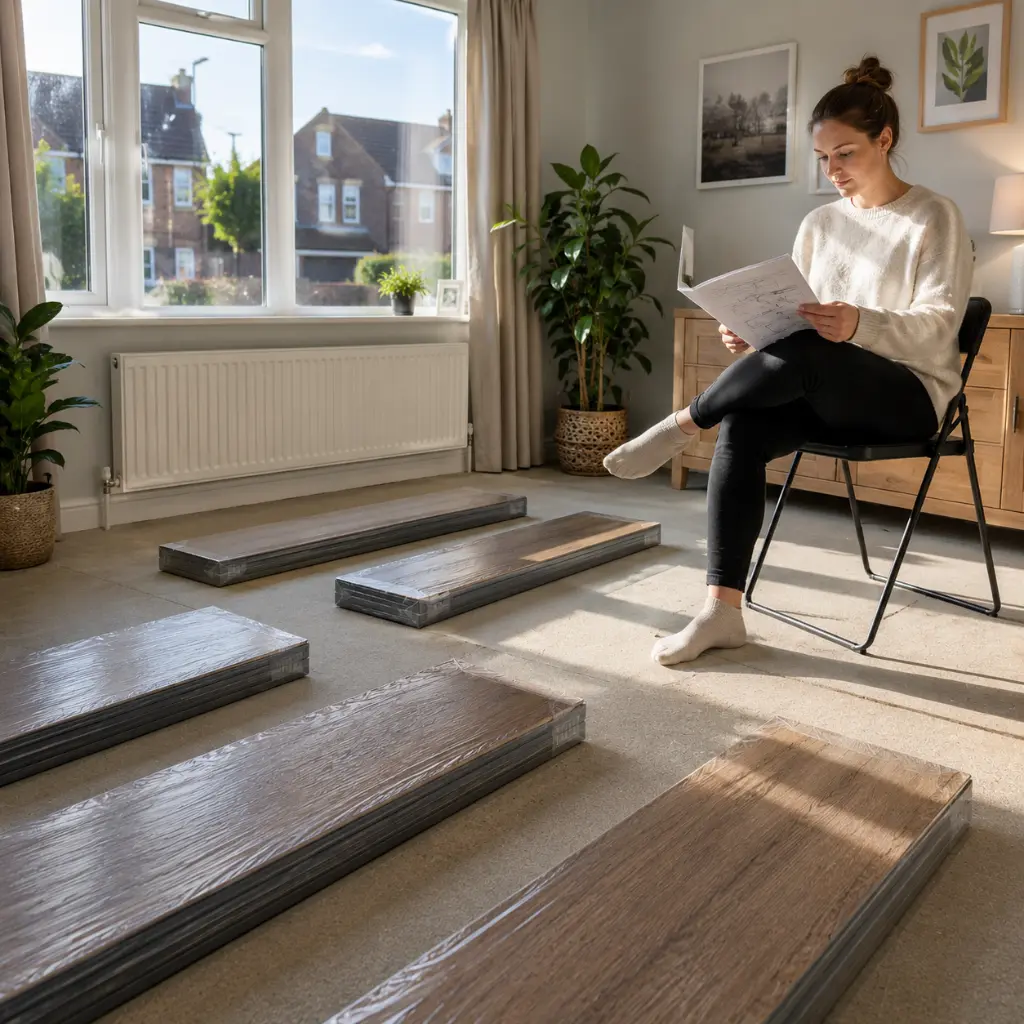
Improving noise insulation between floors is not always a single-fix situation. Before choosing a solution, there are several important factors to work through:
Before committing to new flooring or underlayment work, it is worth considering rugs as an immediate and low-cost measure. A large, dense rug placed in a heavily used upper-floor room, such as a bedroom, landing, or children’s play area, can absorb a significant amount of impact energy from footsteps before it reaches the floor structure. While this will not match the performance of a properly fitted acoustic solution, for renters or homeowners who are not yet ready to relay their flooring, it is a practical step that costs very little and can be put in place straight away.
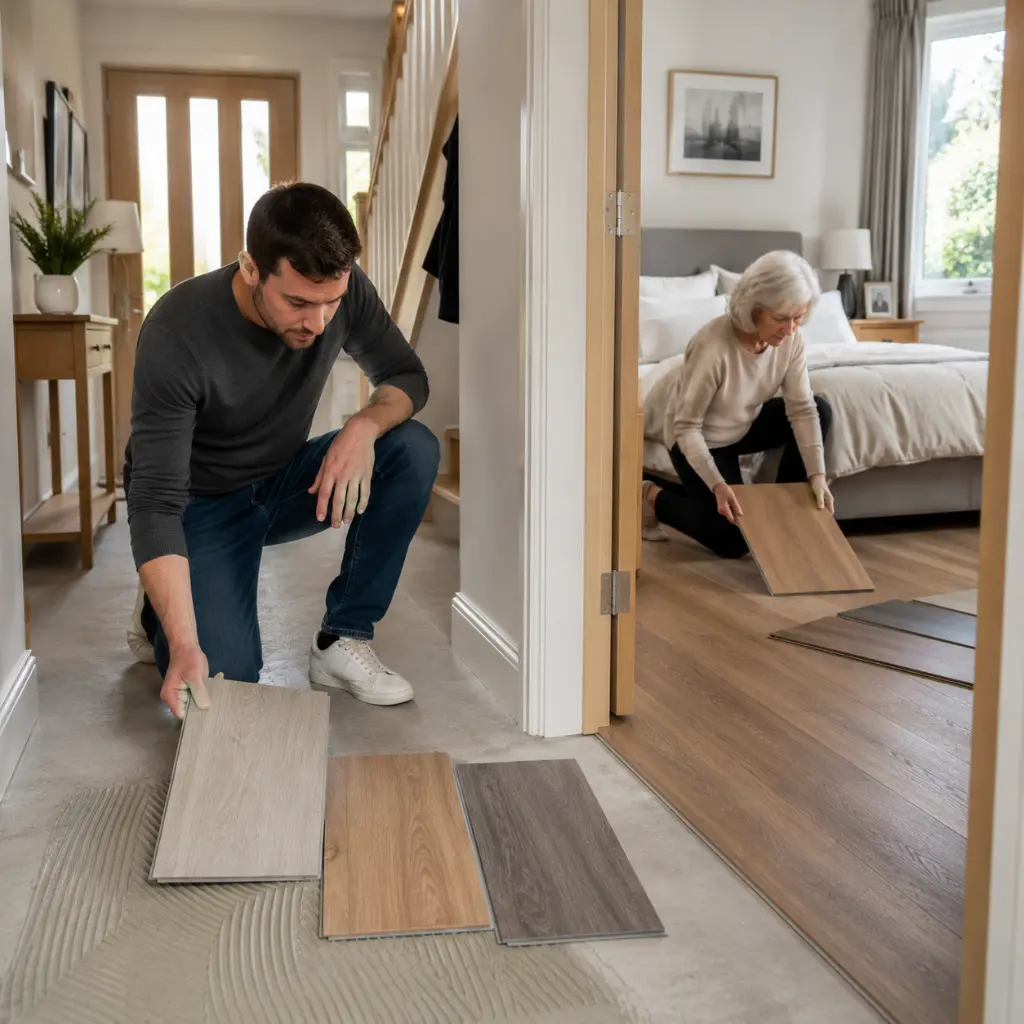
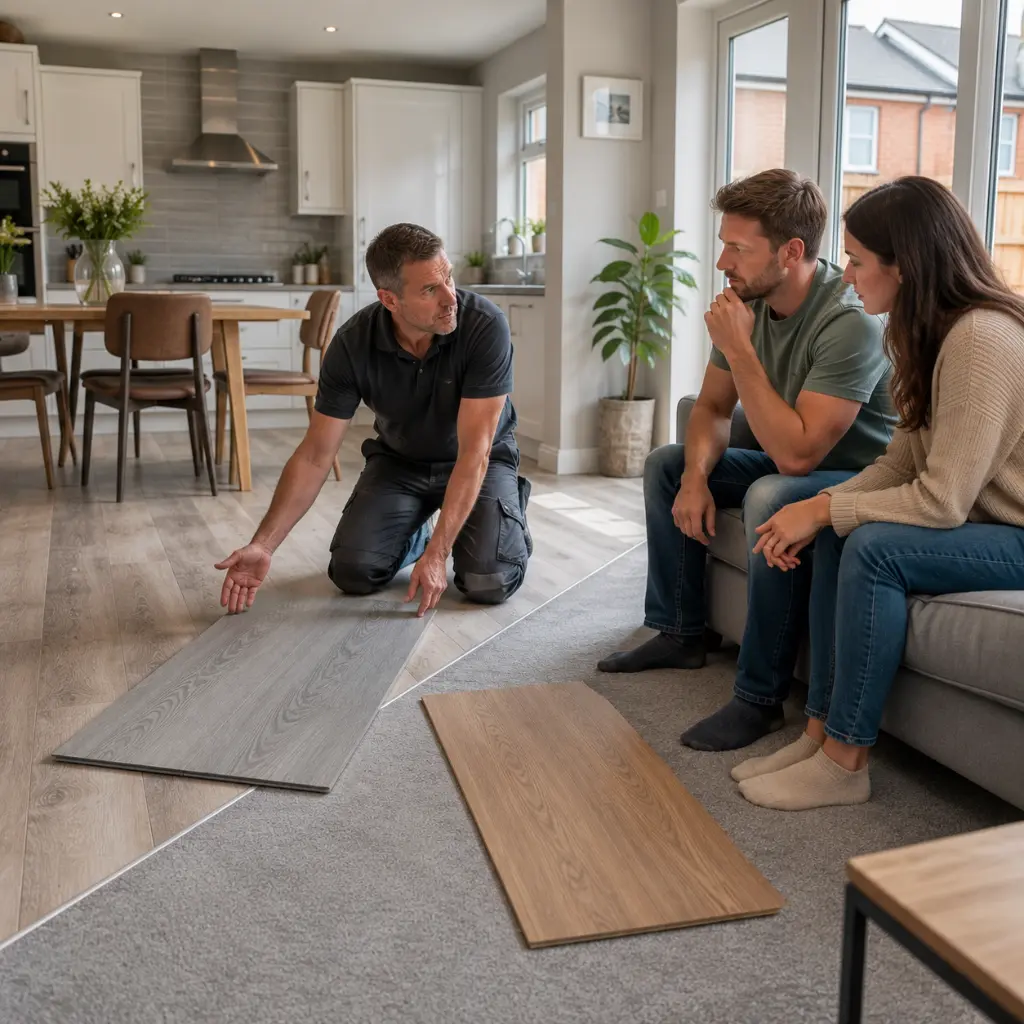
The flooring material laid on the upper floor has a direct bearing on how much noise transfers to the room below. Hard flooring surfaces, such as laminate, transmit impact noise more readily than softer materials, which is worth considering when choosing what goes down in rooms directly above living spaces or bedrooms.
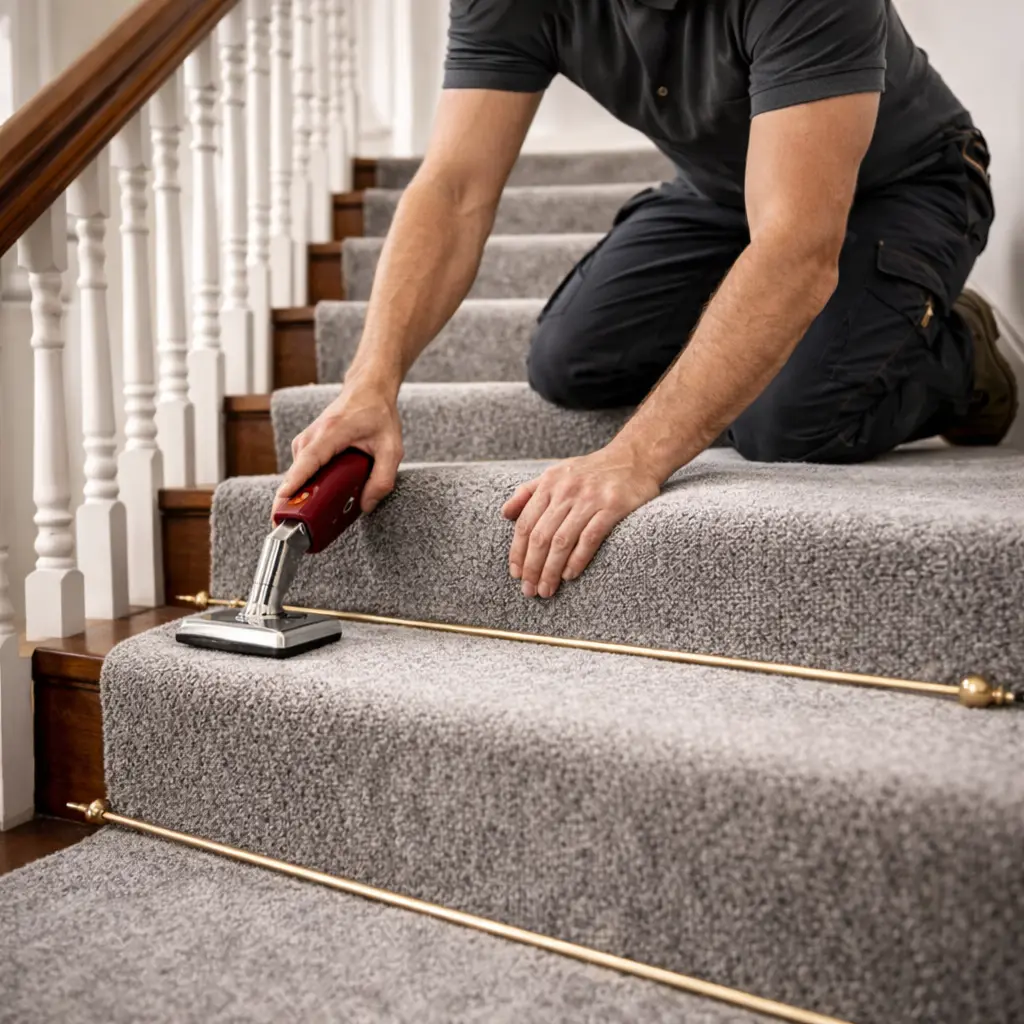
Carpet is the single most effective flooring choice for reducing impact noise between floors. The combination of fibres and padding absorbs the energy of footsteps before it can travel downward through the structure, making it particularly well-suited to bedrooms and upper-floor living areas. In a household where noise between floors is a genuine concern, fitting carpet upstairs rather than a hard surface will produce a more noticeable improvement than almost any other single change.
Laminate and vinyl are popular choices for upper floor rooms, and both can perform reasonably well from a noise perspective when the right underlay is selected. On their own, however, neither material absorbs impact in the way carpet does. The underlay beneath them carries much of the acoustic responsibility when these products are used on upper floors.
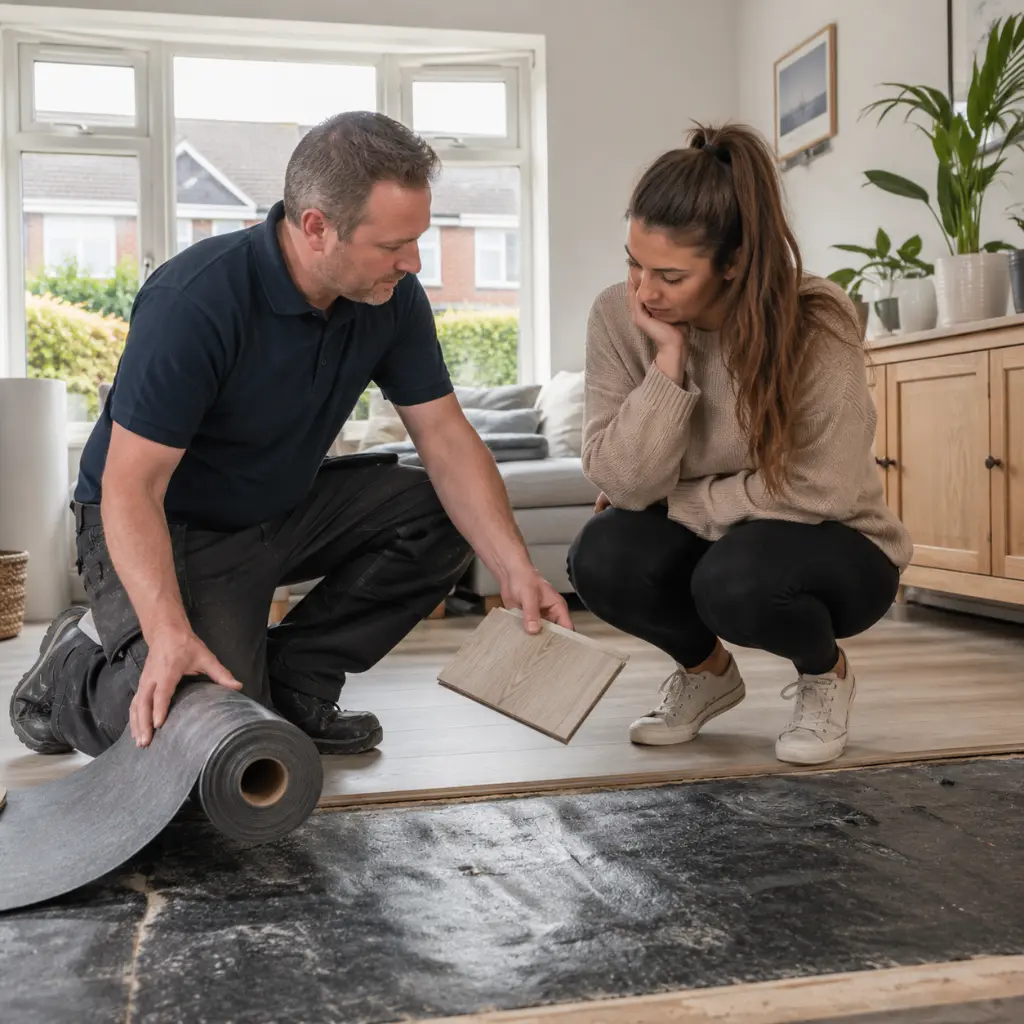
Underlay is one of the most important and underestimated factors in managing floor noise. Selecting the right product for the flooring type and the acoustic requirement makes a considerable difference to how the finished floor performs.
For carpet on upper floors, a dense and thick underlay will outperform a thinner, lighter option every time. Denser underlay absorbs more of the impact energy from footsteps and reduces the vibration that passes through to the ceiling below. If keeping noise between floors to a minimum is a priority, it is worth investing in a quality acoustic underlay rather than a standard option.
For laminate and luxury vinyl tile on upper floors, the underlay choice is essential to achieving worthwhile results. Key points to consider before purchasing:
If you are unsure which underlay suits your flooring and your situation, Floor Coverings Local can help. We supply and fit carpets, laminate, and vinyl across the UK and can advise on the right product for your property before any work begins.
Where flooring and underlay alone are not sufficient, there are further steps that can be taken, though most involve more significant work to the floor or ceiling structure.
In timber joisted floors, the cavity between the upper floor and the ceiling below can be filled with acoustic mineral wool insulation. This addresses airborne noise more effectively than impact noise and requires the ceiling to be removed and reinstated. It is a more involved process but produces a substantial improvement, particularly in older properties where the joist cavity is currently empty.
A floating floor system introduces a layer of resilient material between the subfloor and the finished floor surface, interrupting the path that vibrations travel through and reducing the transmission of both impact and airborne noise. Before deciding whether this is the right approach, consider the following:
Sound travels through gaps as readily as it travels through solid materials. Sealing the perimeter of the floor where it meets the skirting board and filling any gaps around pipes or cables that pass between floors reduces the paths available for airborne noise to travel. This is a low-cost step that is often overlooked but contributes to the overall performance of the floor.
The construction of your floor significantly affects which solutions are most viable. Timber joisted floors, common in Victorian properties, terraced houses, and older semi-detached homes, are more susceptible to both impact and airborne noise transmission. They benefit most from a combination of quality underlay, carpet where possible, and joist cavity insulation where access allows.
Concrete floors, more common in newer builds and purpose-built flats, are naturally denser and better at blocking airborne noise. Impact noise is still a consideration, and underlay remains important, but the baseline performance of a concrete floor is generally stronger than that of timber as a starting point.
Reducing noise between floors in a two-storey home is achievable with the right combination of flooring, underlay, and, where necessary, structural work. For a quick and low-cost starting point, a dense rug on the upper floor will make an immediate difference. For a lasting solution, carpet with a quality acoustic underlay is often enough to transform daily comfort in most UK homes.
Proper flooring installation also plays an important role in reducing noise, as correct fitting, suitable underlay, and secure edges all help limit sound travelling between floors. If you are planning new flooring on an upper floor and want to get the acoustic performance right, get in touch with Floor Coverings Local. We will help you choose the right products and carry out the flooring installation to the standard that makes them work properly.