Underfloor heating is no longer exclusive to high-end new builds. Across the UK, homeowners in terraced houses, Victorian conversions, modern flats, and semi-detached family homes are choosing UFH systems as a practical alternative to traditional radiators. The appeal is clear: consistent warmth across the entire floor, no wall space lost to bulky fittings, and a noticeably more comfortable home during colder months.
What many overlook is that the flooring chosen above the system directly affects how well it performs. The wrong material can trap heat beneath the floor or warp and deteriorate under repeated heating cycles. This guide covers what flooring with underfloor heating works best, what to avoid, and what to consider before making your choice. To explore the best materials and professional fitting options, see what flooring specialists have to offer.
The key measure is thermal resistance, commonly known as tog rating. The lower the tog rating, the more freely heat passes through the floor into the room above. Thickness matters too: thicker materials insulate rather than conduct, working against the system beneath. Dimensional stability under temperature fluctuation is equally critical, as materials that expand or warp with heat can damage both the floor surface and the installation underneath.
Always check your UFH manufacturer's recommended maximum surface temperature and combined tog guidance before purchasing any floor covering.
Tiles are the most effective floor covering for use with underfloor heating. Both ceramic and porcelain conduct heat quickly, distribute temperature evenly, and retain warmth after the system cycles down. They are thin, dimensionally stable, and completely unaffected by temperature fluctuation. Water-resistant and easy to maintain, they suit kitchens, bathrooms, and hallways across all UK property types. For straightforward compatibility and long-term performance, tiles are the benchmark.
Limestone, slate, and marble share strong thermal qualities with tiles. Natural stone conducts heat well and retains it for extended periods, improving overall system efficiency. It is also exceptionally durable in high-traffic areas. Stone can feel cool underfoot when the system is off, but a well-programmed heating schedule resolves this easily. Installed correctly, natural stone is a long-lasting, high-performing choice that suits both period properties and contemporary homes.
A common question from homeowners is whether they can have wooden floors with underfloor heating. The answer is yes, provided the right product is selected. Solid hardwood is unsuitable, as repeated heating cycles cause it to expand, contract, and eventually damage the surface. Engineered wood, constructed from cross-bonded layers with a timber veneer on top, is specifically designed to resist this movement.
It offers the warmth and appeal of real wood without the instability of solid timber. Thinner boards transfer heat more efficiently, so always check manufacturer specifications and UFH compatibility before purchasing.
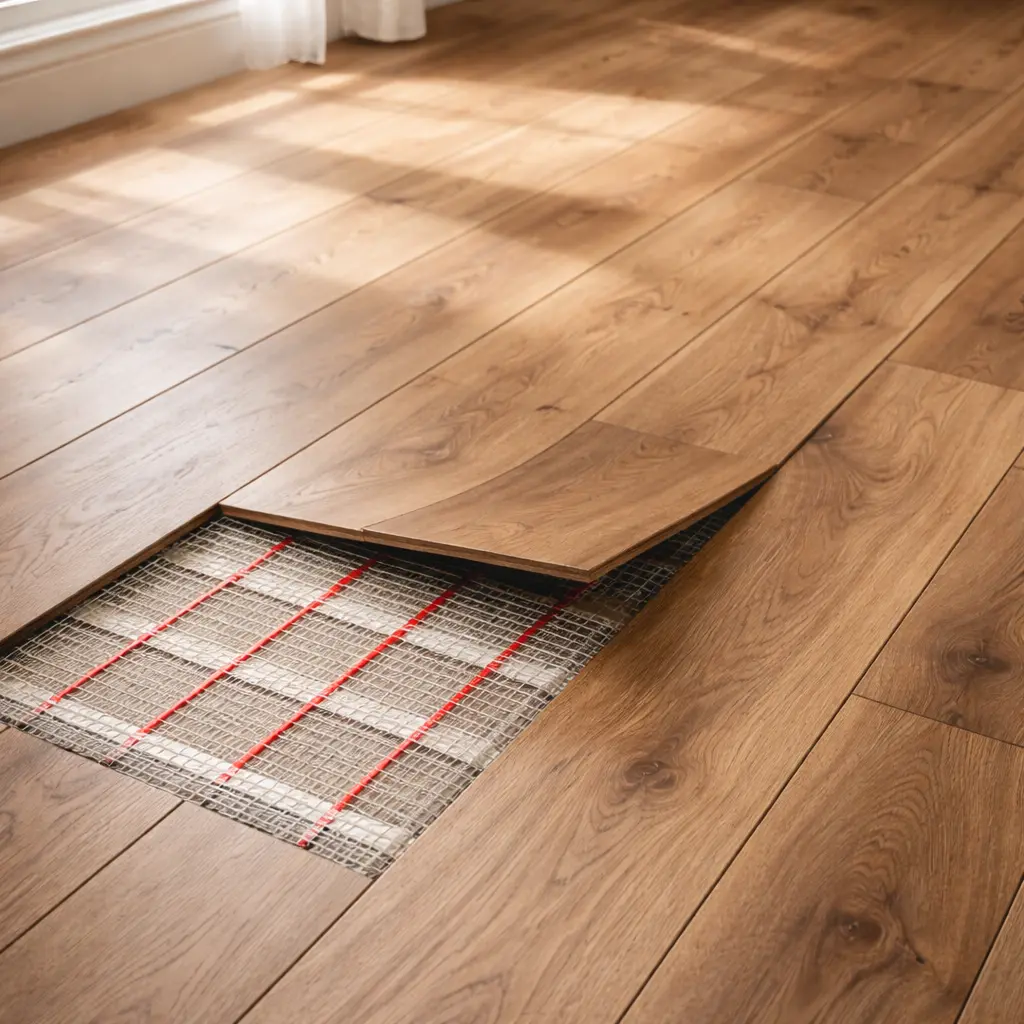
Laminate flooring with underfloor heating is a popular, cost-effective combination when the correct product is chosen. Always look for laminate carrying an explicit UFH compatibility approval, as not all products are tested for this use. Selecting the right underlay for laminate flooring with underfloor heating is equally important. A standard thick foam underlay insulates the floor and significantly reduces heat output. A specialist UFH-compatible underlay, which is thinner and more thermally conductive, must be used instead. Always assess the combined tog of both the laminate and underlay together against your system's recommended limit.
LVT is one of the most practical UFH-compatible floor coverings available. It is thin, thermally conductive, fully water-resistant, and comfortable underfoot, making it an excellent option for kitchens, bathrooms, and open-plan living areas. Vinyl sheet flooring can also work well with underfloor heating, though product-specific compatibility should always be confirmed first. Both LVT and vinyl should be allowed to acclimatise before installation, and the heating system should be brought to temperature gradually over the first few days after fitting.
Solid hardwood is not suitable for above or underfloor heating. Repeated heating and cooling cause solid timber to expand and contract continuously, leading to gaps between boards, surface cupping, and structural damage over time. If a wood finish is important to you, engineered wood is the correct alternative.
Carpet is not automatically incompatible with UFH, but it must be selected carefully. A thick carpet combined with a standard underlay creates a thermal barrier that prevents heat from reaching the room and forces the system to overwork. If carpet is preferred for a bedroom or sitting room, choose a thinner product with a lower tog rating and pair it with a specialist UFH underlay. Always calculate the combined tog of both components and stay within the limits specified by your system manufacturer.
Budget laminate products that have not been tested for UFH use are best avoided. Low-cost laminates may contain adhesives or core materials that react poorly to sustained heat, resulting in swelling, joint failure, or surface deterioration. The cost saving at purchase rarely justify the expense of replacement later. Always select UFH-approved laminate paired with an appropriate underlay.
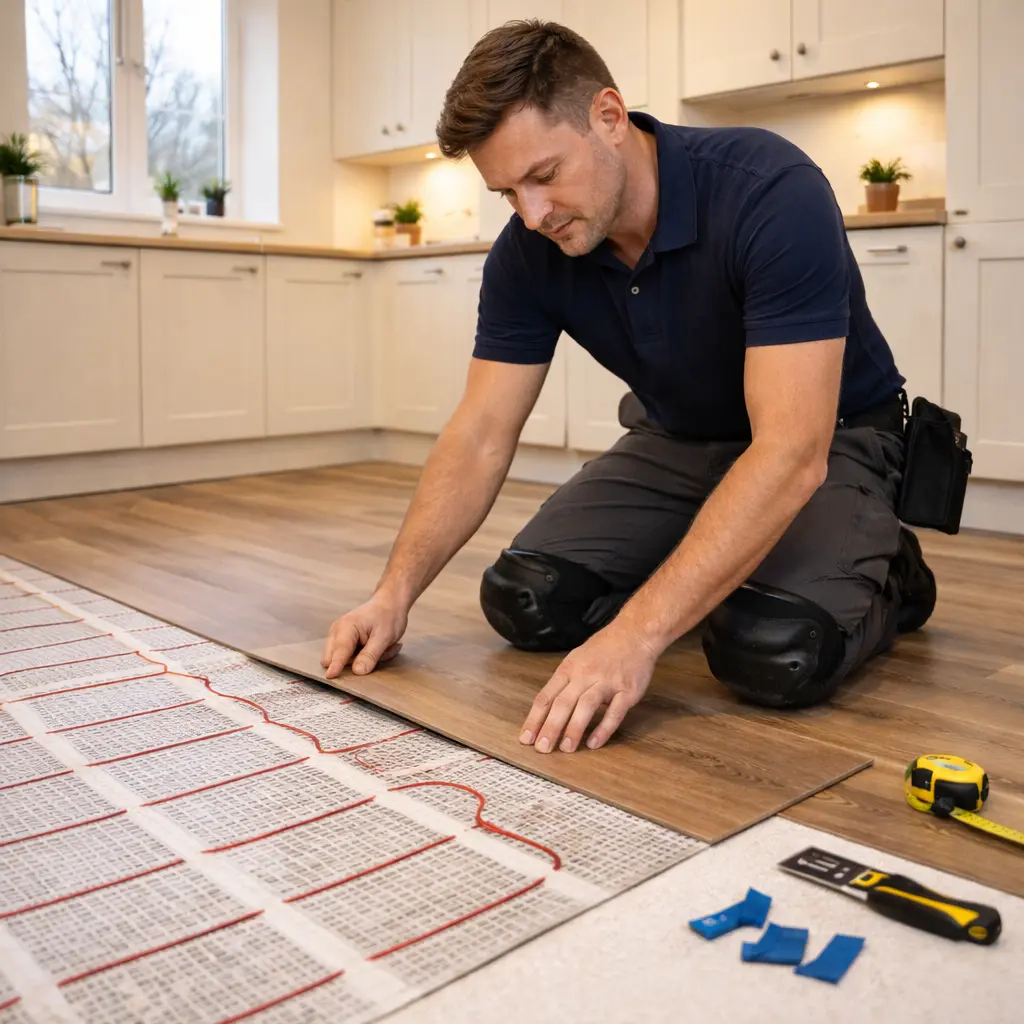
Before committing to any floor covering for use above underfloor heating, work through the following:
If you’re unsure, getting professional advice before purchasing can prevent costly mistakes.
The right flooring with underfloor heating delivers years of comfortable, efficient warmth. Tiles, stone, engineered wood, LVT, and UFH-approved laminate all perform reliably when correctly specified and installed. Whatever your property type or budget, taking proper advice before purchasing is always time well spent. Contact Floor Coverings Local today for straightforward, professional guidance on the best flooring solution for your home.