Whether you are renovating a Victorian terrace, refreshing a semi-detached family home, or fitting out a new build from scratch, planning full house flooring across every room is one of the most significant interior decisions you will make. Get it right, and your home feels considered, comfortable, and visually connected. Get it wrong, and even well-chosen individual materials can look disjointed together. With a clear plan, an understanding of how different flooring choices interact, and the right guidance from the outset, creating a look that flows naturally throughout your property is entirely achievable.
This is one of the most common questions homeowners ask when approaching a whole-house flooring project, and the honest answer is that there is no universal right choice. Uniform flooring suits some homes and layouts beautifully, while a carefully coordinated mix of materials works far better in others. The decision comes down to your home's layout, how each room functions, your household's daily demands, and what you want the finished result to feel like. Understanding the genuine strengths and limitations of each approach is the most useful starting point.

Running the same flooring throughout your home creates visual continuity that works particularly well in open-plan layouts. When the eye moves across a space without being interrupted by contrasting floor surfaces, rooms feel larger, lighter, and more connected. In smaller UK properties, where terraced houses and flats often have compact floor plans, this sense of flow can make a meaningful difference to how spacious the home feels day to day.
Uniform flooring also simplifies life practically. One material means one cleaning routine, one set of care requirements, and no need to maintain different products across different rooms. Ordering a single flooring material in quantity for the whole house is also generally more cost-effective than sourcing several different products separately, which can help when working to a budget across a larger project.
There is a safety benefit worth noting, too. Consistent flooring across connected spaces removes the level changes and awkward threshold transitions that can occur when materials of different thickness meet, which matters in homes with elderly relatives, young children, or anyone with mobility considerations.
A uniform approach comes with real constraints that are worth being honest about before committing. Not every flooring material is appropriate for every room. A laminate that looks excellent in a living room is not the right choice for a bathroom or utility room where moisture is a regular presence. A hard tile surface that performs well in a kitchen may feel unwelcoming and cold underfoot in a bedroom.
There is a design dimension to consider as well. Running identical flooring through every room can, depending on the property and the material chosen, produce a result that feels flat. Different rooms serve different purposes and naturally suit different atmospheres. A bedroom benefits from the warmth and softness of carpet. A hallway needs something that can withstand heavy foot traffic and be wiped clean quickly after muddy boots on a wet winter's day.
Practical factors such as heat compatibility also play a role, particularly in homes with underfloor heating systems, where not all materials respond well to temperature changes. Long-term maintenance is another consideration. If part of the floor becomes damaged and the original product is no longer available, achieving a consistent match across a large area can be difficult and costly.
Using different flooring in different rooms does not mean your home will feel inconsistent. Approached thoughtfully, mixing materials can add depth, help define distinct zones within the home, and allow each space to perform at its best. The key is coordination rather than contrast.
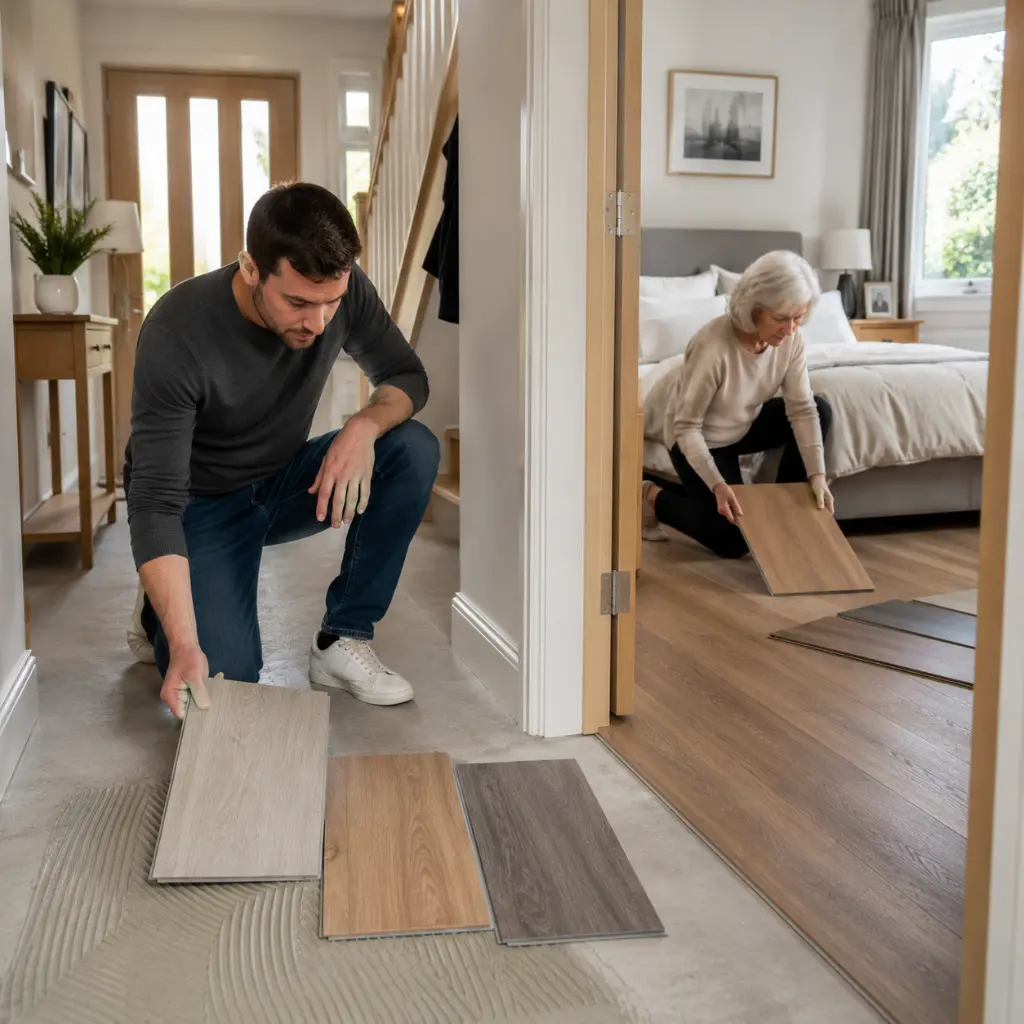
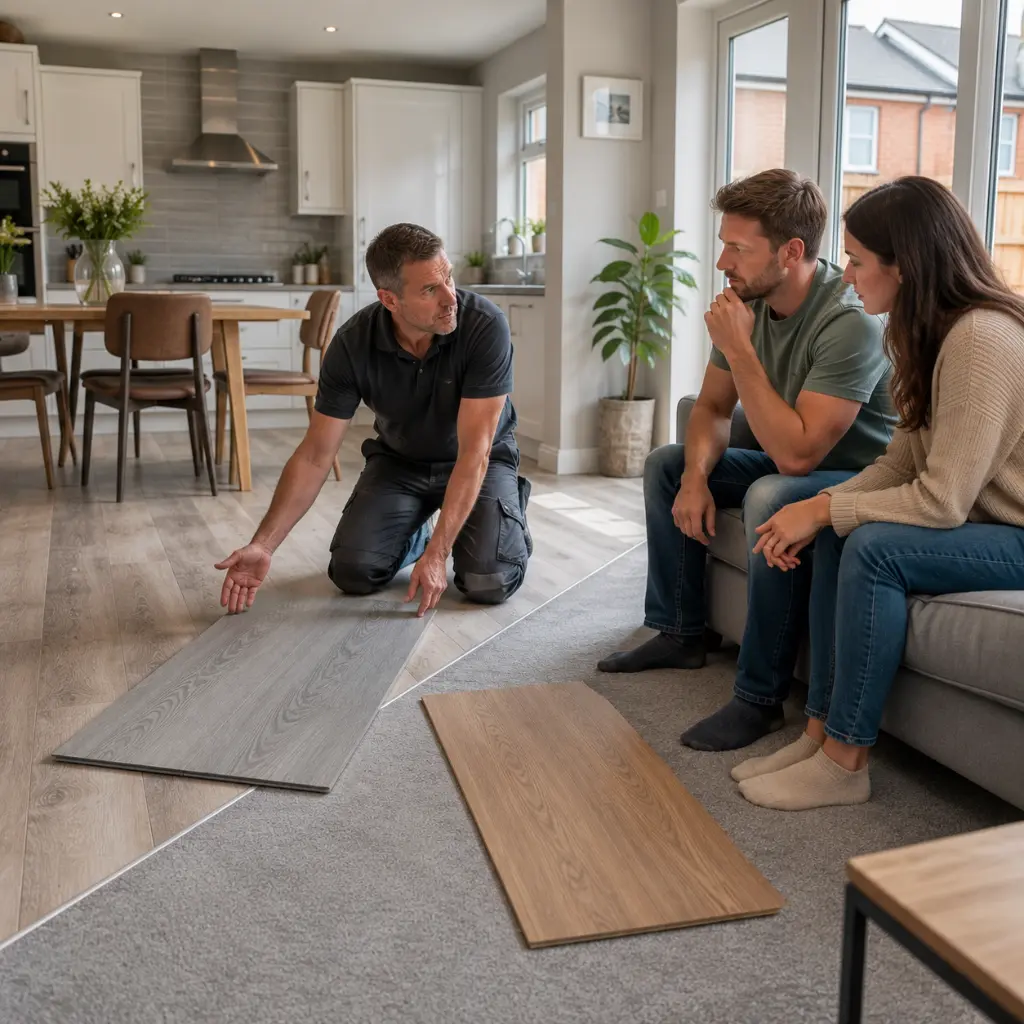
When selecting flooring for multiple rooms, tonal consistency matters more than using identical products. A warm-toned laminate in a living room can sit comfortably alongside a warm-toned carpet in a bedroom or study, provided the undertones align. The most common cause of a disjointed whole-house result is mixing cool and warm tones across rooms that are visible from one another. Lying samples side by side in natural light before committing is one of the simplest and most effective ways to avoid this.
How flooring meets at doorways and thresholds deserves as much thought as the materials themselves. Well-fitted transition strips between different floor surfaces create a clean, considered finish. Where possible, plan for transitions to fall naturally at door frames rather than in the middle of open walkways. This gives each material a clear visual boundary and avoids the unsettled look of a join appearing in an unexpected place.
Practical suitability should always inform material selection, not just aesthetics. Kitchens and bathrooms need flooring that handles moisture, spills, and sustained foot traffic reliably. Vinyl flooring is an excellent choice in these rooms, offering water resistance, durability, and a wide range of finishes to suit different interior styles. Tiles also work well in these environments and retain their appearance with minimal maintenance.
Living rooms and dining areas are well suited to laminate flooring, which provides the visual warmth of a wood finish alongside genuine durability for everyday family use. For bedrooms, carpet remains the most popular choice in UK homes for good reason. It is warm underfoot, quieter underfoot, and creates an atmosphere that hard surfaces simply do not replicate in a room designed for rest.
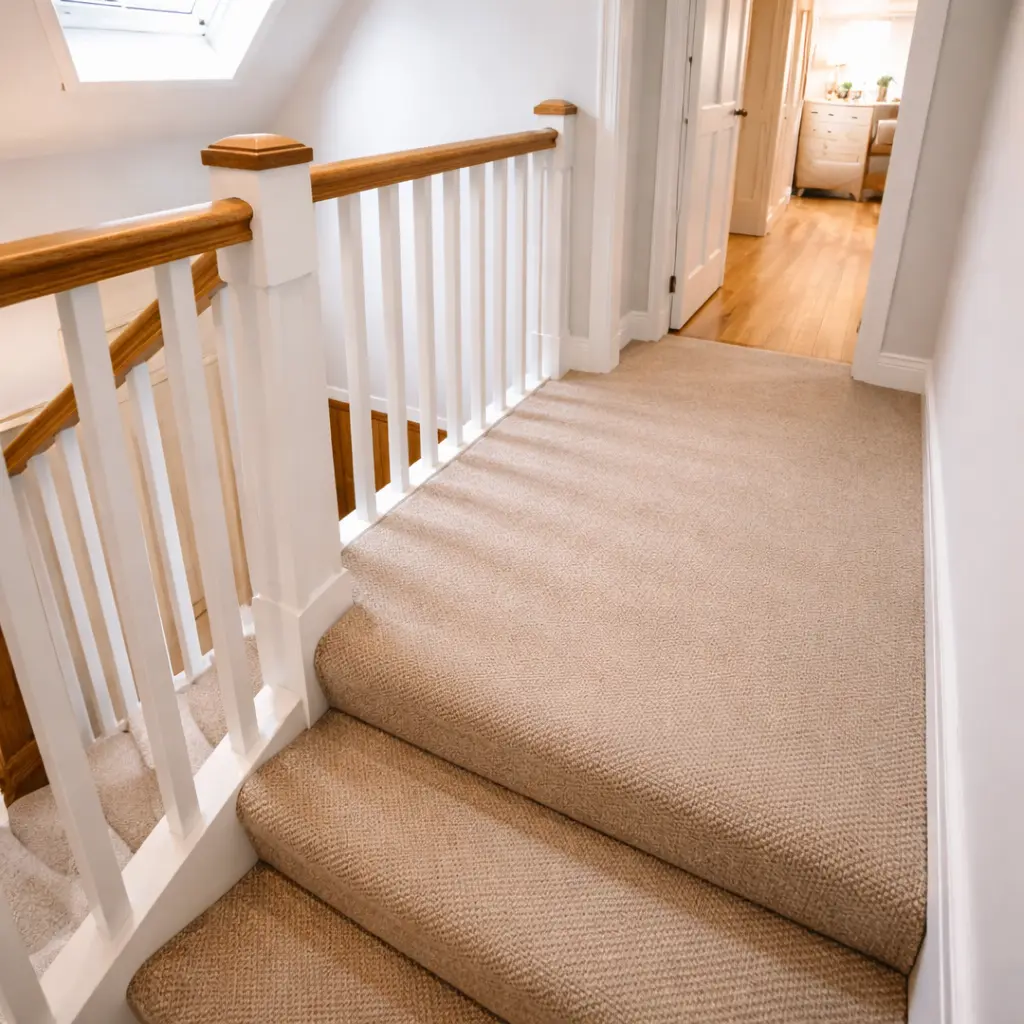
Hallways and staircases experience the heaviest daily wear of any area in a UK home. A robust, easy-to-clean option, such as a quality vinyl or a hard-wearing carpet tile, is often the most practical and long-lasting choice in these spaces.
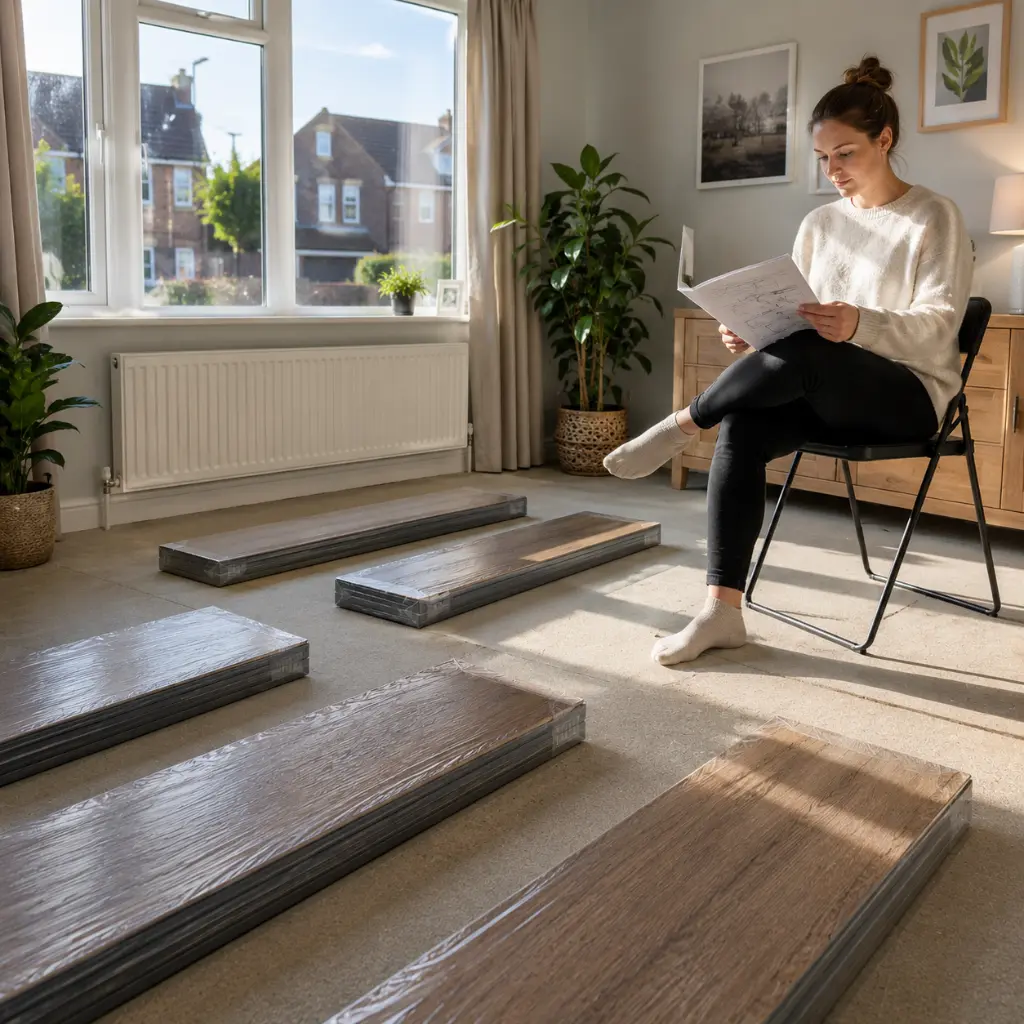
Before purchasing any materials, working through the following points will help you avoid costly decisions and ensure the finished result suits your home properly:
Professional advice before starting can help you match the right materials to each room and avoid unnecessary complications.
Creating a cohesive result with full house flooring is about planning rather than following a single rule. Whether you choose to run one material throughout or coordinate different floors by room and function, the finished result should feel intentional, practical, and suited to the way your household actually lives. Focus on tonal consistency, match materials honestly to each room's demands, and plan your transitions before installation begins. Floor Coverings Local offers straightforward, professional guidance to help you get every stage of the process right. Get in touch with the team today to start planning your project with confidence.